The Politics of Friendship

Isidora Sekulić  – unless you are from Serbia or former Yugoslavia you have very probably never heard that name before. And that is a pity because she was a very remarkable woman and writer.

Sekulić was born in 1877 in a small town in Northern Serbia, at a time when it was extremely rare and unusual for a woman to get a good education; but she was lucky: her father, a lawyer, thought obviously differently from most men of his time (not only in Serbia) and made it possible for his daughter to study.

Isidora graduated from the Teachers College in Sombor, then from the Higher Pedagogicum in Budapest and finally got her Ph.D. in Berlin; she was fluent in seven languages, traveled on her own, and had an excellent knowledge of European art and culture. Most of her life she lived in Belgrade working as a teacher and later in the lexicography department of the Serbian Academy of Sciences.

A small collection of her essays on the Balkans is to my knowledge so far the only part of her work that is translated at all. These essays have the titles: Balkans, The Balkans (notes of a Balkanophile), The Problem of the Small Nation, and Concentrating – Absentmindedness is not a fault but a vice. These essays are complemented in the edition I can recommend here by a short introductory essay The Policies of Friendship, by Nataša Marković and an instructive afterword Blood and Honey by Darko Tanasković and a short biographic sketch.

Sekulić’s main other works, although so far untranslated, give an impression regarding her intellectual interests as a writer: Fellow-Travelers, Letters from Norway, The Deacon of Notre Dame, The Chronicles of the Small-Town Cemetery, Analytical Moments and Topics, To My People, Speech and Language, a cultural review of the nation, and a biography of Njegoš, the Poet-King.

Sekulić was very modern in her writing. In her belletristic texts she used the stream-of-consciousness technique before Virginia Woolf. It is said that Sekulić was adequately Serb and adequately European and cosmopolitan at the same time. In her essayistic writing she would anticipate a concept that would be later called The Politics of Friendship by Jacques Derrida. In her words

“only culture connects people, states and nations; everything else separates them. Cultural contacts are the joy of people…”

Her essay The Problem of the Small Nation should be obligatory reading for each politician of a big nation that thinks he is entitled to decide or have a say in the fate of small nations.

“It is not easy being a small nation: not in Finland, not in Norway, not in Serbia…we are small and we are alone!”

And the following note seems to be written today, so fresh and still valid is it:

“Serbia as a small country must join the world, Europe, at any cost, but not at the cost of losing its dignity and its identity…”

At its core, the Balkan nations have survived the roughly five centuries of Ottoman rule and the five decades of Communism with their particular identity intact; now it is time to become a part of Europe not only economically – without losing its identity and without inferiority complex. Sekulić’s message is as actual as ever.

Sekulić, in many respects a predecessor of Maria Todorova and other scientists that deal with the Balkan identity, is a fascinating author that should be discovered finally also outside her home country – so let’s hope for more translations of her books and essays and maybe also one day a biography that will be available to readers outside Serbia. Her Politics of Friendship are now needed more than ever.
Sekulic
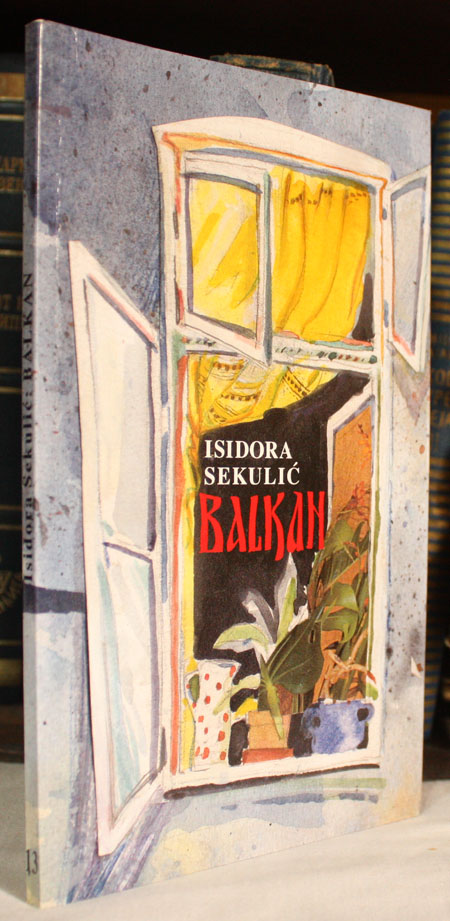
Isidora Sekulić: Balkan, translated by Vuk Tošić, bi-lingual edition Serbian-English, Plavi jahač, Belgrade 2013

Jacques Derrida: Politics of Friendship, trans. George Collins (London & New York: Verso, 1997)

Maria Todorova: Balkan Identities: Nation and Memory, Hurst, London & New York University Press, 2004

Maria Todorova: Imagining the Balkans, New York: Oxford University Press, 2009

© Thomas Hübner and mytwostotinki.com, 2014-5. Unauthorized use and/or duplication of this material without expressed and written permission from this blog’s author and/or owner is strictly prohibited. Excerpts and links may be used, provided that full and clear credit is given to Thomas Hübner and mytwostotinki.com with appropriate and specific direction to the original content.


Literary critics vs. book bloggers

Recently I followed an interesting discussion in social media regarding the role of literary critics as opposed to book bloggers. My own opinion in a few words:

1. Here the literary critics, there the book bloggers – in my opinion that’s already a wrong alternative. Some literary critics have a blog where they publish, some book bloggers are professional and/or knowledgeable literary critics.

2. There is indeed no principle antagonism between literary criticism and book blogging. The literary criticism or essay or review is a literary FORM. It can be published as a monograph/book, as an essay in a literary journal, in a newspaper or in other print media – or in electronic form as a blog. Book blogging is a MEDIUM of publication, not a literary form. An article published on a book blog may or may not be a literary criticism, or essay, or review written by a professional and/or knowledgeable person; to take the MEDIUM (paper or electronic) as the defining criteria for the quality of the content (as indeed many participants of that discussion did) is missing the point completely in my opinion.

3. In each country there is a specific tradition of literary criticism. In the German-speaking countries for example there is traditionally a kind of clear division between literary criticism as a scientific and academic subject and popular literary criticism that aims to inform and advise potential readers regarding books. The academic literary critic aims at gaining knowledge, discovering connections of the work with other works, putting the work in many respects in the context of artistic, historical, sociological, and other scientific disciplines, using a set of tools that are the result of academic training. The target audience of this kind of academic literary criticism is not the general public, who wants to have advice what to read but a peer group that consists almost exclusively of other academics.

4. While academic literary criticism is important and has a raison d’être on its own, it is obvious that the general public is usually not interested in scientific essays, but in reviews that inform about content and author of a book, and that are able to highlight the particular strengths of the book in question and guide the readers of the review in a way that helps him or her to make up his/her mind if they would enjoy this particular book. Depending on the personal knowledge and ability of the individual reviewer and also of the target audience, reviews could be long or short, informed or clueless, superficial or deep.

5. The percentage of book bloggers and of academic literary critics that are able to write a good book review for readers is approximately the same, according to empiric evidence that I gained in the course of many years. The main defaults of a certain part of the book bloggers in this respect are the inability to write properly and too little knowledge about the subject. The main defaults of a certain part of the academic literary critics are the inability to write properly and too much knowledge about the subject.

6. An academic training in the field can help to write a good review of a book; but it is not an obligatory precondition – just the same like with Creative Writing Classes: not all graduates become good authors, and most excellent authors never studied Creative Writing or any literary subject.

7. I got the impression that a certain part of the audience seems to think that someone that writes in a way that I don’t understand proves that this person must be a great expert, and therefore deserves admiration. I got also the impression that a certain part of the audience seems to think that book bloggers are corrupt – while literary critics are not. (I had to laugh aloud when I read this – it shows such a touching ignorance of the true state of affairs in the literary world). To both groups I just want to say: wake up, you are delusional! Or maybe you should just start to read some of the good book blogs about which you seem to have no clue, but obviously a lot of prejudices and – some of you – sneering contempt that is absolutely not justified.

8. In a functioning book market, academic literary criticism has its place just as book reviews for readers. In a functioning book market the reader can and should decide by himself/herself, who can help him/her to find the right books for him/her. Traditional academic literary critics had kind of monopolized the review pages of the print media over decades. The success of book bloggers shows that the general audience was looking for something else, or something additional, had needs that this closed society of literary academics did or could not satisfy. Book bloggers bring an additional element of competition in the market place – and thus they can enhance also the work of traditional literary critics. You may like or not like book bloggers, but they are here and they intend to stay.

© Thomas Hübner and mytwostotinki.com, 2014-5. Unauthorized use and/or duplication of this material without expressed and written permission from this blog’s author and/or owner is strictly prohibited. Excerpts and links may be used, provided that full and clear credit is given to Thomas Hübner and mytwostotinki.com with appropriate and specific direction to the original content.
Vier Gedichte von Edvin Sugarev

Пясък
 
обитавам те
както песента
славея обитава
 
обладаваш ме
както водата
камък обладава
 
пясък на дъното съм
накрая
успокоен и безименен

пак ще се срещнем
тогава
ти ще си морска вълна
 

Sand
 
ich bewohne dich
wie das lied
die nachtigall bewohnt
 
du beherrschst mich
wie das wasser
den stein beherrscht
 
sand auf dem grund bin ich
endlich
besänftigt und namenlos
 
wenn wir uns wiedersehen
dann
wirst du die meereswelle sein

————————————————————————-

 
пространство
 
безименното присъствие
безименното отсъствие
 
танцувам в здрачевината
изопната между тях
 

raum
 
namenlose anwesenheit
namenlose abwesenheit
 
ich tanze in der dämmerung
zwischen beide gespannt

———————————————————————————

 
стъпки
 
топла светлина и кръпки есенни
слънцето
от клоните се стича
по пътеката идеш
гола
и листата целуват петите ти
 
само стъпка още
само стъпка
и ще сме завърнати завинаги
 

schritte
 
warmes licht und herbstliche flicken
die sonne
fließt die zweige herunter
du kommst über den pfad
nackt
und die blätter küssen deine fersen
 
nur noch ein schritt
ein schritt nur
und wir werden uns
für immer umschlungen halten

—————————————————————————————–
 
танц на дервиш
 
все по-бързо
все по-бързо се върти
върти се докато се слее
в цветен вихър разноликото
докато тимпаните на ритъма
в един единствен звук протяжен зазвучат
 
пространствата са подлудели
огъват се и се изливат в него
вдън въртопа
стопява ги
и ги поглъща и вилнее
на танца в урагана
но както и във всеки ураган
 
в центъра
е спокойно
 
в центъра
е мълчание
 

tanz des derwischs
 
schneller
und schneller wirbelt er
dreht sich bis der farbige wirbel
die verschiedenen gesichter verschmilzt
bis der paukenrhthmus
zu einem einzigen langanhaltenden laut wird
 
die räume sind ver-
rückt biegen sich und ergießen sich
in den strudel
schmelzen und werden verschlungen
im wirbelsturm des tanzes
doch wie in jedem wirbelsturm
 
ist es im zentrum
ruhig
 
ist es im zentrum
still

Sugarev

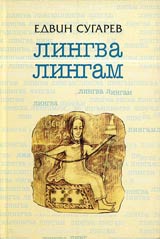
Edvin Sugarev: Lingva Lingam (Едвин Сугарев: Лингва Лингам), ателие Аб, Sofia 2001

Aus dem Bulgarischen von Thomas Hübner

© Edvin Sugarev and ателие Аб, 2001
© Thomas Hübner and mytwostotinki.com, 2014-5. Unauthorized use and/or duplication of this material without expressed and written permission from this blog’s author and/or owner is strictly prohibited. Excerpts and links may be used, provided that full and clear credit is given to Thomas Hübner and mytwostotinki.com with appropriate and specific direction to the original content.

The Sinking of Sozopol – film

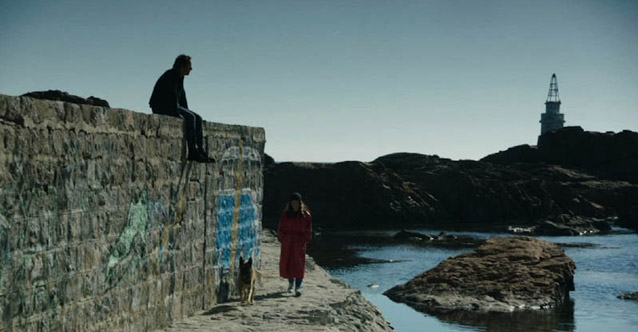
A man is drinking ten bottles of vodka and it is raining a lot in Sozopol.

The sinking of Sozopol
http://programata.bg/img/gallery/multy_2943/mid_1.jpg

Bulgaria, 2014, 100′
Director: Kostadin Bonev
Writing credits: Ina Valchanova, Kostadin Bonev
Cast: Deian Donkov, Snejina Petrova, Svetlana Iancheva, Stefan Valdobrev, Vasil Gurov, Leonid Iovchev, Veselin Mezekliev, Miroslava Gogovska, Petia Silianova, Biliana Kazakova

© Thomas Hübner and mytwostotinki.com, 2014-5. Unauthorized use and/or duplication of this material without expressed and written permission from this blog’s author and/or owner is strictly prohibited. Excerpts and links may be used, provided that full and clear credit is given to Thomas Hübner and mytwostotinki.com with appropriate and specific direction to the original content.
Canada

There is a certain moment when the reader is already half through Richard Ford’s novel Canada, when Dell Parsons, the narrator of the story gives us an insight into his philosophy of life:

“It’s been my habit of mind, over these years, to understand that every situation in which human beings are involved can be turned on its head. Everything someone assures me to be true might not be. Every pillar of belief the world rests on may or may not be about to explode. Most things don’t stay the way they are very long. Knowing this, however, has not made me cynical. Cynical means believing that good isn’t possible; and I know for a fact that good is. I simply take nothing for granted and try to be ready for the change that’s soon to come.”

What if Dell’s and his twin sister Berner’s parents hadn’t met at all? They could have married someone else, someone more suitable as a partner. What if Dell’s mother had decided to leave her husband with the children at a moment when it still was possible? She was only 34, and her husband 37 – a mismatch if there ever was one – when the terrible thing happened that left such a mark on Dell and destroyed this quite average American family, living in a quiet, average town, Great Falls, Montana. What if Dell’s father, a war hero, charming and good-looking, but obviously over-estimating his talents and under-estimating the risks of his fraudulent business schemes in which some Indians were involved, would have remained in the airforce? Probably none of the terrible events that happened, would have happened at all. But because of a tragic coincidence of many small events and happenstances, Dell Parsons has to begin the life story we are reading with the words:

“First, I’ll tell about the robbery our parents committed. Then about the murders, which happened later. The robbery is the more important part, since it served to set my and my sister’s lives on the courses they eventually followed. Nothing would make complete sense without that being told first.”

What follows is the very detailed account of the events that led to the robbery and that make roughly half of the book. The amateurish bank robbery of Dell’s and Berner’s parents happened in a moment when the mother had (almost) made up her mind to leave her husband. But beside from having pretentions regarding her children’s education and of having a real talent to be a poet and writer, a talent that is suffocated in her marriage with a man from an Alabama backwater town who speaks in a funny Dixie accent that is kind of repelling for the daughter of educated Jewish immigrants – beside from that Neeva, the mother, is also a weak person that shies away in the last moment from leaving Bev, her husband.

Deep inside the mother must have felt that the bank robbery she is about to commit with her husband in order to pay a debt to some Indian who threatened to kill the family – a result of the failed dealings of her husband and his fellow crooks – is going to fail, because she made arrangements for her children to be taken to Canada by her friend Mildred Remlinger, and thus to prevent them from being brought up in a foster home or even a juvenile prison. While Berner runs away on her own and leads later a hippie-style life in San Francisco, Dell is making the journey to Canada with Mildred. Mildred has a brother in Canada, Arthur, and this Arthur is supposed to take care of Dell.

If it wouldn’t be for the intro of the book, we as readers would suspect that after the traumatic experience with his parents who are locked away for life or at least a very long time, Dell is now through the worst part of his life, and the second part would describe how he builds up a new better life in Canada. But – there is Arthur Remlinger, handsome, intelligent, with good manners, a former Harvard student, a reader and chess player with an interesting ladyfriend, Florence, a painter.

Remlinger seems oddly out of place in the godforsaken place in Sasketchewan where he owns a run-down hotel with a gambling den and a bar full of “Filipino” girls that spend the night frequently with the guests in their rooms; his right-hand man Charley, a halfbred, is a really creepy guy and probably a pervert, as Dell suspects who has to work with this Charley when the “sports”, the hunters from the U.S., visit the area that is full of game. Arthur Remlinger, an American like Dell, has a dark past, a past that is not forgotten by everyone as it turns out…and he has a violent temper too…

The reviewers were divided regarding the qualities of this book. While some praised the work as a masterpiece, others complained about the slowness with which the story builds up and about certain redundancies. Yes, this is a story that builds up very slowly – and you need to like that if you want to enjoy the novel. And yes, there are redundancies, but I found them quite interesting. After all, we are reading the story told by Dell Parsosns, after his retirement as a teacher in Canada, and after having met his twin sister again who is suffering from the final stages of cancer. For me the redundancies are attempts of the narrator to rationalize what has happened to him, to make sense of a life in which everything went upside down more than once, and to reassure himself that the things really happened to him the way they did.

What makes the book also interesting to me, are the antagonisms on various levels: between the parents; between the parents and children; between Dell and Berner, who although being twins are so different; between men and women; between the United States and Canada, so near and similar, and yet so different countries and societies. And the big villain of the book, the enigmatic Arthur Remlinger, has the format of Kurtz, the “hero” of Joseph Conrad’s Heart of Darkness.

How come Dell survives the catastrophes of his life so (seemingly) unharmed? Maybe it is because of his ability to take life like it is, and not as it should be according to our plans and pretentions; maybe because of the fact that he felt always loved by his parents and his sister, despite the fact that this family was not like other families; maybe because of  the fact that there was always a woman in his life who made an important decision for him in a crucial moment (his mother; his sister; Mildred; Florence; Clare) that proved to be life-altering in a positive way. But in the end, it remains a mystery why some of us not only survive difficult childhoods but do something meaningful with their lives, while others in similar conditions turn into criminals or end in suicide. 

Dell has not become a beekeeper, something he wanted to become when he was young; and he has also not become a strong chess player, despite the fact that he studied Mikhail Tal’s combinations again and again when he was young. But he took a few good lessons from life and mastered it somehow, even when the odds were against him in his youth, and even when his father and later Arthur Remlinger tried to make him an accomplice to their crimes.  

For me this is the best work of Ford so far – and his previous books were already excellent. Canada is a book about the fragility and loneliness of life, and how to come to terms with this fact. It left a very strong impression on me.

Ford

Richard Ford: Canada, Bloomsbury, London 2012

© Thomas Hübner and mytwostotinki.com, 2014-5. Unauthorized use and/or duplication of this material without expressed and written permission from this blog’s author and/or owner is strictly prohibited. Excerpts and links may be used, provided that full and clear credit is given to Thomas Hübner and mytwostotinki.com with appropriate and specific direction to the original content.
Vier Gedichte von Ivajlo Dobrev

Аритметика
 
И ти – като нищожна част
от огромния часовник,
и все пак твърде значителна
за неговите механизми,
бъди сигурен, че времето
е безкраен любовен плащ –
съвкупност от зависимости
на взаимност.
 

Arithmetik
 
Und du – bruchteil
des riesigen uhrwerks,
und doch sehr bedeutsam
für seine mechanismen,
sei versichert, daß die zeit
ein unendlicher mantel der liebe ist –
eine ansammlung von abhängigkeiten
auf gegenseitigkeit.

————————————————–
 

Дребна мъдрост
 
Веднъж ученикът
отишъл при учителя си
и го попитал, после
учителят отишъл
при ученика и
го попитал, а после,
не им харесвало и
спрели да се виждат.
 

Pfennigweisheit
 
Einmal ging der schüler
zu seinem lehrer
und fragte ihn, dann
ging der lehrer
zu seinem schüler und
fragte ihn, und dann
mochte er nicht mehr und
sie hörten auf sich zu sehen.

————————————————–
 

Почивам си от поезията
 
доизносвам роклите на мама
доизносвам обувките на татко
броя големите банкноти в сакото
на чичо Фред почивам си от поезията
отдадох се на здравословен живот
ям малко спя много вечер се моля
не чакам просветление искам да съм
опашката на куче – да изразявам радост
 

Ich ruhe mich von der dichtkunst aus
 
ich verschleiße mutters kleider
ich verschleiße vaters schuhe
ich zähle die großen scheine im sakko
von onkel Fred ich ruhe mich von der dichtkunst aus
sie gab mir ein gesundes leben
ich esse wenig schlafe viel abends bete ich
erwarte keine erleuchtung will nur
der schwanz des hundes sein – um freude auszudrücken

————————————————–
 

Две четири стишия
 
В плетения кош
на жълт лист хартия
върху ръждив ключ
има част от старо стихотворение
 
Ти не можеш да бъдеш разделена
ти не можеш да бъдеш разделена
Женитба на тъжното
в бледното око на радостта
 

Zwei vier verse
 
Im weidenkorb
auf einem vergilbten blatt papier
über einem rostigen schlüssel
steht ein teil eines alten gedichts
 
Du kannst nicht getrennt werden
du kannst nicht getrennt werden
Ehe der traurigkeit
mit dem blassen auge der freude

Dobrev

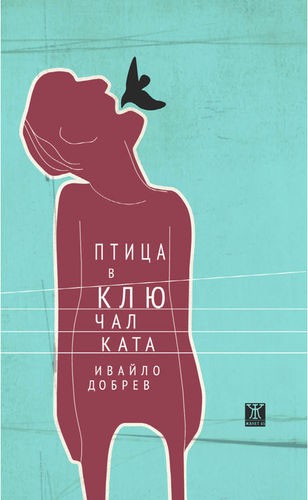
Ivajlo Dobrev: Ptitsa v kljuchalkata (Ивайло Добрев: Птица в ключалката), Janet45, Plovdiv 2014

Aus dem Bulgarischen von Thomas Hübner

© Ivaylo Dobrev and Janet 45, 2014
© Thomas Hübner and mytwostotinki.com, 2014-5. Unauthorized use and/or duplication of this material without expressed and written permission from this blog’s author and/or owner is strictly prohibited. Excerpts and links may be used, provided that full and clear credit is given to Thomas Hübner and mytwostotinki.com with appropriate and specific direction to the original content.

Drei Gedichte von Tanja Nikolova

и без въпроси, моля
 
седим и пием след работа
защото той иска да се самоубие
тъпо
но ние сме там –
приятелите
една мижава алтернатива на смъртта
и се шегуваме
и пеем
и пием…
основно пием
опитваме се да измислим
за него
и за себе си
доводи за живот:
“- Животът е хубав!”
(е добре де…не е)
но…
“-Трябва да се живее!”
защо???
…ами…
пием
…а любовта?
а бе…
………………
я наздраве!
……………….
любовта не е живота
животът в ХУБАВ и ТРЯБВА
(като лозунг)
вярвай!
и без въпроси,
моля…


und ohne fragen, bitte
 
wir sitzen und trinken nach der arbeit
weil er sich umbringen will,
dumm
aber wir sind da –
die freunde
eine schäbige alternative zum tod
und wir scherzen
und singen
und trinken…
vor allem trinken
wir versuchen
uns für ihn
und für uns selbst
gründe fürs leben auszudenken:
“- Das leben ist schön!”
(na ja … ist es nicht)
aber…
“Man muss leben!”
warum???
…ach komm…
wir trinken
…und die liebe?
hör doch auf…
………………
na dann prost!
……………….
die liebe ist nicht das leben
das leben ist SCHÖN und MAN MUSS
(wie eine losung)
glaub es!
und ohne fragen,
bitte …

……………………………………………………………………………………


песен
 
твоята кухня, мила,
е моят аеродрум
летя, летя
вино, сирене и музика
ах, каква музика!
вълшебно е от лекота
но ти знаеш, мила,
с теб летя


lied
 
deine küche, liebes,
ist mein flugplatz
ich fliege, ich fliege
wein, käse und musik
ach, was für musik!
magisch ist die leichtigkeit
aber du weisst schon, liebes,
mit dir fliege ich

……………………………………………………………………………………
 
 
Писмо до Кабул
 
написах писмо
цяла страница ситен шрифт
за децата, за къщата, за приятелите
объркано и простовато
писмо
зa малките неща
които са големи, големи
по-големи от всеки стих
представям си как четеш и се усмихваш
и се смалявам
до сълза


Brief nach Kabul
 
ich schrieb einen brief
die ganze seite in delikater schrift
über die kinder, das haus, die freunde
verwirrt und seicht
ein brief
über die kleinigkeiten
die groß, groß sind
größer als jeder vers
ich stelle mir vor, wie du ihn liest und lächelst
und vergehe 
vor tränen


kora_Tolkoz1

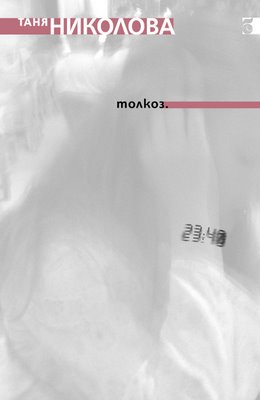
Tanja Nikolova: Tolkoz (Толкоз), Literaturen forum, Sofia 2007

Aus dem Bulgarischen von Thomas Hübner

© Tanja Nikolova and Literaturen forum, 2007
© Thomas Hübner and mytwostotinki.com, 2014-5. Unauthorized use and/or duplication of this material without expressed and written permission from this blog’s author and/or owner is strictly prohibited. Excerpts and links may be used, provided that full and clear credit is given to Thomas Hübner and mytwostotinki.com with appropriate and specific direction to the original content.
Fünf Gedichte von Ivanka Mogilska

Разговор
 
Думите са бавни.
Черно-бели.
Спрели.
После тръгнали
в погрешната посока.
 
Gespräch
 
Die Worte sind langsam.
Schwarz-weiss.
Gestoppt.
Gingen dann
in die falsche Richtung.

—————————————————————-

Мечтание в 10 Секунди
 
Невъзможните дни
ги заравят
като черупки от охлюви.
После пясъкът бяга
да се дави в морето.
 
Träumerei in 10 Sekunden
 
Die unmöglichen Tage
vergrabe sie
wie Schneckenhäuser.
Danach flieht der Sand
um im Meer zu ertrinken.

—————————————————————-
 
За Страха
 
Птиците се събраха.
Гарванът даде знак.
Екзекуцията започна.
Бесеха ловеца,
който уби лисицата.
 
Zum Fürchten
 
Die Vögel versammelten sich.
Der Rabe gab Zeichen.
Die Hinrichtung begann.
Gehängt wurde der Jäger,
der den Fuchs tötete.

———————————————————————–
 
Библейски Мотив
 
Железни са правилата на бога:
Не лъжи!
Не кради!
Не убивай!
Не пожелавай жената на ближния!
Не е казано само какво да правиш,
ако жената те пожелае.
 
Biblisches Motiv
 
Ehern sind Gottes Gebote:
Du sollst kein falsches Zeugnis ablegen!
Du sollst nicht stehlen!
Du sollst nicht töten!
Du sollst nicht begehren deines Nächsten Weib!
Nur wird nicht gesagt, was zu tun ist,
wenn dessen Frau dich begehrt.

——————————————————————————-
 
Краят на лятото
 
Самотен гларус
е останал да целува
на пясъка лицето.
 
Das Ende des Sommers
 
Eine einsame Möwe
ist verblieben um das Antlitz
des Sandes zu küssen.

Mogilska

Ivanka Mogilska: DNA (Иванка Могилска: ДНК), Janet45, Plovdiv 2004

Übersetzung aus dem Bulgarischen von Thomas Hübner

© Ivanka Mogilska and Janet45 Izdatelstvo, 2004
© Thomas Hübner and mytwostotinki.com, 2014-5. Unauthorized use and/or duplication of this material without expressed and written permission from this blog’s author and/or owner is strictly prohibited. Excerpts and links may be used, provided that full and clear credit is given to Thomas Hübner and mytwostotinki.com with appropriate and specific direction to the original content.

The Invention of Life

Johannes, the narrator of the novel Die Erfindung des Lebens (The Invention of Life), grows up in a small family with his loving parents in Cologne in the 1950s. But Johannes’ start in life is overshadowed by a history of traumata and terrible losses in the past – experiences that made his mother literary speechless and that also affect Johannes: he is mute, like his mother.

The first part of the book describes the life and daily routine of the three members of the family who lead an almost symbiotic life with very few contacts outside the family. Shopping or playing on the playground in the presence of his mother are a real torture for the child due to the lack of understanding and empathy of the biggest part of their surrounding. Only the walks with the father who takes him to places where Johannes is accepted without questions asked, are a temporary relief from the boy’s loneliness.

But things are changing step by step, thanks to a benevolent uncle who presents his piano to Johannes’ mother; she was once a talented pianist. Reluctantly, she takes up playing again and starts to teach her son too: for Johannes the beginning of a new life devoted to music – and also the proof that he will be more in life than ‘a mute idiot’, as his environment, including his school teacher, frequently tells him.

While music is one of the triggers for a long and painful process of becoming a ‘normal’ child (and also for his mother to regain her speech), it is finally the father who with his positive attitude to life and his understanding what is good for the development of his son, starts a program that could not have been better conceived by an experienced psychologist.

This program includes long walks in the country side, lessons in drawing, regular writing exercises in order to memorize new words, expressions and discoveries in nature, and also physical activities that strengthen Johannes also in this respect. That all this is done in the absence of his mother may be the key to break the extremely strong bond with her. From the father Johannes learns also why his mother is like that – Johannes had four brothers, but they all died before his birth. The circumstances how all this happened are revealed only much later by an uncle of Johannes.

When the recovery of this family is already a miracle, the way to breaking the spell of the past is just the first part of the novel. Johannes has to go through many difficult experiences in school and later life – he has always problems to develop close relations with other people and also his dream to become a professional pianist will not become true despite his great talent. Devastated he returns from the Conservatorio in Rome to live again with his parents – but again, life has a surprise for him…

This novel is written in the tradition of the Entwicklungs- and Künstlerroman; Johannes is writing this novel in Italy, where he spent the happiest part of his life – also this a reference to many literary works of the German tradition (there are of course a few Goethe references as well in the text). Johannes finds in Italy not only his true vocation, and the memories of his love story with Clara when he was a student; he rediscovers what life is about, grows close to a woman and her daughter, and in the end all is (possibly) well…

You know, I am not taking up easily books with almost 700 pages, like the edition I was reading. Such a chunky book requires a lot of time and we all can remember experiences when it turned out not to be worth it. Here this was not the case. I enjoyed Die Erfindung des Lebens (The Invention of Life) thoroughly.

I could immediately relate to Johannes and his fate and although the novel is full with descriptions of daily life, I never found it dull or boring. Ortheil is an experienced novelist, but it was a good decision to tell the story of his life (because this novel is almost an autobiography) when he was already in his fifties; otherwise he would have been too close to the young Johannes and this lack of distance would have spoiled this very touching book, I suppose. It is – beside other things – a declaration of love to Italy, and also to Ortheil’s father; Johannes’ father in this novel is one of the most endearing portraits of a father I know of in literature.

The book is not yet translated in English. Publishers, where are you? 

Ortheil

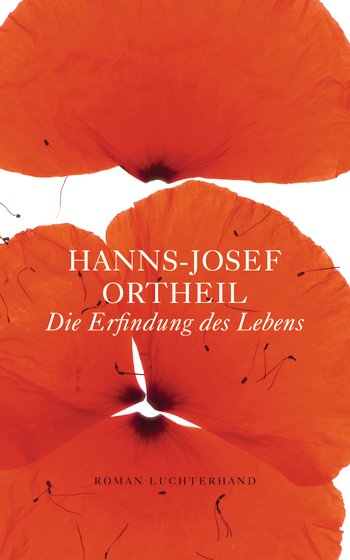
Hanns-Josef Ortheil: Die Erfindung des Lebens, Luchterhand, München 2009

The author talks here about his novel and its autobiographical background (in German).

© Thomas Hübner and mytwostotinki.com, 2014-5. Unauthorized use and/or 
duplication of this material without expressed and written permission from this blog’s author and/or owner is strictly prohibited. Excerpts and links may be used, provided that full and clear credit is given to Thomas Hübner and mytwostotinki.com with appropriate and specific direction to the original content.
A Brazilian in Berlin

The political changes in Europe 1989/90 affected probably no other city more than Berlin. The divided city was not only re-united but became once again a magnet for writers, artists, and all kind of creative people. With them came the hipsters, this sort of people that is so difficult to categorize and for whom Berlin seems to be the place for a never-ending party.

In literary terms, Berlin is – like any other bigger city – the scenery for many novels and stories; it also seems to be a good inspirational place for autobiographical books with sketches or travel notes. Cees Nooteboom’s Berlin Notes or his Roads to Berlin are good examples, as well as Wladimir Kaminer’s Russian Disco, a bestseller with cult status in Germany (more than 1.3 million sold copies). 

When João Ubaldo Ribeiro, the most famous contemporary Brazilian novelist (I am talking about literature here, not drivel – which excludes Paulo Coelho of course), came to Berlin in the early 1990s with his family, he published during his one year as a guest of DAAD (German Academic Exchange Service) and after his return to Brazil a number of newspaper columns about his life and experience in Berlin which were later collected under the title A Brazilian in Berlin.

His adventurous travel to Berlin, experiences in supermarkets or on the street (the aggressive Berlin cyclists were probably never described more up-to-the-point), examples for the mentality of the Berliners, visits of classmates of the kids at home, the very different concept of the word “tomorrow” in Brazil and Germany, the phenomenon that he met a lot of Berliners but no Germans at all, the naked people in Halensee (Freikörperkultur or short FKK is a very serious German movement, and indeed there is probably no other country with fewer legal restrictions of public nudity than Germany), or the unexplicable habit of many Berliners to go to public readings – voluntarily! – all this and a few other experiences are subject of Ubaldo Ribeiro’s causeries.

Although all his texts breathe humour and mild (self-)irony, the author has also a sensorium for the more serious effects of re-unification: since he knows the city from visits before the re-unification, he feels a certain difference in the attitude of people to visitors. Since Berlin was overwhelmed by visitors (and migrants) in the years after the changes, he feels that people are more stressed, less polite. Something seems to have changed…well, Berlin has never been a place of particular politeness, and typical Berliners are famous for their rough wit and no-bullshit attitude.

The book is a very fast read and a suitable preparation when you go to visit Berlin or plan to live there for a while. It was the first book I read by this author and it made me read his more serious works such as Sargento Getulio. The only downside of the book reviewed here: it is not translated in English. 

Joao Joao2


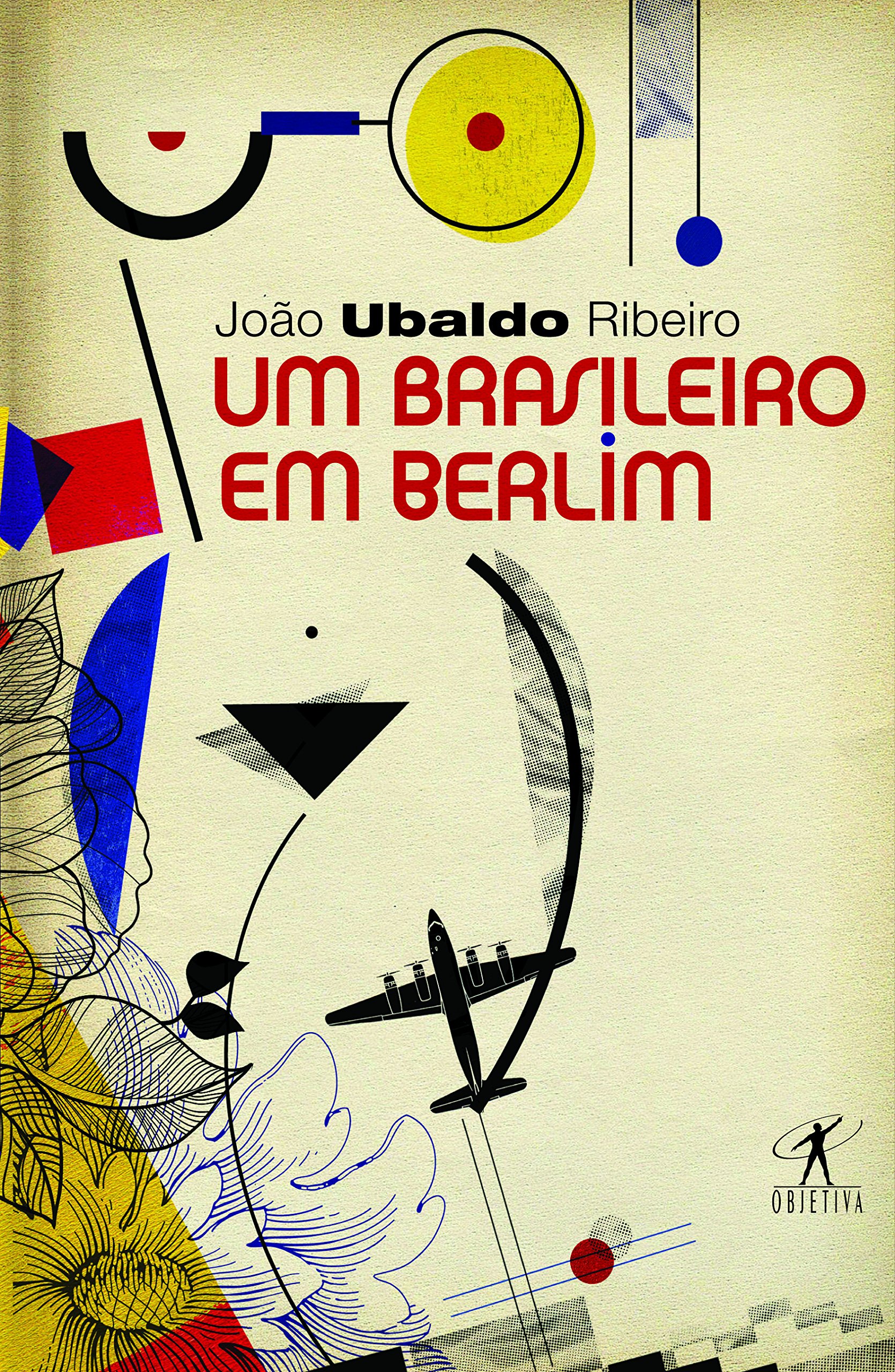
João Ubaldo Ribeiro: Ein Brasilianer in Berlin, translated by Ray-Güde Mertin, Suhrkamp, Frankfurt am Main 1994; Um Brasileiro em Berlim, Objetiva 1995 

Wladimir Kaminer: Russian Disco, translated by Michael Huise, Ebury Press, London 2002
Cees Nooteboom: Berliner Notizen, translated by Rosemarie Still, Suhrkamp, Frankfurt am Main 1991
Cees Nooteboom: Roads to Berlin, translated by Laura Watkinson, MacLehose Press 2013

© Thomas Hübner and mytwostotinki.com, 2014-5. Unauthorized use and/or 
duplication of this material without expressed and written permission from this blog’s author and/or owner is strictly prohibited. Excerpts and links may be used, provided that full and clear credit is given to Thomas Hübner and mytwostotinki.com with appropriate and specific direction to the original content.