Gespräch

Meine Übersetzung des Gedichts Gespräch von Ivanka Mogilska wurde auf der deutschen Website von Public Republic veröffentlicht.

Dank an Natalia Nikolaeva und Tsvetelina Mareva.

© Thomas Hübner and mytwostotinki.com, 2014-5. Unauthorized use and/or duplication of this material without expressed and written permission from this blog’s author and/or owner is strictly prohibited. Excerpts and links may be used, provided that full and clear credit is given to Thomas Hübner and mytwostotinki.com with appropriate and specific direction to the original content.


Women in Translation month upcoming

Following the good example of some blogger friends and in anticipation of this year’s Women in Translation month, I post a list of books by women which I reviewed or from which I published translation samples here, covering the period September 2014 until now:

Deborah Rohan: The Olive Grove
Herta Müller: The Passport
Marjana Gaponenko: Who Is Martha?
Elif Batuman: The Possessed
Neli Dobrinova: Malki mazhki igri
Virginia Zaharieva: Nine Rabbits
Ivanka Mogilska: DNA
Tanja Nikolova: Tolkoz
Isidora Sekulic: Balkan

More to come!

© Thomas Hübner and mytwostotinki.com, 2014-5. Unauthorized use and/or duplication of this material without expressed and written permission from this blog’s author and/or owner is strictly prohibited. Excerpts and links may be used, provided that full and clear credit is given to Thomas Hübner and mytwostotinki.com with appropriate and specific direction to the original content.

The feces of revisionism

They promise to stage “Götterdämmerung“ – but their abilities are even not sufficient for “Hänschen klein“.


(with a friendly nod in the direction of Gottfried Benn)


© Thomas Hübner and mytwostotinki.com, 2014-5. Unauthorized use and/or duplication of this material without expressed and written permission from this blog’s author and/or owner is strictly prohibited. Excerpts and links may be used, provided that full and clear credit is given to Thomas Hübner and mytwostotinki.com with appropriate and specific direction to the original content.

An apology

Just read the second article of Manol Glishev on Boris III.

Now I have to send out an apology to a lot of people. I called Glishev initially a “poet and intellectual“. To all poets and intellectuals – I am really sorry for that.

© Thomas Hübner and mytwostotinki.com, 2014-5. Unauthorized use and/or duplication of this material without expressed and written permission from this blog’s author and/or owner is strictly prohibited. Excerpts and links may be used, provided that full and clear credit is given to Thomas Hübner and mytwostotinki.com with appropriate and specific direction to the original content.

Retardistan

Manol Glishev is “rather amused“ – by what? By the death of 11,363 Jews who were sent to Treblinka by his idol and the blog post I wrote about it.

Manol Glishev is also inspired – he promised to write a poem/poems about this amusing topic. – “My funny Holocaust Haikus“ is the working title as I have heard.

And judging from his fine sense of humor, I am sure not to expect in vain a sitcom featuring Macedonian Jews cracking jokes in the gas chamber…soooo amusing – at least for a person with the character of a Manol Glishev.

© Thomas Hübner and mytwostotinki.com, 2014-5. Unauthorized use and/or duplication of this material without expressed and written permission from this blog’s author and/or owner is strictly prohibited. Excerpts and links may be used, provided that full and clear credit is given to Thomas Hübner and mytwostotinki.com with appropriate and specific direction to the original content.

An experience

I am very rarely commenting on political topics in social media. But sometimes a posting is provoking a reaction from my side; especially racism, antisemitism, sexism, homophobia, xenophobia, revisionism faced in comments in social media require that I have to take a stand from time to time.

So it happened that during the last weeks I was twice active in FB in relation to a political topic. In one case I signed – following the invitation of a friend – a petition regarding the banning of the Bulgarian chapter of “Blood & Honor”, a disgusting and extremely violent skinhead and Nazi group that is banned in many countries because they are considered as a criminal gang responsible for hundreds of hate crimes against “non-whites” (also in Bulgaria they have a track record of beating people to pulp that don’t look “white” enough).

The other case was the revisionist campaign by some crypto-fascist pseudo-intellectuals on the payroll of former Czar and Prime Minister Simeon Sakskoburggotski who try to rewrite Bulgarian history and turn the main responsible for the deportation and killing of more than 11,000 Jews, Boris III, into a national hero and “Bulgarian Schindler”. My answers in both cases were common sense answers: spreading publically available information on the Nazis, and mentioning scientific publications that render this revisionist attempts ridiculous, and refute the invented claims of Boris III as the savior of the Bulgarian Jews.

As a reaction, I was branded in the public discussion or in private messages (partly sent anonymously), amongst others, as:

“Liberal”, “communist”, “liberal-communist”, “cultural Marxist from the Frankfurt School”, “liar”, “bolshevist mongrel”, “Nazi”, “Jewish bastard”,” SS-Sturmbannfuhrer”, “idiot”, “garbage”, “retard”, “pederast”, “nutcase”, “slanderer”, “anti-bulgarian”, and many other nice epitheta that speak for the intellectual level of those who use it – I am talking about dozens, no, hundreds of people using this kind of expressions, mostly people who are according to their public profiles historians, psychiatrists, TV hosts, advocates, or who have other professions that require a certain formal education or at least knowledge or professionalism. (For sure I know that of course only for the non-anonymous part of the messages.)

Additionally, and in mostly but not always anonymous messages, my parents and family were threatened and insulted in the most primitive manner, people expressed regret that I was not gassed in Treblinka, it was promised that “we will find out where you live, and then you will see!”, I was promised to be beaten to pulp, or alternatively that they wish “someone will break every single bone in your body” or will “shut you up for ever”, and various other forms of interaction that correspond with the mental abilities of this human scum. (For those that promised to wait for me “on the streets of Sofia and show you what it means to mess with us”: be aware that my Albanian bodyguards are maybe just around the corner in that case – and be also aware that they have their own concept of “Blood & Honor” – if you get the point.)

It is an experience, but I am not surprised. It is quite a spectacle to see a certain category of individuals acting like a pack of rabid dogs, or a bunch of foaming hysterical lunatics in a pogrom – just because you dared to voice an opinion and present some facts that are unpleasant for them.

Welcome to Bulgaria, the country that prides itself with its “legendary tolerance and hospitality”. 

To be fair: I know – no, I hope that these people are not the majority in Bulgaria. But what really shocks me is the almost complete lack of any solidarity for people who voice justified criticism and are actively doing their duty as citizens to stand up for human rights, or the right of free speech, and against fascism, racism, revisionism.

Even a big part of the intellectuals in Bulgaria seems to be on permanent vacation or busy with their own things. At least that is my impression and experience. Not everyone is like me eloquent and well-equipped and -prepared to deal with those people I described in the previous paragraphs and that represent the dregs of the Bulgarian society; and not everyone has his own outlet to speak out like I do here. For the marginalized and bullied groups in Bulgarian society, life must be very depressing – not only because they are marginalized and bullied, but because so few people who know or should know better stand up for them.

 
© Thomas Hübner and mytwostotinki.com, 2014-5. Unauthorized use and/or duplication of this material without expressed and written permission from this blog’s author and/or owner is strictly prohibited. Excerpts and links may be used, provided that full and clear credit is given to Thomas Hübner and mytwostotinki.com with appropriate and specific direction to the original content.

A case of revisionism – short update

A Bulgarian version of my previous article on the Boris III campaign by revisionist circles was published recently on the popular website Площад Славейков (Ploshtad Slaveykov), together with articles by the Bulgarian novelists and writers Lea Cohen and Angel Wagenstein

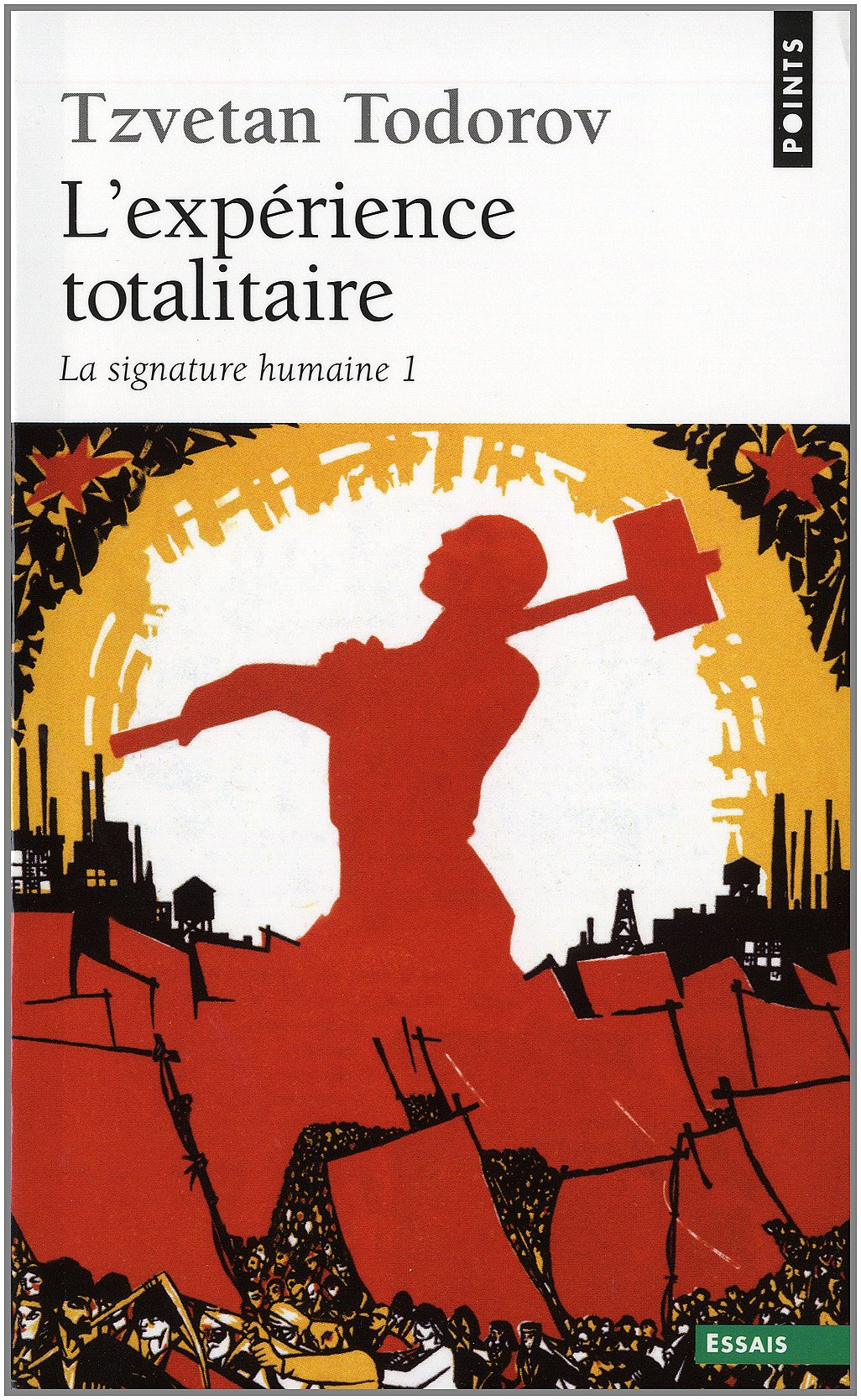
There is also an interesting article related to the publication of the Bulgarian translation of Tzvetan Todorov’s book Тоталитарният опит (L’expérience totalitaire: la signature humaine) that deals with this question in a philosophical context on the same website.

Todorov

Tzvetan Todorov: L’expérience totalitaire, Points, Paris 2011

© Thomas Hübner and mytwostotinki.com, 2014-5. Unauthorized use and/or duplication of this material without expressed and written permission from this blog’s author and/or owner is strictly prohibited. Excerpts and links may be used, provided that full and clear credit is given to Thomas Hübner and mytwostotinki.com with appropriate and specific direction to the original content.


A case of revisionism, or How interested circles in Bulgaria try to turn the main responsible for the killing of 11,363 Jews into someone that is “more than a Bulgarian Schindler”

The events about which I am talking here took place more than 70 years ago and are extremely well documented. But until today there are two competing narratives regarding the interpretation of these events and a recent interview of the former Bulgarian Czar and later Prime Minister Simeon Sakskoburggotski (Simeon von Sachsen-Coburg-Gotha) brought them to the surface again and created a quite heated discussion in the public sphere in Bulgaria.

The facts: Bulgaria, whose government at that time had since long very close ties to Nazi Germany, joined the Axis officially on March 1, 1941. Bulgaria had lost territories in the Balkan Wars and WWI that it considered to be rightfully part of Bulgaria, and Nazi Germany supported these territorial claims to Macedonia, a part of Kosovo, the Dobrudzha, and the Greek part of Thrace. Part of the deal to join the Axis was on the other hand to actively support the extermination of the Jews – it was later agreed that Bulgaria will “deliver” as a starter 20,000 Jews to the Nazis. So, in the end of the day it was a deal “territory against handing out the Jews for extermination”.

Even before joining the Axis, the Bulgarian government started to support actively the anti-Semitic policy of the Nazis. Bulgaria issued laws that deprived Bulgarian Jews of most of their rights; the laws were inspired by the anti-Semitic laws in Nazi Germany that in a way prepared the population to accept the fact the Jews were no citizens, and actually not even human beings in the ideology of the Nazis and their willing helpers.

In spring 1943, the Bulgarian parliament issued a supportive vote to deport for now 20,000 Jews from the territory of Bulgaria (including those territories that were to be annexed by Bulgaria) to Poland. 11,363 Jews from Bulgarian-occupied Macedonia and Western Thrace were rounded up by Bulgarian police and military, put in trains guarded by Bulgarians and sent mainly to Treblinka. There was literally only a handful of survivors.

When in March 1943 the Bulgarian authorities started to announce their intention to round up also the Jews from the “Old” Bulgarian territory, i.e. Bulgaria in the borders before 1941, courageous Bulgarian citizens, a few politicians with a conscious (such as Dimitar Peshev), and some of the leaders of the Bulgarian Orthodox Church (Metropolit Kiril and Metropolit Stefan), organized public resistance in Kyustendil, Sofia, Plovdiv, and other places. A demonstration of the illegal Communist party in Sofia resulted in the arrest of more than 400 participants.

Bulgaria was a country where antisemitism was not a mass phenomenon, most Bulgarians traditionally held good relationships with their Jewish neighbors and felt that they were Bulgarian citizens just like everybody else. It became obvious to the government and to the powerful Czar Boris III that they had underestimated the supportive reaction of the Bulgarian population for the Jews; at a time when it was already clear that Nazi Germany will lose the war (this happened after the capitulation of Stalingrad), the Czar and the government decided to “play on time”.

In order to avoid a serious crisis and threat to their power by a possibly very strong reaction of a considerable part of the Bulgarian population if they would deport the remaining Jews to Poland, they found all kind of excuses to delay the deportation – much to the anger of Dannecker, the highest Nazi representative in Bulgaria who was dealing with the organisation of the endlösung, and of Hitler personally. But knowing fully well that he was on the losing side, Boris (who died a few days after he visited Hitler in Germany) tried to gain some leverage for the time after the war. And to be considered the “savior” of the Bulgarian Jews would be possibly part of that leverage, so he hoped.

As a result, all Jews within the pre-1941 territory of Bulgaria survived (unless they perished as part of the partisan movement); almost all Jews in the annexed territories were killed.      

In his recent interview with CNN, the son of Czar Boris III, the former Czar Simeon II, and later Prime Minister of Bulgaria, mentioned his hopes that his father will be declared one of the Righteous Among the Nations, a title awarded by Yad Vashem to non-Jews who risked their lives to save Jews during the Holocaust.

The basic criteria to be awarded the title of Righteous Among the Nations, according to the official website of the Yad Vashem Memorial are as follows:

  1. Active involvement of the rescuer in saving one or several Jews from the threat of death or deportation to death camps;
  2. Risk to the rescuer’s life, liberty or position;
  3. The initial motivation being the intention to help persecuted Jews: i.e. not for payment or any other reward such as religious conversion of the saved person, adoption of a child, etc.;
  4. The existence of testimony of those who were helped or at least unequivocal documentation establishing the nature of the rescue and its circumstances.

It is obvious that Czar Boris III is not fulfilling a single one of these criteria.

I would not have mentioned the attempt of a son to whitewash his father from his responsibility of the death of more than 11,000 people, if it would be a private matter only. But Simeon is not a private person only. He came back to Bulgaria after decades of exile to become Prime Minister, making the promise that after 800 days the Bulgarians would live better under his rule (he and his sister live indeed much better now – one of the first laws he issued was about the restitution of the private property of the family of the Czar, and now he and his sister own land and properties that were never theirs, and which make them the by far biggest landowners in Bulgaria).

The reason why I am writing about this topic is another one. What we can witness in Bulgaria is the attempt of interested circles to whitewash history, to deny historical responsibility for the deeds of the past, or even for serious crimes that were committed in the past. That is not limited to Bulgaria of course, and it is not limited to the role of the Czar in the survival of the Bulgarian Jews living on the pre-1941 Bulgarian territory. Revisionism is in my opinion a very serious threat for Bulgaria. Only when you know who you are and what you did in the past and for what you are responsible, you have a chance to learn from history.

An article written by Manol Glishev, a poet and intellectual, shows clearly the very ugly side of this kind of revisionism. I was really shocked and aghast when I read it.

After an introduction which he is using to insult everyone who dares to be critical regarding Boris’ role and Simeon’s objective lies about that part of history (see below), saying that “negativism transferred from father to son or from son to father is a totalitarian practice”(!!!), we “learn” in his article how Boris III was working hard for years to preserve the life of every Bulgarian – but “unfortunately” the Jews in the occupied and annexed territories were not Bulgarians, so there was nothing he could do. (This is ignoring the fact that it was Boris III and his government that “made” all inhabitants of the occupied and annexed territories into Bulgarians – except for the Jews, for which he had already other plans.)

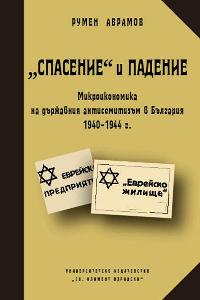
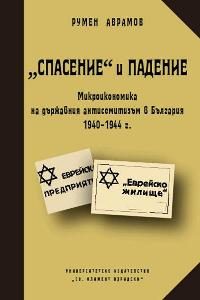
In one of the paragraphs that is dealing with the fate of the Macedonian and Thracian Jews, Glishev is writing that Macedonia was not part of Bulgaria at the time of the deportation and that the Czar made “big efforts” to save the Macedonian and Thracian Jews. Both is simply a fabrication. I would recommend Mr Glishev to read a bit about the historical facts. As a start I could recommend him the excellent book by Rumen Avramov: “Salvation” and fall: Microeconomics of the state antisemitism in Bulgaria 1940-1944, which shows among other things the very strong involvement of the Bulgarian state, its government and its ruler, Czar Boris III in the deportation and killing of the Jews in the annexed territories. That the Bulgarian state and Boris himself bear the responsibility for the extermination of the Jews in Macedonia and Western Thrace is also evident from the documents published recently by Avramov and Nadia Danova from the archives of Alexander Belev, the “Kommissar für Judenfragen” in Bulgaria, the organizer of the activities against the Jews. Mr Glishev could also inform himself by reading the Dimitar Peshev biography by Gabriele Nissim. Or Arno Lustiger’s excellent book Rettungswiderstand, in which the author describes clearly and with plenty of documentary support that the main responsibility for the extermination of the Jews in Macedonia and Western Thrace was with the Bulgarian government and Boris III.

When Mr Glishev even writes that “Boris is more than a Bulgarian Schindler” (headline of his article), I feel really that I am running out of words. To read a headline like this from an intellectual and poet is sickening. His intervention on behalf of an opportunistic ruler who sided with the Nazis because it suited his policy to increase the Bulgarian territory (and let – if possible – others do the dirty job for him), someone who didn’t have the slightest problem to turn the Bulgarian Jews into slaves that were deprived of almost any human rights, someone who ordered his policemen and military to round up the Jews in Macedonia and Western Thrace and send them to Treblinka, is not a worthy cause by any means.

According to the logic applied by Mr Glishev, Joseph Goebbels should be given the title of a Righteous Among the Nations too. It was Goebbels, who ordered the release of about 2,000 Jews in Berlin in 1943, after a group of women demonstrated in the Rosenstrasse in Berlin, after the arrest of their Jewish husbands and fathers. As a result of these unexpected demonstrations, and after a major bombing raid, Goebbels decided not to fuel possible protests and to release these people – for the time being. Does that make Goebbels a “savior of the Jews of Berlin”? The answer is obvious, and I feel ashamed that some people, among them even intellectuals and writers have the chutzpah to make a “savior of the Jews” out of an opportunist and bootlicker of the Nazis, who partnered in their crimes whenever it was favorable for him.

In an emotional, but factually correct response, the writer and survivor Lea Cohen answered to Glishev’s unsupportable article and Simeon’s interview.

Contrary to what Simeon said in the interview, Bulgaria was not an occupied country; Macedonia and Western Thrace were occupied by Bulgarian troops; to say that Boris “was hiding the Jews in labor camps” is so ridiculous and outrageous as to say Stalin was “hiding the opposition in labor camps”; it was not Simeon’s mother, but the Spanish ambassador that issued passports to the Bulgarian Jews; it was not the Nazi administration, but the Bulgarian administration that sent the Jews from Macedonia and Western Thrace to Treblinka; Boris III name was removed by the Jewish National Fund from all commemorative signs after a committee headed by an Israeli High Court judge came to the result that he in no way was responsible for saving the Bulgarian Jews – Simeon is just outright lying in this interview.

It makes me angry to see a person spreading so much obvious revisionist lies as Simeon does; it is sickening to see some intellectual and writer running to his help for his outrageous lies, trying to manipulate the public opinion in Bulgaria in accordance with Simeon’s revisionist agenda.

That the Jews in the pre-1941 Bulgarian territory were saved, is and will always be an honorable act by the part of the Bulgarian population responsible for it and by those people who voiced their resistance to the planned deportation; Boris III doesn’t belong to that group of honorable people, and revisionist campaigns like the one his son, with the support of interested circles, is running now, will hopefully have no success. This is not only a question of the interpretation of historical events; it is also a question of morals and ethics.

It is high time to admit that also Bulgaria had its share of responsibility in the Holocaust, and that the saving of a part of the Jews is just a (convenient) part of the whole story. It is also important to remember who was responsible from the Bulgarian side for this participation in the Holocaust: the Bulgarian government at that time, and the monarch Czar Boris III. That may be painful for some people who still prefer a made-up version of history to the truth – but it is indispensable for the country’s future. Only a Bulgaria that acknowledges its past – and not a revisionist parody of it – will be able to build a future free of the ghosts of antisemitism, racism and fascism.
kniga_roumen_1

Румен Аврамов: „Спасение“ и падение, Университетско издателство „Св.
Климент Охридски“, 2012 (Rumen Avramov: “Salvation” and fall: Microeconomics of the state antisemitism in Bulgaria, 1940-1944), Sofia 2012

Румен Аврамов и Надя Данова: Депортирането на евреите от Вардарска Македония, Беломорска Тракия и Пирот, март 1943 г./ Т. I-II (Rumen Avramov and Nadya Danova, eds.: The deportation of the Jews from Vardar Macedonia, Aegean Thrakia and Pirot, March 1943, 2 vol.), Sofia 2013

Arno Lustiger: Rettungswiderstand. Über die Judenretter in Europa während der NS-Zeit. Wallstein, Göttingen 2011

Gabriele Nissim: The Man who stopped Hitler, I. Borouchoff, 2002

© Thomas Hübner and mytwostotinki.com, 2014-5. Unauthorized use and/or duplication of this material without expressed and written permission from this blog’s author and/or owner is strictly prohibited. Excerpts and links may be used, provided that full and clear credit is given to Thomas Hübner and mytwostotinki.com with appropriate and specific direction to the original content.
Two new projects

As I mentioned already in an earlier blog post, I am working on some book-related projects that absorb right now a considerable part of my free time. Since then things have become more tangible, and I feel this is the right moment to inform my readers a bit more in detail about these projects.

I am now – together with my associate and dear friend Elitsa Osenska – the proud owner of two new small companies that deal with different aspects of the book market. One of them (Hyperion) is a literary agency that is assisting publishers, authors and other agencies to sell book translation rights and other subsidiary rights on foreign markets; the agency aims also to assist authors in their professional development. The other company (Rhizome) is a publishing house that will mainly publish high-quality fiction (and in some cases also non-fiction). Both companies are located in Sofia, Bulgaria.

As for Hyperion, we have already won a few prestigeous partners with which we will work. We will represent selected titles of the publishers I.B.Tauris, Verso Books (both UK), and Wallstein (Germany) in Bulgaria, Macedonia, Albania, Kosovo, and Indonesia. We are also now the exclusive sub-agent of The Raya Agency (Beirut), the most relevant literary agency in the Arabic world, for Bulgaria, Macedonia, Albania and Kosovo. We represent books by authors such as H.G. Adler, Kamal Al Riahi, Hoda Al Qudumi, Mohammad Alwan, Benedict Anderson, Sinan Antoon, Hoda Barakat, Samar Mahfouz Barraj, John Berger, Marcel Beyer, Joseph Breitbach, Judith Butler, Hilal Chouman, Joan Copjec, Hassan Daoud, William Davies, Mike Davis, Jabbour Douaihy, Robert Elsie, Elias Farkouh, Iain Finlayson, Richard Hamilton, Mohammad Eqbal Harb, Wang Hui, Ghada Karmi, Khaled Khalifa, Mostafa Khalifa, Naila Jraissati Khoury, Ruth Klüger, Eka Kurniawan, Ibrahim Nasrallah, Ilan Pappe, Youssef Rakha, Makkawi Said, Amina Shah, Fatima Sharafeddine, Marcus Tanner, Abdullah Thabit, Armin T. Wegner, Samar Yazbek, Slavoj Žižek. We are now in negotiations with a publisher and two authors from Bulgaria to represent them as well. Our client base is expanding.

As for our publishing house Rhizome, we are preparing the publication of our first two titles. We are planning to publish by the end of the year a book with poems by the excellent Bulgarian author Vladislav Hristov in German (you can find a sample translation here). Suhrkamp is granting us the Bulgarian language rights of the novel Wer ist Martha? (Who Is Martha?) by Marjana Gaponenko (you can find a review of this wonderful book here). For 2016 we have four more titles “in the pipeline”. For 2017 we plan with six or seven new titles.

Our mission statement as a publishing house is a quote by the famous publisher Kurt Wolff:

„Man verlegt entweder Bücher, von denen man meint, die Leute sollen sie lesen, oder Bücher, von denen man meint, die Leute wollen sie lesen. Verleger der zweiten Kategorie, das heißt Verleger, die dem Publiumsgeschmack dienerisch nachlaufen, zählen für uns nicht – nicht wahr? ”  –

(“You either publish books of which you think that people should read them, or books of which you think that people want to read them. Publishers of the second category that run in a servile manner after the public’s taste do not count for us – isn’t that so?”) 

It may sound a bit arrogant, but we will definitely be publishers of the first category of this quote.

In October we will visit the Frankfurt Book Fair which will help us to widen and increase our network. We are also developing a website for each of the two operations and will be present at social media.

Of course I will keep on blogging here, but as you can see I am a very busy man these days – I have a regular job and a private life as well, haha. This blog will be free of advertisement also in the future and I will keep my work as a literary agent and micro publisher separated from this blog, but from time to time I might write here about my experiences in these fields as well.  

Translation of the Kurt Wolff quote by Thomas Hübner

© Thomas Hübner and mytwostotinki.com, 2014-5. Unauthorized use and/or duplication of this material without expressed and written permission from this blog’s author and/or owner is strictly prohibited. Excerpts and links may be used, provided that full and clear credit is given to Thomas Hübner and mytwostotinki.com with appropriate and specific direction to the original content.
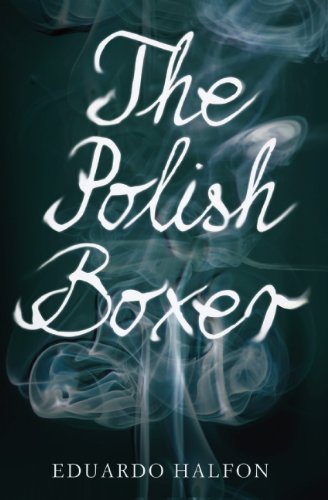
The Polish Boxer

No, the tattooed six-digit number visible on the arm of the narrator’s grandfather is not his phone number as he tells his grandson – it is his inmate number from Auschwitz.

Eduardo Halfon, the narrator/author of The Polish Boxer is a literature professor at a college in Guatemala that seems to be rather frustrated by his job. Year after year he is teaching students that don’t take the slightest interest in literature – but the rare exceptions make up for this disappointment. Juan Kalel, an Indio student is such an exception; he is not only very intelligent and attentive, it turns out that he is also a genuine poet. When he drops out of college all of a sudden, Eduardo wants to find out why…

Later Halfon meets together with his girlfriend a talented classical Serbian/Gypsy pianist at a festival in Antigua; the pianist sends him later strange postcards from all over the world with rather cryptic messages that deal with the origin, fate, and culture of the Gypsy people and especially with their music. Without remarking it first, the narrator gets more and more drawn into the Gypsy music and once the postcards suddenly come to a stop, he travels to Belgrade to find out what happened to Rakic, the pianist who was an outsider in the Serbian and the Gypsy society as well.

And there is the story of Halfon’s grandfather, who survived Auschwitz thanks to the help of a Polish Boxer – that’s what he tells Eduardo, although when a TV crew interviews him about his concentration camp survival, he tells them that he survived exclusively due to his skills as a carpenter. The classical unreliable narrator.

These three stories plus a few smaller ones are interwoven in Eduardo Halfon’s novel. While it starts like a classical campus novel in which a literature professor is talking about different authors and his concept of literature, later visiting an interdisciplinary Mark Twain conference in the United States, the focus shifts completely to questions of identity when he meets the pianist Rakic, who is rejecting his Serbian heritage and wants to become a Gypsy (since he is of mixed origin, he is shunned by both communities). The author/narrator, a Jew that rejects his Jewish heritage (“I have retired from being Jewish”, he says somewhere) is probably attracted to Rakic’s story so much because Rakic, just like him wants to get rid of a part of his heritage in order to become someone else – but that is of course not possible.

The chapter about the Indio poet would make in my opinion a great stand-alone short story. But since Kalel is dropped and never again mentioned during the rest of the book, I was wondering why his story was included in the novel. The same goes even for the story of the Polish Boxer, since the main character in the book (beside the author) is neither the Polish Boxer nor the grandfather, it is the enigmatic pianist. Halfon can write and many pages are really gripping, but as a novel, the book disappointed me a bit. 

My impression of The Polish Boxer is mixed: an interesting author and a text that makes curious to read more by Halfon. As a novel it is for me not very satisfactory. The different parts and story lines fall not always in place, and even the title is a bit odd since we learn next to nothing about The Polish Boxer except the few remarks of the grandfather, a seemingly unreliable storyteller. Maybe we have to wait for Halfon’s next book – I read somewhere that he is working on a follow-up novel to The Polish Boxer – and then maybe some of my questions will be answered, who knows.

A few minor mistakes (like Nejgoš instead of Njegoš) could be easily fixed in  a new edition.

Halfon

Eduardo Halfon: The Polish Boxer, translated by Thomas Bunstead et al., Bellevue Literary Press, New York 2012

© Thomas Hübner and mytwostotinki.com, 2014-5. Unauthorized use and/or duplication of this material without expressed and written permission from this blog’s author and/or owner is strictly prohibited. Excerpts and links may be used, provided that full and clear credit is given to Thomas Hübner and mytwostotinki.com with appropriate and specific direction to the original content.