A few days ago, I had the opportunity to pay a visit to the newly opened National Art Gallery “Square 500” in Sofia which shows right now a huge exhibition curated by two former museum directors. The exhibition gives an overview over the Bulgarian Museum collections of the National Gallery (for Bulgarian art) and of the National Museum for Foreign Art.
The museum, ridiculously dubbed “the Bulgarian Louvre” by a part of the media and political “elite” of the country was already before its opening subject to many headlines in the media, namely because of the delayed opening and – not completely untypical for Bulgaria – because of alleged irregularities in the procurement and tender process of the reconstruction of the building that houses the museum. A rather big amount of tax payers’ money went into the coffers of the shady construction mogul who – allegedly – won the manipulated tender because he – allegedly – is a friend of the Minister of Culture.
If these rumors are really true I cannot say – but I wouldn’t be surprised. As an art lover I am of course more concerned about the result and I want to give my informed opinion about it here.
The edifice of the building which houses the museum is a late 19th century design in Viennese style, adapted after WWII to the needs of a museum and again changed now by several modern attachments, all in all a worthy location for such a museum.
Most of the artworks I saw in the exhibition were already known to me – except for a few that are borrowed from other collections for this exhibition – it is basically a combination of the works that were housed before in the two separate museums mentioned above. So regarding what I saw I can say: a good overview about Bulgarian art since the 1830s until 1989 (I didn’t see any artwork produced after the collapse of communism – if this reflects a lack of budget for new acquisitions in the last 25 years or a political statement that tells us that there is no good art produced in Bulgaria in the last decades according to the exhibition curators I don’t know), and a – in my opinion not very favorable mix with foreign artworks that are hung frequently together with Bulgarian artists of the same period.
While the Bulgarian art collection is in a way representative (except for the most recent period), the presented examples of foreign art are in most cases mediocre. It is also not visible or explained why the artworks are hung in that specific neighborhood (which frequently has no relation/influence with the respective Bulgarian artist).
Another thing that struck me was the lighting: in some rooms it was really awful and much too intense. Artworks are sensitive items and the light must be carefully balanced between the need to protect it against possible damage and the wish of the visitors to see and study it in the best possible way. The lighting as it is now doesn’t do justice to either of these requirements.
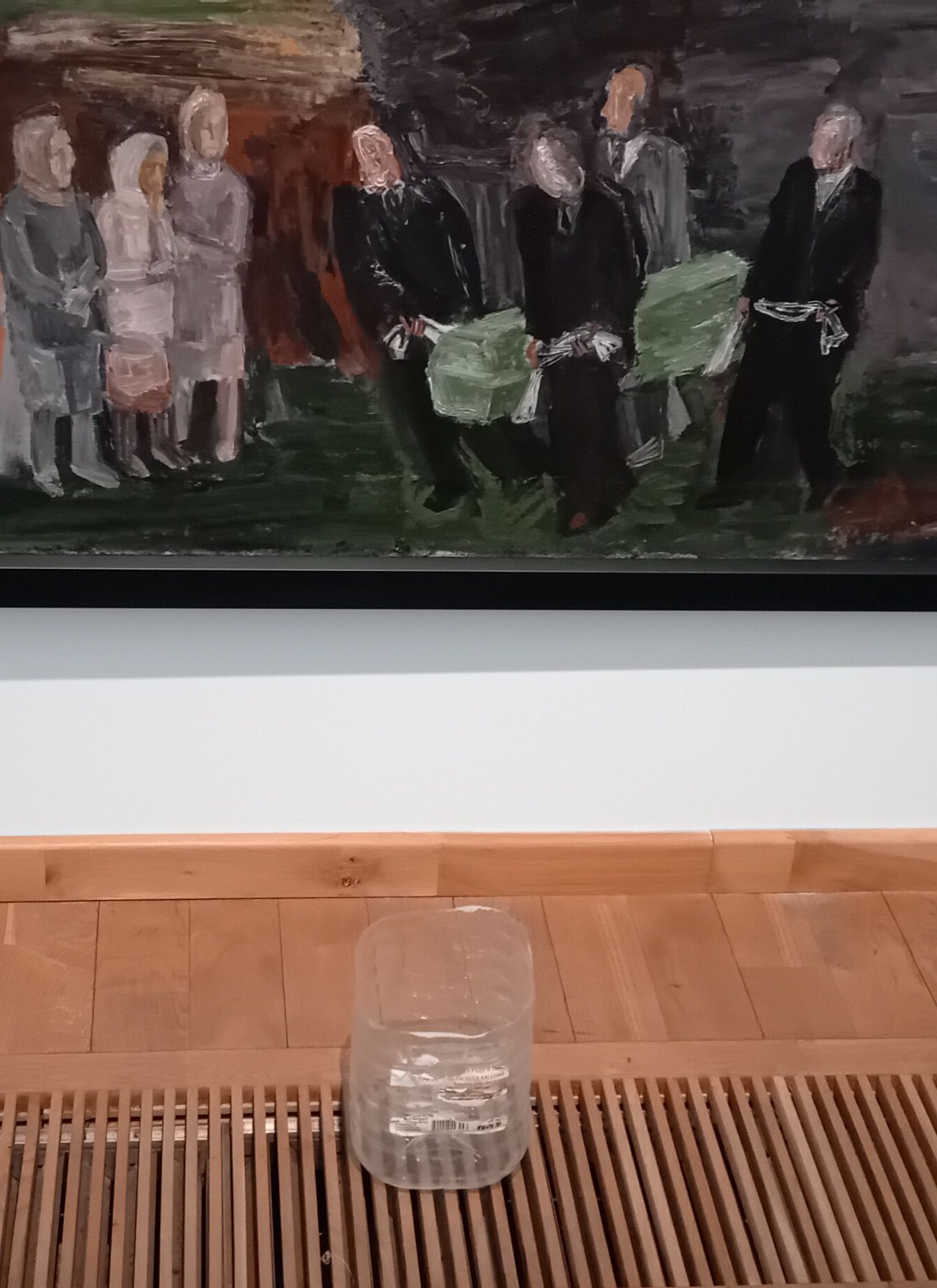
I had also the impression that the plates which describe the artwork have been done in the very last moment; there are frequently four or five of such very basic paper clippings stuck to the wall in one place and the visitor has to guess which plate belongs to which artwork. It looks cheap and inadequate.
Alas, the most surprising thing for me was something else: when you prepare such an exhibition which shows a considerable part of the visual art heritage of the country and which many people would like to see, you should make sure that people really see it when they visit the building. My guess is that a lot of the visitors will not have seen many of the artworks because the orientation in the exhibition is very very difficult.
The exhibition covers several floors and the whole building is a little bit like a labyrinth – there are only a few (very small) arrows that guide the visitors, room numbers are missing frequently, as a visitor you stumble from 19th century Bulgarian art to Christian Indian art from Goa, to Japanese woodcuts, and you have never an idea what comes next or what you have probably missed when you have once chosen a direction that was not the one intended by the exhibition makers (but which you can only guess). Friends who visited the exhibition told me for example that they almost didn’t find the room with the artwork of Vladimir Dimitrov-Maistora, one of the most famous Bulgarian painters, and only because of their persistence they found the hidden room where his paintings from the collection are displayed. And I am sure I saw – probably! – all works only because I am a very persistent visitor. Just when I prepared to leave I realized I had missed a complete flight of rooms with four more exhibition rooms!
That the museum shop where you can buy the exhibition catalogue and many other catalogues and books is hidden in a corner at the very edge of the outermost corner of the building and not in the entrance area where it belongs adds to the picture. The exhibition makers could easily print a small map on the backside of the ticket for orientation – this small thing would add indeed a lot of value for the visitors. But no, you have to pay 10 Leva (5 Leva for students, pensioners, unemployed), a proud amount considering the average salaries of the Bulgarians – and then you are on your own in the building.
A nuisance: while most living Bulgarian artists are not at all represented in the exhibition, the Minister of Culture, Mr. Razhidov, a sculptor of modest talent has two of his own artworks in the show. It reminds me of the fact that when I visited the last time the small gallery in the Ministry of Culture it displayed an exhibition with works of – the Minister. Remember Alek Popov’s description of the visiting sculptor in his Mission London? I am not sure but my strong guess is that it is based on a real person most Bulgarians know…
That even if Mr. Razhidov would be a second Giacometti it would not be appropriate to include his own artworks in any exhibitions sponsored by the Ministry he leads seems to have never crossed his mind. It is called “Conflict of Interest” and borders the territory of outright corruption. He uses his position and taxpayers’ money to increase his popularity and potential market value as an artist. And of course he gets away with it. Also a part of the “Culture” he is promoting.
Conclusion: if you are in Sofia and are interested in Bulgarian art, this exhibition is a must. The collection itself is the by far best in that field in Bulgaria or anywhere else, the result of decades of diligent collecting. (When Lyudmila Zhivkova, the daughter of the dictator Todor Zhivkov was de facto in charge of the collection, it increased considerably – mainly by acquiring fake artworks she was tricked into buying by some clever crooks.) That this extraordinary show is so poorly prepared and presented is a pity and shows again the lack of professionalism that is so typical for many of those people who are politically responsible for Bulgarian Culture.
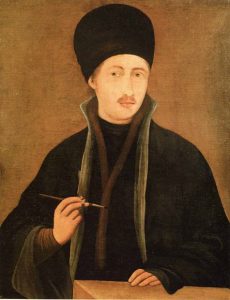
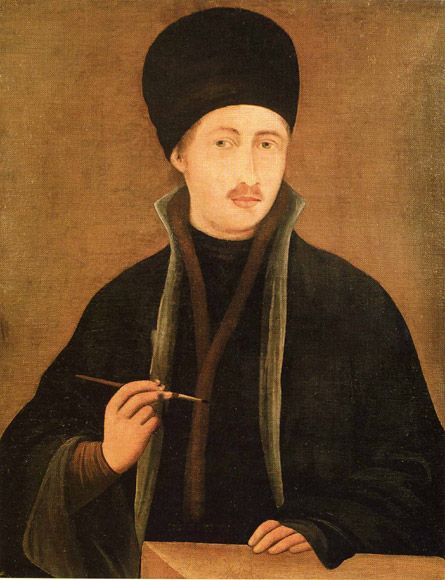
Zahari Zograf, Self-portrait, National Art Gallery Sofia, ca. 1840
The exhibition can be visited at the building of the National Gallery of Foreign Art, Sofia, 19 February Str. No.1, near the Cathedral Alexander Nevski
© Thomas Hübner and mytwostotinki.com, 2014-5. Unauthorized use and/or
duplication of this material without expressed and written permission from this blog’s author and/or owner is strictly prohibited. Excerpts and links may be used, provided that full and clear credit is given to Thomas Hübner and mytwostotinki.com with appropriate and specific direction to the original content.


 Facebook
 RSS
RSS Twitter