Category Archives: Books

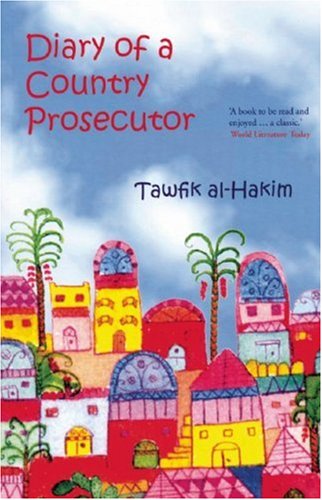
Diary of a Country Prosecutor

Diary of a Country Prosecutor (also published under the title Maze of Justice) is a partly autobiographical short novel by Tawfik al-Hakim; it was first published in 1937. Al-Hakim based the book on his personal experiences as a Prosecutor.

The narrator is a young Public Prosecutor from Cairo that works in a small town in the Nile delta. He keeps a diary in which he describes his life and thoughts in this rather dull, boring place, surrounded by usually illiterate fellahin and a few a bit more wealthy traders and village dignitaries and state representatives, like the umdah, the local mayor, and the ma’mur, the officer in charge for the public order in the district. Some judges, ushers, legal assistants, and ghafirs (sentries) complete the cast of characters of this novel – almost. Because there are also two somehow elusive characters in the book: the beautiful peasant girl Rim and the mysterious and eccentric Sheikh Asfour who usually knows more about what’s going on than all representatives of the state together but who prefers usually to keep his knowledge for himself.

The book starts with a crime. Someone shot at Kamar al-Dawla Alwan, but there is no visible motif nor is there a suspect. The Public Prosecutor describes the investigation and it is soon obvious that the reader cannot expect a classical whodunit. In fact, the search for the perpetrator is not so much what drives the story, but the absurd way how the law is exercised.

It is revealing what the narrator says about the two judges with whom he is working. One is terribly slow and usually charges all defendants as guilty, the other is terribly fast (because he wants to catch the 11 a.m. train back to Cairo in time every day) and charges also all defendants as guilty. The law is based on the Code Napoleon, a foreign import completely alien to the fellahin who don’t understand anything about it.

“The usher went on calling out names. The type of charge had begun to vary and we were entering a different world, for the judge was now saying to the accused, ‘You are charged with having washed your clothes in the canal!’ – ‘Your honor – may God exalt your station – are you going to fine me just because I washed my clothes?’ – ‘It’s for washing them in the canal.’ – ‘Well, where else could I wash them?’ – The judge hesitated, deep in thought, and could give no answer. He knew very well that these poor wretches had no wash basins in their village, filled with fresh flowing water from the tap. They were left to live like cattle all their lives and were yet required to submit to a modern legal system imported from abroad. – The judge turned to me and said, ‘The Legal Officer! Opinion, please.’ – ‘The state is not concerned to inquire where this man should wash his clothes. Its only interest is the application of the law.’ – The judge turned his glance away from me, lowered his head, shook it and then spoke swiftly like a man rolling a weight off his shoulders: ‘Fined twenty piastres. Next case.’”

Even more outrageous is a case in which the ‘speedy’ judge is in charge:

“A decrepit bent-backed man with a white beard came forward, hobbling on a stick. The judge pounced on him with a question: ‘You expended reserved wheat?’ – ‘it was my wheat, your honor, and I ate it with my family.’ – ‘Pleads guilty. One month with hard labour!’ – ‘A month! Do you hear, Muslims! My own wheat, my own crop, my own property…!’ – The policeman dragged him away. As he went, he stared at those in court with goggling eyes as though he could not believe that he had heard the sentence aright. Surely his ears must have deceived him and the spectators must have heard the truth. For he had stolen no man’s wheat. It is true that the usher had visited him and ‘reserved’ his wheat, appointing him as a trustee until such time as he paid the government tax. But the pangs of hunger had seized him violently – him and his family; so he had eaten his own wheat. But who could possibly regard him as a thief on that account and punish him for stealing? It was impossible for this old fellow to understand a law which called him a thief for eating his own harvest, sown by his own hands. These were crimes invented by the law to protect the money of the government or of private creditors; but they were not natural crimes in the eyes of the poor farmer, whose simple instinct could not find any sin in them. He knows well enough that assault is a crime, and murder is a crime, and theft is a crime; for all these involve an obvious aggression against somebody else and reveal clear and evident moral turpitude. But ‘expending reserved property’ – and this was something whose principle and definition he could not grasp. For him it was purely a formal, legalistic crime, whose impact he must go on enduring without believing in it at all.”

Tawfik al-Hakim’s book is first of all a powerful attack on the state of the legal system in his home country, which didn’t even try to establish justice – but ‘the law’. It shows the situation in its full absurdity and frequently with a savage humor that borders the macabre: there is a scene where the town barber, under the supervision of the Public Prosecutor and a pathologist, is dragging corpse after corpse out of first one grave and then another in a muddled attempt to locate the body of a woman who has been murdered. ‘The comedy is grim, but comedy it is’, as Booker Prize Winner P.H. Newby says in his foreword to the edition I read. That someone is arrested for the murder that is clearly innocent, is just adding to the picture.

Al-Hakim was a liberal; he studied law in France in the 1920s and started a career as a Public Prosecutor in Egypt but got quickly very disappointed and pessimistic. He is today considered a classic of modern Arabic literature. He was the Arab world’s leading dramatist, as well as a major writer of novels and short stories. Diary of a Country Prosecutor (elegantly translated by the young Abba Eban, later to become a famous Israeli diplomat and politician) is a brilliant book in the tradition of Gogol and Kafka; and I am afraid that it hasn’t lost its relevance even today.
al-Hakim


Tawfik al-Hakim: Diary of a Country Prosecutor, transl. by Abba Eban, Saqi Books, London 2005

© Thomas Hübner and mytwostotinki.com, 2014-5. Unauthorized use and/or duplication of this material without expressed and written permission from this blog’s author and/or owner is strictly prohibited. Excerpts and links may be used, provided that full and clear credit is given to Thomas Hübner and mytwostotinki.com with appropriate and specific direction to the original content.
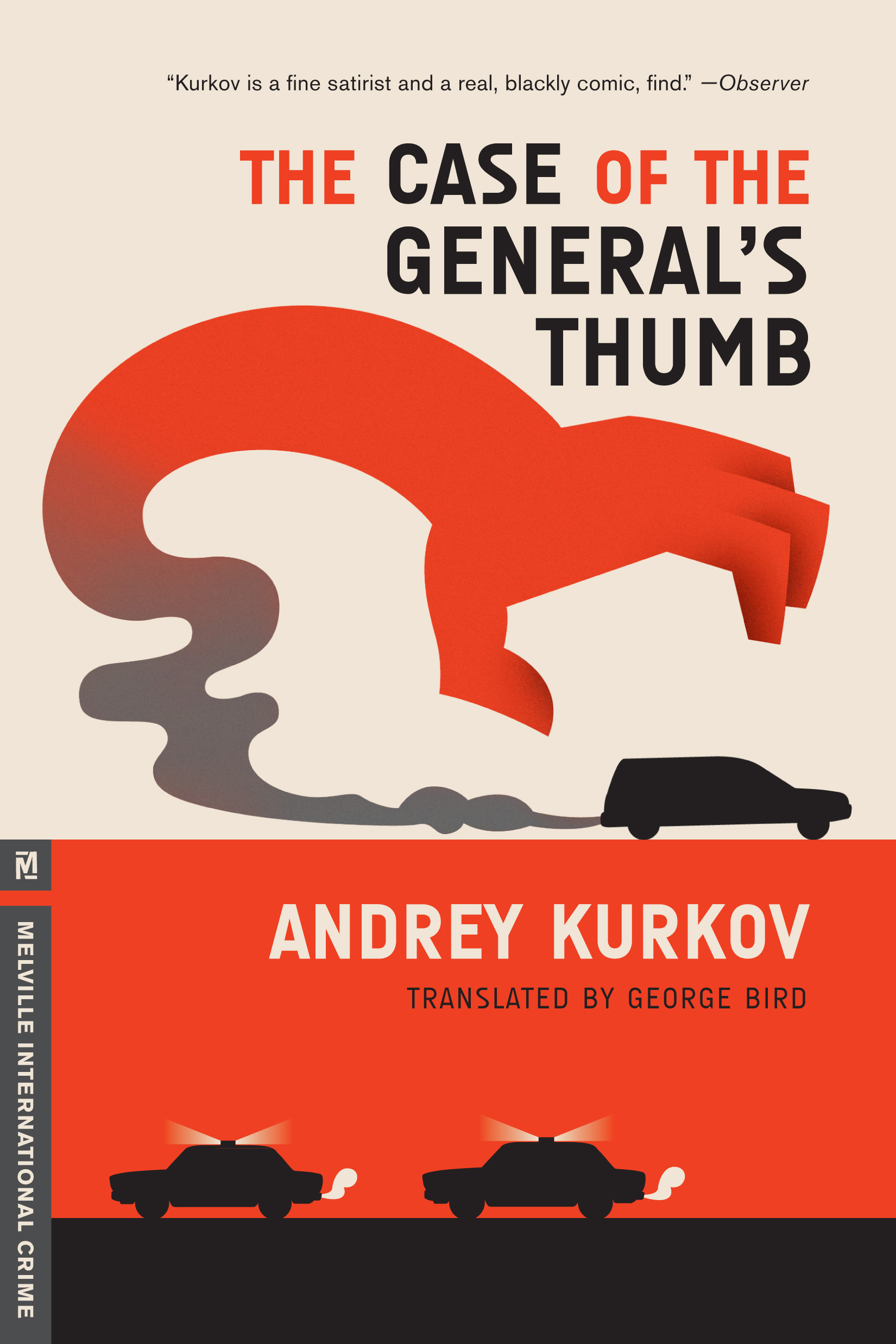
The Case of the General’s Thumb

“Kiev, night of 20th-21st May, 1997
Sergeant Voronko of the State Vehicle Inspectorate loved his snug little glass booth on Independence Square in the heart of Kiev, and never more than in the small hours, when Khreshchatik Street was free of traffic, and nipping out for a smoke was to experience a vibrant, blanketing silence very different from the fragile night stillness of his home village.”

But on that particular late evening, things turn out to be very different from usual for Sergeant Voronko. First he gets a call to go urgently to another post due to an emergency there, and when he has almost arrived there with his old Zhiguli car, he gets another call to go back again to his glass booth at Khreshchatik Street because his presence at the other post is no longer needed. When he is arriving back at his usual workplace, a corpse is hanging attached to an advertising balloon. The deceased is not only a distinguished general but also a presidential advisor and the circumstances hint at a crime with a political background. And, strangely enough, one of the general’s thumbs is missing. (At the end of the book we will know why.)

It is clear from the very beginning of the book that this is not an ordinary crime. The general’s connections, his links to the Ukrainian and also Russian Intelligence networks are uncovered step by step by the young investigator lieutenant Viktor Slutsky. Slutsky, and not one of his more experienced colleagues is dealing with the case – maybe someone thinks the rookie Slutsky will get (conveniently for certain people) lost in this complicated, entangled and twisted network of relations between all the players involved; or maybe he can be easily directed by someone who is pulling the strings behind the scenes? Both is very probable, and indeed Slutsky gets permanently calls on his mobile phone by a mysterious voice that is always strangely very well informed and tells the lieutenant what to do next. But when Slutsky meets Refat, a mysterious Tartar who works for the Russian Intelligence, he starts to be for the first time keeping a few secrets from the voice on the phone…

The other main line of the story follows Nik, an ethnic Russian that was recently expelled from Tajikistan with his family. Nik, with a background in police/intelligence work and a sound knowledge of German, is trying to get a job in Ukraine where he was born and where he intends to relocate his family too. Luck seems to be on his side when he is offered a job where exactly his abilities and experiences are needed. But he soon realizes, just like lieutenant Slutsky that he is mainly a pawn in a political chess game. He and Sakhno, the other agent he is joining to do some unclear business – including tossing fish over a garden gate, or carting a parrot around – in not exactly exciting German cities like Koblenz, Euskirchen or Trier, are always told what to do without any explanation – and they are also not supposed to ask too many questions.

It would spoil the fun if I would retell the story here in detail, so I better stop here with the synopsis.

You can read Kurkov’s novel like you would read any fast-paced crime/espionage genre novel. It is a real page-turner and I read it in one evening. There is a lot of action, good dialogues, very credible characters and an interesting story. All ingredients you need to enjoy a book of this genre.

But there is also a second, less obvious layer of the story. Kurkov is a master of intertextuality. The book is full of allusions to other works and writers of the genre but also to Russian literature. Ian Fleming, Eric Ambler, John Le Carre, but also Michail Bulgakov, Ilf & Petrov, Yevgeniy Zamyatin, to name just the few references which I have discovered – and I am sure there are much more in the book. If you are well-read, you will enjoy this book therefore even more.

Additionally, there is a dry humor in many scenes, for example in an early chapter when Slutsky goes home after work to his family:

“Now, up to the eigth floor, and supper. The lift had yet to be installed, a fact for which the tenants, except perhaps the elderly couple on the twelfth floor, were physically the fitter.”

And, although on the surface this is not the main topic of the book, the strained relations between Russia and Ukraine cast already their long shadows over the story:

“RUSSIA AND UKRAINE – NEITHER PEACE NOR WAR? Ran the eye-catching Izvestiya headline. It was a question, it appeared, of determining the frontier, or, more exactly, of the two sides being able to agree where it ran.”

In this novel, things are rarely as they seem to be at a first glance. Even an innocent turtle keeps a dark secret.

Kurkov is a compassionate author. Viktor Slutsky and Nik Tsensky, the two main characters in this book share the same dream: to have a normal life in a decent flat with their families. And when Kurkov is granting almost all surviving characters in the story a happy end, it is like he is winking at us readers. They might be pawns in a political chess game, but they keep their dignity, and as a reward deserve a fairy tale-like ending.

Andrey Kurkov was a new discovery for me: it was the first book by him I read, but it will be definitely not the last.

Kurkov

Andrey Kurkov: The Case of the General’s Thumb, transl. by George Bird, Melville House, New York 2012

 
© Thomas Hübner and mytwostotinki.com, 2014-5. Unauthorized use and/or 
duplication of this material without expressed and written permission from this blog’s author and/or owner is strictly prohibited. Excerpts and links may be used, provided that full and clear credit is given to Thomas Hübner and mytwostotinki.com with appropriate and specific direction to the original content. 
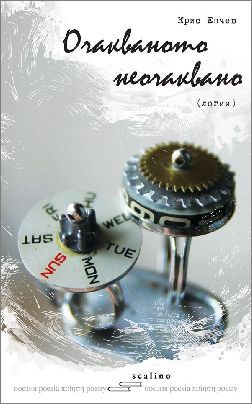
Drei Gedichte von Kris Enchev

Enchev


                                                            На Ели
очакваното неочаквано
в тесен коридор да просветне
нагоре по криви стълби
покрай прозорец с гълъби
така незабележимо от случайни слизащи
устремени към други нагоре
или други пропасти
 
                                                          Für Eli
das erwartete unerwartete
im dunkeln flur leuchtend
über krumme stufen hinaufsteigend
vorbei am fenster mit den tauben
so ununterscheidbar von zufällig herabsteigenden
strebend zu den anderen oben
oder zu anderen abgründen

—————————————————————————————————————————-

                                        На Поли
убивам времето
за да не ме убие то
дъждът ми е свидетел
 
                                           Für Poli
ich schlage die zeit tot
damit sie mich nicht totschlägt
der regen ist mein zeuge

—————————————————————————————————————————- 

събирам
в тайна таванска стаичка
картини
на които
те няма
 
картини
които нямат лице
нито очертания
нито сенки
 
очаквам
 
влагата
праха
паяжините
 
опитай
да очертаеш
отсъствие

ich sammle
im geheimen schrank auf dem dachboden
bilder
auf denen
du nicht bist
 
bilder
die weder gesicht
noch linien
noch schatten haben
 
ich warte
 
feuchtigkeit
staub
spinnweben
 
versuche
die abwesenheit
zu zeichnen

aus: Kris Enchev: Ochakvanoto neochakvano (Очакваното неочаквано), Scalino, Sofia 2014
Aus dem Bulgarischen von Thomas Hübner


© Kris Enchev and Scalino OOD, 2014.
© Thomas Hübner and mytwostotinki.com, 2014-5. Unauthorized use and/or 
duplication of this material without expressed and written permission from this blog’s author and/or owner is strictly prohibited. Excerpts and links may be used, provided that full and clear credit is given to Thomas Hübner and mytwostotinki.com with appropriate and specific direction to the original content. 
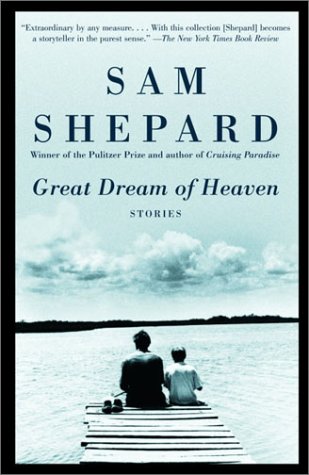
Great Dream of Heaven

E.V. is the Remedy Man in the short story with this title that opens the collection Great Dream of Heaven. He is a kind of horse whisperer who is called by Mason, a farmer somewhere in the West of the U.S. when one of his particular wild horses cannot be tamed. E.V., a rather unassuming man, knows his trade and we readers witness how he is resolving the problem while chatting casually with Mason and inviting Mason’s son, who is also the narrator of the story to assist him. In the end we have learned a few things about horses and about life on an isolated farm in the West. So, what – you will maybe feel inclined to say.

But there is more to this story than just this. While usually the father, a well-meaning, but dominating figure is the one who sets the rules for the son (women are absent in this story), it is this one time E.V. who tells the son in a friendly, casual way what to do next in order to help him – while the father is a quite passive bystander, strangely skeptic about E.V.’s remedy man’s work that proves to be successful. For the son, this is a new experience: to see his father passive and another person being in charge. In the end, the narrator watches from a tree the evening and night sky:

“The whole ranch turned below me. I arched my head back and my mouth went open to the black sky. The giant splash of the Milky Way must have caused the high shrill squealing to burst out of me, just like someone had pulled a cord straight down my spine. My skin was laughing. I heard my dad come out on the screen porch and yell my name but I didn’t answer. I just hung there spinning in silence. I knew right then where I’d come from and how far I’d be going away.”

The heroes of these stories are frequently on the move, like the man who left his wife to live with his new love (in Coalinga ½ Way). He stops in some godforsaken place called Coalinga, halfway between the place he lived and the place he intends to live. It’s revealing that it is the perfect equidistance between the two important women in his life. When he calls his wife from there, she tries to convince him to come back, or at least meet somewhere to discuss what is wrong with their relationship in person. But even the fact that he is not only leaving his wife for good, but also his son who is still a little child, cannot make him change his mind.

“What about Spence? Are you going to tell him you’re not coming back?” – “Not right now.” – “When?” she says. – “I don’t know.” – “What am I supposed to tell him then?” – “Tell him I’ll call him.” – “When?” – “I’m not sure.” – Silence again. A high piercing shriek of a circling hawk. A Jeep roars past. A Jeep with no windows or doors, just the wind ripping across the wide-eyed face of the driver. – “Are you still there?”, he says to the phone. – “Where am I supposed to go?” she says. – “I don’t know.”

After he hangs up, he is calling his lover with whom he intends to live in the future. But this woman tells him not to come. It turns out she is moving to Indiana with her husband and considered the relationship with the narrator as a fling without much importance. The end mirrors the conversation he had just before with his wife, but with reversed roles:

“You’re flying out to Indiana to meet David?” – “Yes. I was just going out the door when the phone rang.” He hears the loud splash of the fat man hitting the pool outside. Then nothing. A distant siren. “Hello,” she says. “Are you still there?” – “Where am I supposed to go?” he says.

These two stories contain a lot of elements that are typical for this book. A man between two women, or a woman between two men. The physical distance, but also the rift between people in general, and the gulf that separates people from their true selves. The setting is usually in a small town, or somewhere on the road (like in Blinking Eye, where a young woman drives thousands of kilometers with the urn that contains the ashes of her mother). Men have problems with women and with themselves, frequently because they cannot find the right words to express their feelings or leave the important things unsaid. Paranoia is frequently just around the corner (The Company’s Interest), and when firearms come into the picture, things threaten to get out of control very fast (An Unfair Question).

There is also a dry humor in many stories (like in It Wasn’t Proust, or in The Door to Women). The dialogues (Betty’s Cats consists exclusively of dialogues) conceal the experienced playwright and film scenarist and seem to be written with an effortless ease. These are real people talking, and their loneliness is always present, just like in the paintings of Edward Hopper, of which they reminded me sometimes. Or as in the movie Paris, Texas by Wim Wenders. And that’s no coincidence, because Shepard wrote the script of that film. (He is also a remarkable actor – The Right Stuff, Fool for Love, Homo Faber, Don’t Come Knocking come to mind.)

I enjoyed these wonderful stories very much. My favorite piece is the title story Great Dream of Heaven. But they are all very good, without exception.

Great Dream of Heaven

Sam Shepard: Great Dream of Heaven, Vintage, London 2003

© Thomas Hübner and mytwostotinki.com, 2014-5. Unauthorized use and/or 
duplication of this material without expressed and written permission from this blog’s author and/or owner is strictly prohibited. Excerpts and links may be used, provided that full and clear credit is given to Thomas Hübner and mytwostotinki.com with appropriate and specific direction to the original content.
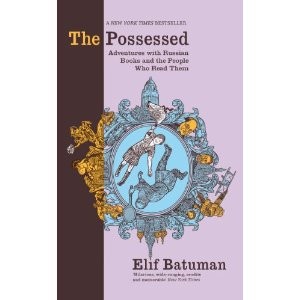
Isaac Babel meets King Kong

If you love Russian literature as much as I do, then Elif Batuman’s book The Possessed is a treat for you. The title refers to Dostoevsky’s novel (also published under the title The Demons) but also to the possessive love of many readers and scholars to the Russian literature in general. And of course to the Russian writers and many of their literary heroes as well.

Elif Batuman is of Turkish origin but grew up in an obviously wealthy upper middle class family in the U.S.. She fell in love with literature and more specifically with Russian literature at an early age. And when she took violin lessons later, her teacher was an enigmatic and somehow secretive Russian – this first Russian she met in real life left a mark on her. When she decided to study linguistics (in the vague hope to become a novelist later), she took up Russian lessons as well. And while linguistics proved to be a real disappointment, Russian language was not, although it took her a long time to learn it well.

When I started The Possessed, I had the expectation to read a book about Russian writers and literature. But it is first of all an autobiographical book by Elif Batuman on her intellectual coming-of-age. That was unexpected – I came across this book by chance in an antiquarian bookstore in Sofia, and since the good hard cover cost only about 5 Euro, I thought I give it a try. Despite my slight momentary disappointment (I had simply wrong expectations), I enjoyed this book very much because it is overall so well-written, funny, interesting, fresh. And it is also a travelogue, kind of.

Batuman describes her time in Stanford and her participation in some international conferences with a lot of (self-)irony and humor. How two well-known Babel scholars “give each other the finger” in a parking lot over a dispute regarding the last free parking space is hilarious. The Babel family (widow and two daughters of the great Isaac Babel) prove to be not easy to handle when they participate in an international conference to Babel’s honor. And also the Tolstoy conference in Jasnaya Polyana turns almost into a disaster because Aeroflot loses her luggage and she has to spend a week in her flip-flops, T-shirt and jeans – not because she is a “Tolstoyan” who prefers the most simple outfit, as most participants seem to assume. Also how she successfully collects travel grants on rather dubious scientific projects, or how the famous New Yorker magazine sends her to Sankt Petersburg without willing to pay her travel expenses, but expecting that she spends a night in the Ice Palace – a real palace made of ice, built according to an old design – these and other stories make for a very entertaining read.

On a more serious note, Batuman provides interesting background information on the writers and works she is covering: mainly Isaac Babel, Tolstoy, Dostoevsky, and Pushkin. I didn’t know Ivan Lazhechnikov before, but her extremely interesting chapter on The Ice House, his book published in 1835 makes me curious to read this work (Batuman makes excessive use of her New Yorker reportage in that chapter).

Another part of the book that I found extremely interesting, was the description of her time in Samarkand, Uzbekistan. While she studied Uzbek language and literature there, she gives very interesting insights into the history and everyday life of people in this now independent country with an ancient literature of high level (especially the works of Mir Ali Nevai, sometimes also referred to as Alisher Navoi).

As I mentioned, this is also an autobiographical work. The author is also the main character, and it describes her changing private life as well. Boyfriends come and go, also interests shift somehow, but the love for literature and the wish to write are the interests which give the authors’ intellectual journey such a strength and continuity.

I enjoyed this book very much. It could have been almost a masterpiece. I say almost, because there are a few things that irritated me a bit and that could have been easily avoided.

Batuman mentions somewhere the fact that Tolstoy introduces in Anna Karenina many characters without a name, or he is using the same name (such as Andrey) several times. That can be a bit confusing when you don’t read Anna Karenina very focused. As if to make an allusion to Tolstoy, she is introducing a certain Matej, a co-student and friend from Croatia in an early chapter. In a much later chapter, a Matej, co-student from Croatia is introduced to the reader again, this time he is the boyfriend of the author. I suppose this is the same person, but then why to introduce him twice? The second time it was very confusing because unless it is an oversight by the author (and the editor), it doesn’t make sense to introduce him again. (I suppose that the two chapters were published before the book edition separately in some journal, and later it was forgotten to remove the double introduction of this person) Or did I miss something completely? I am still confused, and that distracted me a bit from the beautiful prose Batuman writes.

As for her literary likes: they are excellent, and I share most of them. Isaac Babel is one of my biggest heroes in the literary world. And as everyone, she has her idiosyncrasies, which is fine. Still, I would have liked to understand what exactly is so boring about Orhan Pamuk. She doesn’t explain it.

Abdulla Qodiry, the author of Past Days, the most important Uzbek novel of the 20th century might be a great author, world class – but when she writes that he is writing on a thousand times higher level than Cechov, I simply have to believe it as a reader because she doesn’t explain what’s so terrible about Cechov’s writing, or so great about Qodiry’s abilities as an author. (I love Cechov very much and simply cannot believe her.)

The same goes for her rejection of any literature from the “periphery” – come on, you just told us how great Abdulla Qodiry is – and doesn’t he come exactly from the periphery: Uzbekistan?. Or her strong dislike of Creative Writing courses. What exactly is so terrible about them? I didn’t get it – beside the fact that the weather was better in California than in New England where the course she fled from was to take place.

My point here is the following: these opinions – which I don’t share – are all fine, but when the author is not explaining me (or at least not in a way that a reader would consider somehow enlightening or satisfactory) WHY she has these opinions, I get the impression that these are just resentments. Probably it’s more, but it is a pity she didn’t put more effort in explaining her strong opinions on (some) literature. 

Another aspect of the book that I found a bit difficult was the way, scholars or experts that teach outside Stanford are described: the Babel scholar that teaches in Tashkent and makes his own research in Odessa and Moscow is considered a moron: the whole truth is in the American archives, and who wastes his time to interview people who knew Babel or find documents in former Soviet archives is simply a poor idiot. The same goes for the Babel family, three monsters, driven by paranoia and maliciousness. (By the way, Babel was shot on the 27 January 1940, not on the 26th. Who is so strict in his judgement of others should have his facts correct.)

And I could have also done without the anecdote about the poor old Tolstoy scholar, his “accident”, and the resulting bad smelling underwear – Batuman doesn’t give his name, but I am sure for insiders he is easy to identify. Why to embarrass a person by dwelling on his incontinence, a medical condition, not a character deficit? That put me a bit off.

I see my complaints about the book are rather longish. But don’t be deceived: this is despite my ranting in the last paragraphs a book I enjoyed, partly travelogue, partly autobiography, partly literature study. It’s the first book of this author, and I will gladly read what she publishes in the future. It’s just the fact that with a bit of editing, this would have been really a masterpiece. As it is now, it is still a good book.

And Babel and King Kong? There is an almost uncanny connection between the great writer from Odessa and the famous 1933 movie. I am not going to spoil the fun of future readers, so if you want to know about it: read this book.


the-possessed


Elif Batuman: The Possessed, Granta Books, London 2011


© Thomas Hübner and mytwostotinki.com, 2014-5. Unauthorized use and/or 
duplication of this material without expressed and written permission from this blog’s author and/or owner is strictly prohibited. Excerpts and links may be used, provided that full and clear credit is given to Thomas Hübner and mytwostotinki.com with appropriate and specific direction to the original content.
Ein Gedicht von Neli Dobrinova

neli

упражнения за ляв бял дроб
 
бащите идват, слушат новините, гледат спорта
и си тръгват
преди прогнозата за времето
реша още влажните коси на дъщеря си
почукай на дъжда
и ще ти отвори вятърът, с когото винаги сме доверчиви
като долната и горна устни
 
зад костения порцелан на зъбите
езикът чака да бъде подарен –
прегънат на фуния, през която да издишваш воя
на стадо единаци,
или да го превърнеш в звук от върбова пищялка –
прабабата на флейтитe
 
току-що събудена муха изпъква
между стъклото
и книгата уникат
вълшебства на инстинкта


übungen für den linken lungenflügel

die väter kommen, hören die nachrichten, schauen sport
und gehen
vor der wettervorhersage
ich bürste das noch nasse haar der tochter
der regen klopft
und ich werde dir öffnen wind, der uns immer vertraut war
wie die unter- und oberlippe

hinterm porzellan der zähne
wartet die zunge darauf, sich zu zeigen –
zum trichter gefaltet durch den man ausatmet heulen
der einsamen herde,
oder umgeschaltet auf den ton der weidenpfeife –
die urgroßmutter der flöten

die gerade erwachte fliege steht
zwischen dem glas
und dem einzigartigen buch
magie des instinkts


aus:
Neli Dobrinova: Malki mazhki igri (Нели Добринова: Малки мъжки игри), Pergament Press, Sofia 2014
Aus dem Bulgarischen von Thomas Hübner


© Neli Dobrinova and Издателство Пергамент Прес, 2014.
© Thomas Hübner and mytwostotinki.com, 2014-5. Unauthorized use and/or 
duplication of this material without expressed and written permission from this blog’s author and/or owner is strictly prohibited. Excerpts and links may be used, provided that full and clear credit is given to Thomas Hübner and mytwostotinki.com with appropriate and specific direction to the original content. 
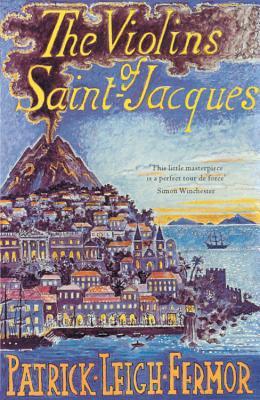
The Violins of Saint-Jacques – the fantasy of an Orientalist

Patrick Leigh Fermor was one of the greatest – if not the greatest – travel writers of the 20th century. The Violins of Saint-Jacques, the book I am reviewing here, is his only novel.

The narrator of the book spends part of his holiday on an Aegean island. He gets acquainted with Berthe, an elderly French lady who lives permanently on the island and who is a very respected figure there.

While dining at her home, the narrator gets interested in one of Berthe’s paintings, a landscape of the Caribbean island of Saint-Jacques. Since the narrator visited this region not long ago, an interesting conversation starts during which Berthe begins to tell the story of her life that is closely connected to Saint-Jacques. She has lived during the most happy and exciting years of her life in this tropical paradise.

Having lost her parents in France at the age of twenty, young Berthe has practically nothing except her good education. An invitation from a relative in Saint-Jacques to work as a governess for his children is accepted by the penniless young woman immediately. The reception by her cousin, Count Serindan, and his family is warm and friendly and the children, just a few years younger as Berthe get soon very attached to the new arrival.

Count Serindan is the richest landowner of Saint-Jacques and also its mayor. Although in his political opinions a monarchist and reactionary, the Count is a charming and warm person who governs his estate (like his family) as a well-meaning father; his black workers – some are actually not so dark as a result of generations of extramarital activities of the Serindans – are treated well and are genuinly fond of the Count; he is also adored by his children and Berthe. (The mother is a somewhat absent person, ill in a vague manner and either on holidays in Europe or withdrawn to her study room.)

The Count is not only a womanizer and philanderer, he is also a man of pleasure in a wider sense. He loves to organize house concerts – he plays several instruments very well -, he is an avid amateur actor, playwright and theater director; he also takes a strong interest in the newest literature from Europe. A kind of well-meaning renaissance ruler, transferred in time and space to the fin-de-siècle Saint-Jacques.

But even on a tropical island paradise not all is well. The count’s oldest daughter falls in love with a do-no-good whose identity is only revealed later; the oldest son falls in love with Berthe; and the arrival of a new Governor of Saint-Jacques from France, a man with considerably different views on politics and a few other things as the Count, trigger the threat of some serious trouble brewing on the island. All is overshadowed by the increasing activities of the volcano towering over Saint-Jacques…

In order to calm down the political tension and reconcile with his opponent, the new Governor, the Count invites for a big carneval celebration that is meticulously planned. And indeed, in the light of the relaxed atmosphere of the Mardi gras, both opponents seem to admit that maybe they thought wrong about their rival; but during the feast, things are happening that put more than one serious threat to the island and the well-being of the Serindan family. (I don’t want to spoil the story by telling too much.)

I have mixed feelings about the book. Leigh Fermor is one of my favorite writers of travel books. Also in this book he shows his excellent craftsmanship on many pages and in many details. The story is exciting, interesting and lively. The characters, especially Berthe and the Count will stay a long time with the reader. The setting on a tropical island and the description of a culture with which most readers will not be familiar, adds to the reader’s entertainment.

Nevertheless, I had two problems with the book.

First – and this is the smaller problem – it was a bit too much for me: political crisis; threatening duel; secret love affair with kidnapping; suicide threat because of unhappy love; the lepers that turn up during the feast and almost provoke a disaster; the threatening volcano. I would have gladly done without one or two of these crisis that all culminate at exactly the same moment – and I bet that would have considerably added to the credibility of the story. Sometimes less is more and this seems also to include the writing of novels.

Second – and this is the bigger problem -: Leigh Fermor presents us the island as a kind of paradise, a world that is in the state of harmony, where more or less everything is in the right place (at least until the arrival of the new Governor).

But let us have a look at the real society of the Creole Caribbean islands at the beginning of the 20th century. The huge majority of the population was excluded from any rights to master their fate and to participate in the nominally democratic elections. Although de jure abolished, de facto the situation of the negro workers was a kind of slavery; and they lived usually in great misery. The picture that Leigh Fermor is presenting us is that of a reactionary imperialist: the paternalistic landowner provides entertainment and alcohol to his black subjects – and they are happy and adore him. For Leigh Fermor this is how life should look like and it is with obvious nostalghia with which he is describing this orientalist fantasy (interracial sex by mutual agreement included – the reality usually looked very different).

Having an oppressor who shows some human decency, reads books, loves music and is a theater addict, like the Count, doesn’t make an oppressive imperialist society any better. Leigh Fermor was a man with conservative, if not reactionary ideas about society. It shows fortunately not (or not much) in his travel books. But it flaws his otherwise very entertaining novel considerably.

LeighF

Patrick Leigh Fermor: The Violins of Saint-Jacques, John Murray 2008

© Thomas Hübner and mytwostotinki.com, 2014-5. Unauthorized use and/or duplication of this material without expressed and written permission from this blog’s author and/or owner is strictly prohibited. Excerpts and links may be used, provided that full and clear credit is given to Thomas Hübner and mytwostotinki.com with appropriate and specific direction to the original content.

Vier Gedichte von Alexander Baytoshev

big-Kucheta

 Вратите 

вратите са отворени –
влезте,
тук е за вас.
Ще се видят
странните ви усмивки.
Останете
по ръбовете на живота,
ще сте добре,
забравили всички.
На това място
няма да би задават въпроси.
Пустините и улиците,
разрушените апартаменти
и счупените пейки –
храмовете на света,
бедни са
без вас –
 
тук сте сами
и вратите са отворени.


Die Türen
 
die türen sind offen –
tretet ein,
hier ist euer platz.
Man wird euer
seltsames lächeln sehen.
Bleibt
an den rändern des lebens,
es wird euch gut gehen,
vergessen werdet ihr alle sein.
An diesem platz
werden keine fragen gestellt.
Die wüsten und straßen,
die zerstörten wohnungen
und zerbrochenen bänke –
tempel der welt,
arm sind sie
ohne euch –
 
hier seid ihr allein
und die türen sind offen.


Кучета
 
Мълчат,
когато им е трудно,
с поглед на изплашен
интелигентен стоик.
 
Не знаят нищо –
но предчустват.
 
Без тяло,
когато опашката е долу,
пресичат на зелено,
понякога пътуват
в градски транспорт.
 
Най-добре ме видят
с периферното си зрение.
Всичко дарят под око.
 
Прибират ги на топка
с лопати,                    
преди да спрат
последното скимтене.


Hunde
 
Sie schweigen
wenn sie es schwer haben,
mit dem blick eines erschreckten
intelligenten stoikers.
 
Sie wissen nichts –
haben aber vorahnungen.
 
Körperlos,
Wenn der schwanz gesenkt ist,
überqueren sie die strasse bei grün
benutzen manchmal
den öffentlichen nahverkehr.
 
Am besten sehen sie mich
aus ihren augenwinkeln heraus.
Allem schenken sie beachtung.
 
Als haufen weggeräumt
mit schaufeln,
vor dem ende
das letzte jaulen. 


Кратко стихотворение за любовта
 
Бих искал да ти подаря нещо
но нямам нищо.
 
Остана ми една здрава връзка от обувка.
 
Само ако ти я подаря,
ще бъда свободен.
 
Знам, че не харесваш връзки от обувки.
Представи си, че е нещо друго.
Представи си, че съм аз.
 
Kurzes gedicht über die liebe
 
Ich möchte dir etwas schenken
aber ich habe nichts.
 
Es bleibt mir ein starkes schuhband.
 
Nur wenn ich es dir schenke,
werde ich frei sein.
 
Ich weiß, dass du keine schuhbänder magst.
Stell dir vor, dass es etwas anderes ist.
Stell dir vor, dass ich es bin.


Едно куче
 
Опустошавам мислите с ръкомахания
После хващам пътя
с повече бръчки по очите.
 
Ще се върна
да разкажа.
 
Ein hund
 
Ich lasse meine gedanken mit gesten aus
Nehme dann die fährte
mit noch mehr falten um die augen auf.

Ich werde wiederkommen
um zu berichten.
 

aus:
Alexander Baytoshev: Kucheta (Александър Байтошев: Кучета), Janet45, Plovdiv 2014
Aus dem Bulgarischen von Thomas Hübner

© Alexander Baytoshev and ИК Жанет45
© Thomas Hübner and mytwostotinki.com, 2014. Unauthorized use and/or duplication of this material without expressed and written permission from this blog’s author and/or owner is strictly prohibited. Excerpts and links may be used, provided that full and clear credit is given to Thomas Hübner and mytwostotinki.com with appropriate and specific direction to the original content.
Who Is Martha?

When the family doctor calls on a Sunday with urgent news, it means usually no good news. The news are indeed so bad that Luka Levadski, the hero of Who Is Martha? has to go to the bathroom and throw up – for the first time since ages.

“The last time it had happened to him, he had still been wearing knickers. What had the girl’s name been? Maria? Sophia? The young girl had allowed her hand to be kissed by a man with a moustache. In front of her a slice of cake. Jealousy had grabbed the schoolboy Levadski by the throat. He had stopped in front of the window of the cafe, taken a bow and spilled the contents of his stomach onto the pavement. Touching his chest, he’d slowly assumed an upright position again.”

The cancer diagnosis for the 96-year old Professor emeritus Luka Levadski, a capacity in the field of ornithology, is certainly devastating for him, but since he lives alone and is without relatives or close friends, it is not an event that makes the world turn upside down at his age. Consulting the shelf with the medical books in his private library, he is considering his situation:

“Cyclophosphamide, sounds like a criminal offense…checks the multiplication of rapidly dividing cells. Side effects: nausea, vomiting, hair loss. May damage the nerves and kidneys and lead to loss of hearing, as well as an irreparable loss of motor function; suppresses bone marrow, can cause anemia and blindness. Well, Bon appetit. Levadski would have liked to call the doctor and chirp down the line.

Tjue-tjue

Ku-Kue-Kue—Ke-tschik-Ke-tschik!

Iju-Iju-Iju-Iju!

Tjue-i-i!

If the doctor had asked him what this was supposed to be, Levadski would have stuck with the truth: A female pygmy owl attracting its mate, you idiot! And hung up. He felt like a real rascal. At the age of ninety-six Levadski was game for playing a prank.”

For Levadski, the decision is obvious: he will have none of these life-prolonging treatments and will die in style. He will buy a walking stick, an elegant new suit and hat, pull a few strings to get a passport and a visa for Vienna quickly and – thanks to the money in his bank account he got for his decades of publishing articles such as On the Red-Backed Shrike’s Humane Art of Impaling Insects and Large Prey on Thorns, or How Global Warming Alters Fish Stocks and Turns North Sea Birds into Cannibals in Western journals – is going on a visit to this place that is filled with childhood memories. Especially the regular visits of the Musikverein with his grand-aunts and the concerts there that, together with the piano lessons of his mother created a second lifelong passion in him: music.

While preparing for his last journey – he has no intention to come back to his flat in Lemberg (Lviv) – we get to know this remarkable person better. Levadski, son of two bird lovers had not an easy but an interesting life: born on the eve of the outbreak of WWI and on the same day when Martha, the last of a rare and now extinct species of passenger pigeons passed on in 1914, he survived two utopias (Austro-Hungary and the Soviet Union), a childhood overshadowed by the early suicide of his father, the war, exile in the mountains of Chechnya and later Siberia, and finally a late career as a professor with international recognition. It was a rather lonely life since Levadski never developed a deep relationship with the female sex:

“That he had a long time ago thought of winning over the opposite sex with his pathetic behavior, when his head had been filled with nothing but the mating dances and brooding habits of birds, was something he did not want to be reminded about. But he did think about it, he thought about it with a hint of bitterness. After a fulfilling academic life he knew: Women would have interested him more if they hadn’t constantly insisted on emphasizing that they were different from men. If they had been like female birds, a touch grayer and quieter than the males, perhaps they would have awakened his interest at the right time. Levadski would gladly have procreated with such a creature. Only he didn’t know to what purpose.”

The second half of the book sees Levadski in his new, last home: an old luxury hotel in Vienna, just around the corner of the Musikverein. We see him enjoying the big bath, bigger than his flat in Lemberg, we see him making acquaintances – with a taxi driver from the Ivory Coast who shares Levadski’s love of the German language; with a cheerful chamber maid from Novi Pazar, a small Balkan town; with Habib, the kind and music-loving Palestinian butler; with another old hotel guest, Mr. Witzturn with whom he is developing a kind of friendship culminating in a joint concert visit at the Musikverein followed by an evening in the hotel bar where they talk their mind about the meaning of life, friendship, and the advantages of gin as a basis to various cocktails.

In the end, Levadski looks back without bitterness. He re-discovered parts of his ego that seemed to be lost a long time ago; memories of happy moments with his parents come back; and he realizes that the gift to make friends even at an old age in the face of the end of his life makes it possible to cross barriers – physical one’s like borders, but also invisible one’s that are imposed to us by society, upbringing or our own prejudices. Or, as Levadski explains on the phone to a young intern of the Konrad Lorenz Institute:

“Barriers, barriers, barriers, you see, Madam, human beings are forever being confronted with limitations, internal or external. Sometimes the shoes are too tight, sometimes the coffin too close, do you understand what I mean?”

Luka Levadski finally breaks the barriers. And he even remembers the name of the girl he thought he had forgotten.

Who Is Martha? is a wonderful book. It is well-written, very entertaining and I read it two times in a row. It breathes sadness, wisdom, humor, and a deep human sympathy for its protagonist and people in general – they are not so different from birds, so they deserve that for sure would Professor Levadski probably say.

Marjana Gaponenko is a young author from Odessa who writes in German – what a great gift to the German language! Who Is Martha? was a big surprise for me and arguably the best book I read in 2014.

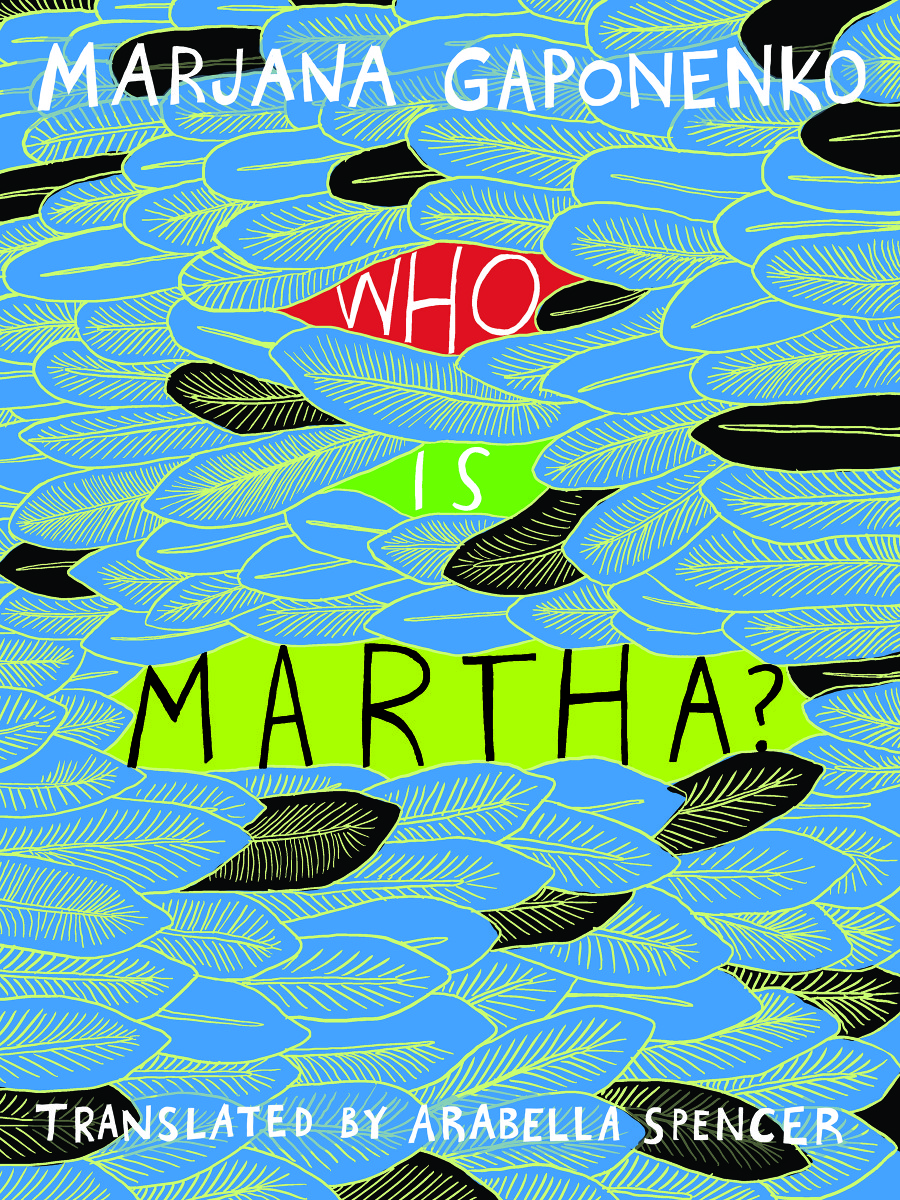
A word about the English edition: the translation by Arabella Spencer reads very smoothly and close to the original. New Vessel Press, a small American publisher with an extremely interesting program of translated fiction, is to be congratulated – this book will hopefully gain many readers and the attention it deserves. Also the cover is beautiful.  A pleasure to have this book in hands.

I won the review copy of this book in the framework of the Wednesdays-are-wunderbar events of my blogger colleague Lizzy as part of the activities related to the German Literature Month. I am very grateful to have been provided with a copy of this amazing novel.

NVP-Whoismartha-cover-jpg-900x1200

Marjana Gaponenko: Who Is Martha?, translated by Arabella Spencer, New Vessel Press, New York 2014


© Thomas Hübner and mytwostotinki.com, 2014. Unauthorized use and/or duplication of this material without expressed and written permission from this blog’s author and/or owner is strictly prohibited. Excerpts and links may be used, provided that full and clear credit is given to Thomas Hübner and mytwostotinki.com with appropriate and specific direction to the original content.


Drei Gedichte von Vladislav Hristov

germanii-cover-vladislav-hristov-350x499


цял ден мета                                                                   
един огромен паркинг
листопадът е в разгара си
не бива да се обръщам назад
да гледам как капят
проклетите листа
германците са учтиви хора
ще кажат довечера
о хер христов
чудесно сте измели
елате утре
половин час
по-рано

den ganzen tag kehre ich
einen riesigen parkplatz
das fallen der blätter ist in vollem gange
ich sollte mich nicht umdrehen
um mir anzusehen wie
das verdammte laub fällt
die deutschen sind höfliche leute
am abend werden sie sagen
oh herr hristov
grossartig haben sie gekehrt
kommen sie morgen
eine halbe stunde
früher


застудя
кучетата ги облякоха
с вълнени пуловери
моя съм го забравил
в българия

es ist kalt geworden
die hunde sind bekleidet
mit wollenen pullovern
meinen habe ich vergessen
in bulgarien


на 2000 километра оттук
доматите зреят
първите череши
вече са на пазара
слънцето влиза
в детската ми стая
през прозореца
който майка всяка сутрин
отваря

2000 kilometer von hier
reifen die tomaten
die ersten kirschen
sind schon auf dem markt
die sonne kehrt ein
in mein kinderzimmer
durchs fenster
das mutter jeden morgen
öffnet

aus: Vladislav Hristov: Germanii (Владислав Христов: Германии), Ergo, Sofia 2014;  aus dem Bulgarischen von Thomas Hübner


© Vladislav Christov and Ergo Books, 2014.
© Thomas Hübner and mytwostotinki.com, 2014. Unauthorized use and/or duplication of this material without expressed and written permission from this blog’s author and/or owner is strictly prohibited. Excerpts and links may be used, provided that full and clear credit is given to Thomas Hübner and mytwostotinki.com with appropriate and specific direction to the original content.