Category Archives: German literature

L1, L2, indirect – and a few more words on translations

When I have some free time, I love to browse blog posts of my fellow book bloggers. It is always interesting to see what the colleagues and friends are doing, which books I missed but should read soon, what they think about books I reviewed recently – and sometimes what they are thinking about other book-related topics.

As I have said several times before, I am much more aware now of the fact that translations matter and are extremely important. Even when you can speak and read five or six languages it will still widen your horizon beyond imagination when you have access to translated books. The availability and also the quality of translations are therefore two of the most important defining elements of an existing book market.

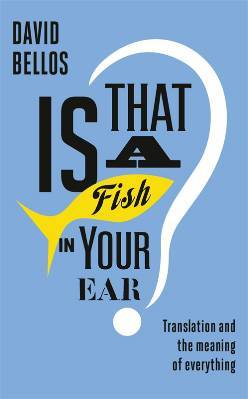
In an older blog post which I have just recently discovered, one of my favorite blogger colleagues, Caroline from Beauty is a Sleeping Cat, was writing about an interesting book by David Bellos, Is That a Fish in Your Ear? – Translation and the Meaning of Everything. Among other authors Bellos has translated the Albanian author Ismail Kadare into English – from the French, not the Albanian language. This is called “indirect translation”, contrary to the direct translation from the source to the target language. Depending on the question if the translator translates into his or her native language, or from his native language into the target language, direct translations are differentiated into so-called “L1” or “L2” translations. Many experts view L2 translations with scepticism or reject them completely, while some consider indirect translations as acceptable when there are no translators available for this particular combination of languages.

I think what counts at the end of the day is the quality of the translation, no matter if it is L1, L2, or indirect. Of course, chances that the translation is excellent are much higher with direct translations. When writers are sometimes using a language that is not their native one, why shouldn’t some translators be able to do the same? (Since Nabokov grew up bilingual, I wouldn’t include him in this list of writers, but there are plenty of them and not the worst) –

An indirect translation might be a kind of second-best solution in cases when there are really no translators available for this particular combination. For Kadare it shouldn’t be a problem to be translated directly into English, since there is not one, but plenty of literary translators for that combination.

But Kadare is a special case: he revised and rewrote all his books that were originally published in the time of communism in Albania when he prepared them for publication in France. That means that a translation of the same book from French to English contains a sometimes very different text than when you would make a direct translation from the Albanian version. And for the novels originally published before 1990 Kadare considers the French and not the Albanian version as the “real”, uncensored text. The revised editions of the pre-1990 novels of Kadare in Albanian language were published after the French versions, if I am not mistaken. For the past-1990 novels, the situation is different: as far as I see they are translated directly from Albanian to English because there is no need for a text revision.

There are also other authors we know mainly from indirect translations. The works of Israel Bashevis Singer are usually translated from English – there are even a lot of people that think Singer was an English-language author. Especially in the case of the translations of Singer to German that is a real pity: Yiddish is so close to German, so why not translate the books directly? (The result would be a very different text, much more close to the original, as I can say from practical experience when I made a sample translation of one of his stories once from the original text to German, comparing the result with the “official” translation from English)

Why do publishers choose to publish indirect translations instead of direct ones? One reason may indeed be a shortage of available translators for the respective combination – although this case may be much rarer as some publishers make us believe. But the problem exists: when I investigated for the possibilities to translate a book from Indonesian to Bulgarian, I realized that there is only one person who can do the job – now imagine if he would be not available for some reason: the only option remaining would be to work with an indirect translation. Otherwise the book would be never available for the potential readers whose native language is Bulgarian and who don’t read in other languages. Although an indirect translation might not be perfect, in the best case it could be a reasonable approximation of the original text. And that would be still far superior then the virtual non-existence of a book in that particular language.

Another reason for indirect translations may be that in some cases publishers can save money – it is cheaper to translate from languages where you can find plenty of competing translators than from languages where there are only a very few translators, or where possibly the translation rights might be cheaper to acquire (depending on the contractual relationships between the involved publishers, the author and the literary agency).

Also literary agents can play a role in this process. Agents try to increase the income of their clients (and by that their own income), so they try to redistribute money from other stages of the book value chain – mainly the publishing houses, but obviously to a growing extent also from translators – into the pockets of their writing clientele, by auctioning off book and translation rights, increasing the royalties for the author, etc., and by that forcing everybody else in the book value chain to decrease their income. There is nothing wrong with this in principle, as long as professional and ethical standards are respected, which is not always the case.

A particular vicious example is a recent case in which Egyptian bestselling author Alaa al Aswany and his agent Andrew Wiley (together with Knopf Doubleday publishers) are involved and that was made public by the Threepercent website of the University of Rochester.

A completely unacceptable treatment of a literary translator – and hard to believe but obviously true: a world famous author, the Godfather of all literary agents and a renowned publishing house use their combined power and leverage to cheat on a hard working professional, for reasons that are as it seems of exclusively pecuniary nature.

By the way, I find it very interesting to see the approach of different writers to the question of translations of their works. While some authors take a great interest and discuss details of the translations with their translators, or even organize like Günter Grass (on their own costs) workshops for their translators to ensure a high quality of the translations, others like Thomas Bernhard show the extreme opposite approach. From an interview with Werner Wögerbauer, conducted 1986 in Vienna:

“W.: Does the fate of your books interest you?

B.: No, not really.

W.: What about translations for example?

B.: I’m hardly interested in my own fate, and certainly not in that of my books. Translations? What do you mean?

W.: What happens to your books in other countries.

B.: Doesn’t interest me at all, because a translation is a different book. It has nothing to do with the original at all. It’s a book by the person who translated it. I write in the German language. You get sent a copy of these books and either you like them or you don’t. If they have awful covers then they’re just annoying. And you flip through and that’s it. It has nothing in common with your own work, apart from the weirdly different title. Right? Because translation is impossible. A piece of music is played the same the world over, using the written notes, but a book would always have to be played in German, in my case. With my orchestra!”

And for those of you who are familiar with Georges-Arthur Goldschmidt’s books with the untranslatable titles Quand Freud voit la mer and Quand Freud attend le verbe, it may be not surprising that I am very sympathetic to Bernhard’s opinion. A translation is indeed always a different book, and sometimes – as is the case with the terms created by Freud in the framework of psychoanalysis, the meaning and specific connotation of central words and expressions are so inseparably linked to the particular language in which they were created (in the case of psychoanalysis: German) that each translation is already an interpretation, over-simplification, reduction of ambiguity, and even falsification of the original text. – But I guess I am digressing a bit. The highly interesting books by Goldschmidt would deserve a more detailed review as is possible here.

Translations are a wide field – I have the feeling that I will return to the issue again sooner or later.
Bellos

David Bellos: Is That a Fish in Your Ear? – Translation and the Meaning of Everything, Particular Books, 2012

Georges-Arthur Goldschmidt: Quand Freud attend le verbe, Buchet Chastel, 2006

Georges-Arthur Goldschmidt: Quand Freud voit la mer, Buchet Castel, 2006

Chad W. Post: A Cautionary Tale

Chad W. Post: The Three Percent Problem, Open Letter, e-book, 2011

The interview with Thomas Bernhard was originally published in the autumn issue 2006 of Kultur & Gespenster, the English translation by Nicholas Grindell was published here.

© Thomas Hübner and mytwostotinki.com, 2014-5. Unauthorized use and/or 
duplication of this material without expressed and written permission from this blog’s author and/or owner is strictly prohibited. Excerpts and links may be used, provided that full and clear credit is given to Thomas Hübner and mytwostotinki.com with appropriate and specific direction to the original content. 
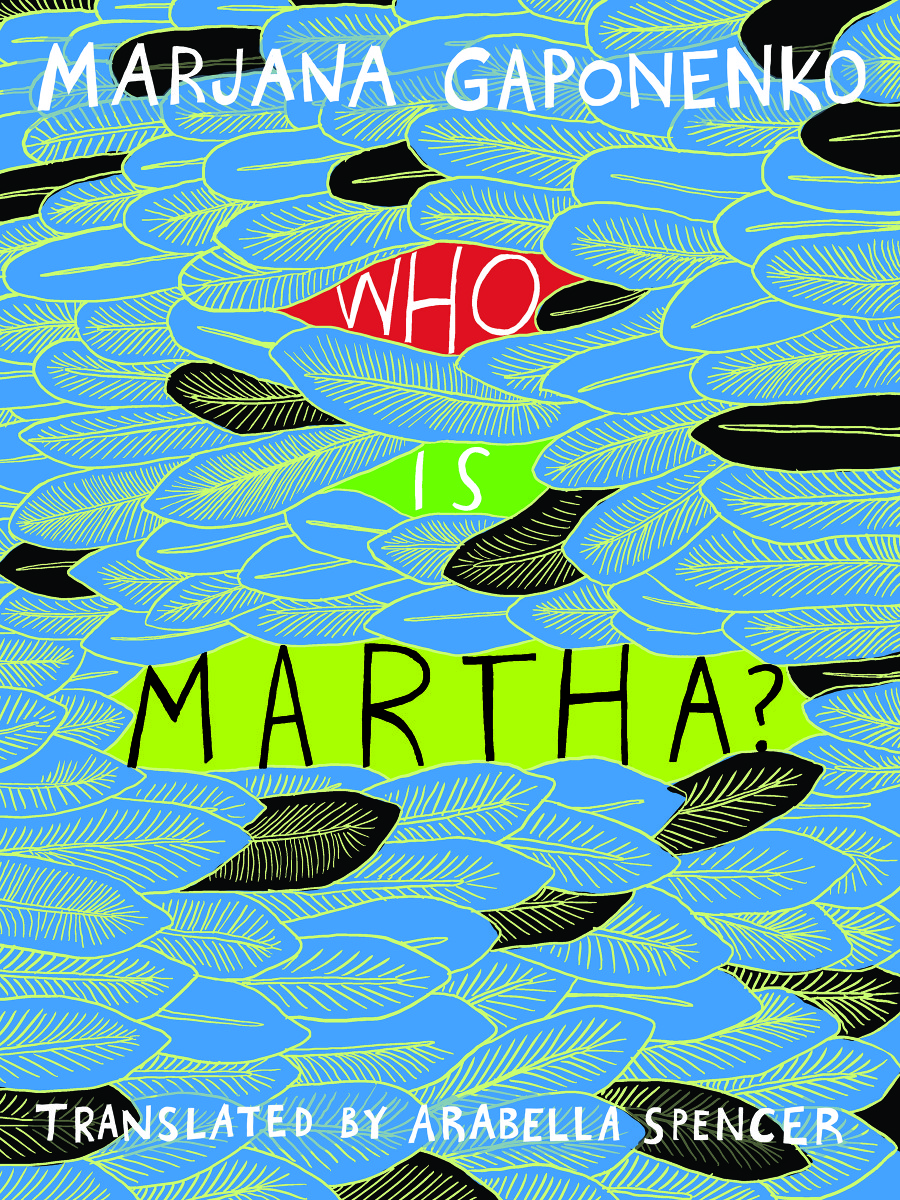
Who Is Martha?

When the family doctor calls on a Sunday with urgent news, it means usually no good news. The news are indeed so bad that Luka Levadski, the hero of Who Is Martha? has to go to the bathroom and throw up – for the first time since ages.

“The last time it had happened to him, he had still been wearing knickers. What had the girl’s name been? Maria? Sophia? The young girl had allowed her hand to be kissed by a man with a moustache. In front of her a slice of cake. Jealousy had grabbed the schoolboy Levadski by the throat. He had stopped in front of the window of the cafe, taken a bow and spilled the contents of his stomach onto the pavement. Touching his chest, he’d slowly assumed an upright position again.”

The cancer diagnosis for the 96-year old Professor emeritus Luka Levadski, a capacity in the field of ornithology, is certainly devastating for him, but since he lives alone and is without relatives or close friends, it is not an event that makes the world turn upside down at his age. Consulting the shelf with the medical books in his private library, he is considering his situation:

“Cyclophosphamide, sounds like a criminal offense…checks the multiplication of rapidly dividing cells. Side effects: nausea, vomiting, hair loss. May damage the nerves and kidneys and lead to loss of hearing, as well as an irreparable loss of motor function; suppresses bone marrow, can cause anemia and blindness. Well, Bon appetit. Levadski would have liked to call the doctor and chirp down the line.

Tjue-tjue

Ku-Kue-Kue—Ke-tschik-Ke-tschik!

Iju-Iju-Iju-Iju!

Tjue-i-i!

If the doctor had asked him what this was supposed to be, Levadski would have stuck with the truth: A female pygmy owl attracting its mate, you idiot! And hung up. He felt like a real rascal. At the age of ninety-six Levadski was game for playing a prank.”

For Levadski, the decision is obvious: he will have none of these life-prolonging treatments and will die in style. He will buy a walking stick, an elegant new suit and hat, pull a few strings to get a passport and a visa for Vienna quickly and – thanks to the money in his bank account he got for his decades of publishing articles such as On the Red-Backed Shrike’s Humane Art of Impaling Insects and Large Prey on Thorns, or How Global Warming Alters Fish Stocks and Turns North Sea Birds into Cannibals in Western journals – is going on a visit to this place that is filled with childhood memories. Especially the regular visits of the Musikverein with his grand-aunts and the concerts there that, together with the piano lessons of his mother created a second lifelong passion in him: music.

While preparing for his last journey – he has no intention to come back to his flat in Lemberg (Lviv) – we get to know this remarkable person better. Levadski, son of two bird lovers had not an easy but an interesting life: born on the eve of the outbreak of WWI and on the same day when Martha, the last of a rare and now extinct species of passenger pigeons passed on in 1914, he survived two utopias (Austro-Hungary and the Soviet Union), a childhood overshadowed by the early suicide of his father, the war, exile in the mountains of Chechnya and later Siberia, and finally a late career as a professor with international recognition. It was a rather lonely life since Levadski never developed a deep relationship with the female sex:

“That he had a long time ago thought of winning over the opposite sex with his pathetic behavior, when his head had been filled with nothing but the mating dances and brooding habits of birds, was something he did not want to be reminded about. But he did think about it, he thought about it with a hint of bitterness. After a fulfilling academic life he knew: Women would have interested him more if they hadn’t constantly insisted on emphasizing that they were different from men. If they had been like female birds, a touch grayer and quieter than the males, perhaps they would have awakened his interest at the right time. Levadski would gladly have procreated with such a creature. Only he didn’t know to what purpose.”

The second half of the book sees Levadski in his new, last home: an old luxury hotel in Vienna, just around the corner of the Musikverein. We see him enjoying the big bath, bigger than his flat in Lemberg, we see him making acquaintances – with a taxi driver from the Ivory Coast who shares Levadski’s love of the German language; with a cheerful chamber maid from Novi Pazar, a small Balkan town; with Habib, the kind and music-loving Palestinian butler; with another old hotel guest, Mr. Witzturn with whom he is developing a kind of friendship culminating in a joint concert visit at the Musikverein followed by an evening in the hotel bar where they talk their mind about the meaning of life, friendship, and the advantages of gin as a basis to various cocktails.

In the end, Levadski looks back without bitterness. He re-discovered parts of his ego that seemed to be lost a long time ago; memories of happy moments with his parents come back; and he realizes that the gift to make friends even at an old age in the face of the end of his life makes it possible to cross barriers – physical one’s like borders, but also invisible one’s that are imposed to us by society, upbringing or our own prejudices. Or, as Levadski explains on the phone to a young intern of the Konrad Lorenz Institute:

“Barriers, barriers, barriers, you see, Madam, human beings are forever being confronted with limitations, internal or external. Sometimes the shoes are too tight, sometimes the coffin too close, do you understand what I mean?”

Luka Levadski finally breaks the barriers. And he even remembers the name of the girl he thought he had forgotten.

Who Is Martha? is a wonderful book. It is well-written, very entertaining and I read it two times in a row. It breathes sadness, wisdom, humor, and a deep human sympathy for its protagonist and people in general – they are not so different from birds, so they deserve that for sure would Professor Levadski probably say.

Marjana Gaponenko is a young author from Odessa who writes in German – what a great gift to the German language! Who Is Martha? was a big surprise for me and arguably the best book I read in 2014.

A word about the English edition: the translation by Arabella Spencer reads very smoothly and close to the original. New Vessel Press, a small American publisher with an extremely interesting program of translated fiction, is to be congratulated – this book will hopefully gain many readers and the attention it deserves. Also the cover is beautiful.  A pleasure to have this book in hands.

I won the review copy of this book in the framework of the Wednesdays-are-wunderbar events of my blogger colleague Lizzy as part of the activities related to the German Literature Month. I am very grateful to have been provided with a copy of this amazing novel.

NVP-Whoismartha-cover-jpg-900x1200

Marjana Gaponenko: Who Is Martha?, translated by Arabella Spencer, New Vessel Press, New York 2014


© Thomas Hübner and mytwostotinki.com, 2014. Unauthorized use and/or duplication of this material without expressed and written permission from this blog’s author and/or owner is strictly prohibited. Excerpts and links may be used, provided that full and clear credit is given to Thomas Hübner and mytwostotinki.com with appropriate and specific direction to the original content.


German Literature Month – Wrap-up

glm_iv1


November and the first days of December saw a co-ordinated effort of many book bloggers that participated in the fourth edition of German Literature Month, hosted by Caroline and Lizzy. It was a great and overwhelming experience.

As for my own rather ambitious reading and reviewing plans, I managed to read all the books I had originally on my list plus a few more that caught my attention in the last moment. However, since the writing of a review in a foreign language takes quite some time for me and I don’t want to hasten things, I was lagging behind a bit regarding the publication of the forecasted reviews. Additionally I had to travel abroad several times – traveling seems to be for me a good time for reading, but not the perfect time to write reviews. 

Out of the nine books on my TBR list I published seven reviews in time plus one additional for a new book that has not yet been translated but deserves a swift publication in English and other languages. The missing reviews will follow very soon.

What is my experience with this event?

First, it was a lot of work but also a lot of fun. I made the decision to embark on a rather ambitious personal program and this turned out to be the most busy month so far in my blogging “career”. Nevertheless I never had the feeling that it was stress or that I regretted for a moment my rather big-mouthed announcement at the beginning of German Lit Month. I thoroughly enjoyed the process to devote a whole month to German-language literature and I was extremely delighted that not only such a big number of other book bloggers participated but also their choice of books and the tremendous quality of the output was truly amazing me.

Second, while reading and reviewing books is usually a solitary experience, this one was a community experience. Checking on a daily basis what my colleagues are reading, going through their thoughtful and erudite reviews, commenting on some of them or reading comments to my own posts, made me feel to be part of a group who shares the same interest, the same passion for literature. This experience to be part of a community was – beside the possibility to discover new authors or re-discover titles I had read before and comparing my own opinion with that of other reviewers – the most exciting aspect of this month for me.

Third, I realized that such an event needs time to grow. Since it was organized for the fourth time, it is already a kind of well-established event that seems to draw each year more interest from the readers and the blogger community. This is only possible since the two heads and hearts behind this event, Caroline and Lizzy, do a lot of background work that I really very much appreciate. This includes not only the lobbying for participation of readers and bloggers but also contacting publishers, setting up a website for this event (which I find extremely useful).

Fourth, I tried to follow the other participants’ posts as good as possible and left also some comments. But I still have to follow up some of the posts and will try to read all reviews because I enjoyed really each single opinion. There is such a big variety of individual voices among the book bloggers that I very frequently discover aspects in these reviews that make me see a book in a slightly different light. What better could be said about this event? 

Fifth, I am very happy and a bit embarrassed too that one of my posts was singled out by Caroline as “Best Post” – thank you so much and the titles of the two books I won sound very appealing: Just Call Me Superhero and The Hottest Dishes of the Tartar Cuisine by Alina Bronsky. I guess I had a little newcomer bonus since the quality of many posts was outstanding and would have deserved the prize too!

To sum it up: a great experience – and I am already waiting for German Literature Month 2015. Thanks to Caroline and Lizzy as hosts, and to all participants who made this such a terrific event!

© Thomas Hübner and mytwostotinki.com, 2014. Unauthorized use and/or duplicationof this material without expressed and written permission from this blog’s author and/or owner is strictly prohibited. Excerpts and links may be used, provided that full and clear credit is given to Thomas Hübner and mytwostotinki.com with appropriate and specific direction to the original content.
The Kraus Project

glm_iv1

This review is part of the German Literature Month, hosted by Lizzie (Lizzies Literary Life) and Caroline (Beauty is a Sleeping Cat)

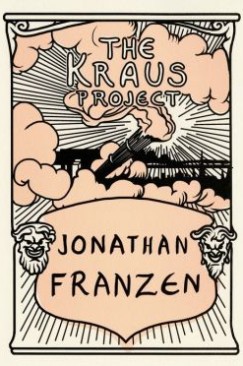
The Kraus Project by Jonathan Franzen is a hybrid book.

It contains on the upper part of each page on the left side the original German text of four essays and a poem by the Austrian author Karl Kraus, mirrored by the English translation of the respective text on the opposite right page.

On the lower part of each page are numerous footnotes that are sometimes longer than Kraus’ text itself.  The footnotes are partly by Jonathan Franzen, partly by the Kraus scholar Paul Reitter, partly by the German-Austrian novelist Daniel Kehlmann, like Franzen an admirer of Kraus. Franzen is also the translator of Kraus’ texts.

Since Karl Kraus is almost unknown in the English-speaking world, the publisher obviously thought it a good idea to bring this book on the market with Jonathan Franzen as author on the title page. But again, this book is a translated and annotated collection of some of Kraus’ texts.

A few words about Karl Kraus:

coming from a wealthy assimilated Jewish family, Kraus grew up in Vienna at the end of the 19th century. Vienna was at that time a melting pot of people and ideas. Literature and theater (two lifelong passions of Kraus) were at its height, Sigmund Freud developed psychoanalysis that revolutionized later many aspects of our lives, Mahler and Schönberg revolutionized music, Adolf Loos, Kraus closest friend revolutionized architecture, the Vienna school of economists revolutionized economics, the Vienna Circle and Ludwig Wittgenstein revolutionized philosophy. All kind of modern ideologies came to light in that period in Vienna, including the “modern” racial Antisemitism and its natural reaction, Zionism, whose main propagandist was the journalist Theodor Herzl, a former colleague of Kraus who would become one of his most hated targets.

“Vienna’s streets are paved with culture; the streets of other capitals are paved with asphalt”,

is a popular aphorism by Kraus.

In this hotbed of culture and ideologies the typical Kaffeehauskultur developed where each faction of intellectuals had their favorite coffeehouses where they met and engaged in group and cartel building, gossiping, writing and reading. Kraus was part of this culture, but never belonged to any group. One of his most remarkable features is that he successfully obtained his absolute independence during all his intellectual life.

Kraus’ main “work” are the roughly 40,000 pages of his journal Die Fackel (The Torch), which he published between 1899 and 1936. In the first years, he admitted every now and then guest authors but from 1912 on, he wrote the journal exclusively by himself.

Die Fackel had a blog-like feel: Kraus’ was publishing whenever he had something to say and about whatever he felt he needed something to say. Although literature and theater were always prominent topics in Die Fackel, Kraus was an avid reader of the Austrian and foreign press – and from here he took most of his inspirations.

Kraus was writing about foreign and local policy, about the situation of workers in the factories, about women’s rights, he was an early advocate of equal rights of homosexuals, and he was an everyday observer of the journalism in Austria, which was in an extremely bad shape according to Kraus.

This opposition to the frequently badly written journalism made Kraus many enemies, especially since he combined it with irony and sarcasm, but also with undeniable truths. His lawyer was for sure a very busy man and it is said that Kraus won almost all his court cases. He knew the rules and acted within these rules very efficiently to expose corruption, nepotism, stupidity and wrong use of language.

He did all this in a unique style, frequently playing with words and creating a richness of aphorisms that may be rivaled only by Lichtenberg. He was also a stage persona: he gave more than 700 performances reading, singing, acting alone on a stage – his audience consisted mainly of addicted Kraus fans; Elias Canetti for example said in his autobiography that he visited more than 300 of Kraus’ unique performances. Kraus must have been a magnetic personality that had many people under his spell.

The two main pieces in The Kraus Project are Kraus’ most famous essays on the German-Jewish poet Heinrich Heine and on the Austrian playwright Johann Nestroy.

Heine is for Kraus on the one hand a great and extremely popular poet. Many of his poems were turned into popular songs and are part of the folk poetry. But Heine’s followers turn his spirit into something superficial. And this is not by accident, it is because of specific virtues in Heine’s works. In Kraus’ times there was a firm belief of many intellectuals that there was a deep difference between Romance and German culture. As Kraus put it:

Two strains of intellectual vulgarity: defenselessness against content and defenselessness against form. The one experiences only the material side of art. It is of German origin. The other experiences even the rawest of materials artistically. It is of Romance origin. To the one, art is an instrument; to the other, life is an ornament. In which hell would the artist prefer to fry? He’d surely still rather live among the Germans. For although they’ve strapped art into the Procrustean Folding Bed of their commerce, they’ve also made life sober, and this is a blessing: fantasy thrives, and every man can put his own light in the barren window frames. Just spare me the pretty ribbons!…”

Austria, although linguistically part of German culture, is for Kraus deeply affected by the “French” poet Heine. Even the biggest Anti-semites “forgave” Heine his Jewish origin, just because his verses appeal so much to the tendency of most of the Vienna literati to gloss over everything with patches of jokes and irony. (I owe The Kraus Project the information that young Adolf Hitler in his Vienna years supported an initiative to build a monument for Heine – Heine’s poems were later not removed from the school books in Nazi Germany, just his name; it was all supposed to be “folk poetry” then).

While the Heine essay is very acerbic in it’s evaluation of the poems of this great German writer, the big hater Kraus shows in the other main essay that he can be also a great admirer and lover: he re-discovers the Austrian actor, singer, playwright Johann Nestroy, a popular performer of the first part of the 19th century who fell into oblivion soon after his death.

That Nestroy is nowadays considered to be one of the greatest authors for theater in German  is almost exclusively a result of the decades of Kraus’ efforts to make him again popular. I love Nestroy’s plays, and there is hardly anything (with the exception of Shakespeare, and the obscure play Datterich by Ernst Elias Niebergall, written in Darmstadt dialect) that I enjoy more on a stage than his plays. To me, the Nestroy essay is Kraus’s best essay – the Heine piece, although very interesting, shows also a side of Kraus that is not very appealing: the text is not free from Anti-semitic slurs.

Franzen’s translation is a heroic and brave effort and mostly very decent in my opinion. Kraus is extremely difficult to translate and that he tackled this task deserves a lot of respect.

The footnotes are frequently related directly to the text. Paul Reitter adds a lot of his knowledge about Kraus, much to the profit of the reader. Also many of Franzen’s and Kehlmann’s footnotes are interesting. The one thing that surprised me was that Franzen is dragging the reader a lot into his personal life during the time he lived in Germany and Austria as a student. We learn many details about the person Jonathan Franzen, including the story of his failed first marriage, and a short bout of mental illness when he was in Germany. If you like Jonathan Franzen as an author (I do), you might as well enjoy this part of the annotations, but if not you will have to skip some of them. I am still wondering if it wouldn’t have been better to split the book in two: a translation of Kraus only, and a longer essay with Franzen’s view of Kraus.

Kraus was a larger-than-life author. His play Die letzten Tage der Menschheit (The Last Days of Mankind) is about 800 pages long. The Kraus Project gives some insight in part of his work, but those who would like to discover the full Kraus and also the Vienna of his times (because most of his work can be only understood from the context) should maybe read in parallel also Carl Schorske’s excellent book Fin-de-siècle Vienna: Politics and Culture.

Let me close with a poem by Karl Kraus in which he explains why he kept silent for a long time after the Nazis took power in Germany:

Let no one ask what I’ve been doing since I spoke.
I have nothing to say
and won’t say why.
And there’s stillness since the earth broke.
No word was right;
a man speaks only from his sleep at night.
And dreams of a sun that joked.
It passes; and later
it didn’t matter.
The Word went under when that world awoke,

Man frage nicht, was all die Zeit ich machte.
Ich bleibe stumm;
und sage nicht, warum.
Und Stille gibt es, da die Erde krachte.
Kein Wort, das traf;
man spricht nur aus dem Schlaf.
Und träumt von einer Sonne, welche lachte.
Es geht vorbei;
nachher war’s einerlei.
Das Wort entschlief, als jene Welt erwachte.

kraus-project

Jonathan Franzen: The Kraus Project, Fourth Estate, London 2013

Carl Emil Schorske: Fin-de-siècle Vienna: Politics and Culture, Vintage 1980

© Thomas Hübner and mytwostotinki.com, 2014. Unauthorized use and/or duplication of this material without expressed and written permission from this blog’s author and/or owner is strictly prohibited. Excerpts and links may be used, provided that full and clear credit is given to Thomas Hübner and mytwostotinki.com with appropriate and specific direction to the original content.

Tschick or Why We Took the Car

glm_iv1

This review is part of the German Literature Month, hosted by Lizzie (Lizzies Literary Life) and Caroline (Beauty is a Sleeping Cat)

Usually I am not quoting from book blurbs. But in this specific case, I’ll gladly make an exception:


Joseph Roth’s Rebellion

glm_iv1

This review is part of the German Literature Month, hosted by Lizzie (Lizzies Literary Life) and Caroline (Beauty is a Sleeping Cat)

Joseph Roth is nowadays mostly known as a literary fiction writer but in the 1920s and early 1930s his reputation as one of the most prolific journalists was outshining even his fame as a novelist. To those who want to get to know the full Roth, I recommend therefore his journalistic work; frequently he touches issues in his articles that he later on used as material or inspiration for his literary prose.

Roth was best when it came to social issues, to the living conditions of the ordinary, mostly poor population of Austria, Germany, France, and the other countries he visited. He wrote for example several long pieces for the Frankfurter Zeitung and the socialist Vorwärts about the fate and the living conditions of the crippled and physically handicapped ex-soldiers of WWI – if you know the artwork of Otto Dix or George Grosz you know how terribly millions of men were mutilated for the rest of their mostly miserable lives.

One such victim of WWI is Andreas Pum, the central figure of Rebellion, the novel that was also first printed in Vorwärts before a book edition was published. Andreas lost a leg in the war, but he seems strangely happy. Not only has he survived, he also got a medal (one of those pieces of metal that governments are quick to hand out) and a license to play a barrel organ and so he can make a living from the few coins he gets from the people listening to his repertoire. To him that is fair enough.

Andreas is a simple, uneducated man. He doesn’t reflect his situation and those war cripples that complain about their fate or the lack of support from the government, he considers as malingerers and thieves. Andreas is at this stage the complete negation of the rebel. He just wishes to improve his life a bit and to have a wife and family. A good fate – so it seems to Andreas – sends him a widow whose plump forms attract him and soon he moves in to the widow’s house and can enjoy the life of a husband. He loves the widow’s daughter like his own child and even for Muli, the small donkey that carries his barrel organ, he has tender and friendly feelings. Andreas is a kind man.

Everything could be perfect for Andreas, but one day he is being insulted by a rude passenger in the tram, one word gives another and the verbal argument is followed by physical violence. A policeman is soon on the scene and Andreas will be held responsible by the court for his violent behavior. How Andreas becomes – just by coincidence and certain unpredictable events in combination with the vileness of the public organs such as the police – a victim of a system that always holds people like Andreas down, shows Joseph Roth’s mastery and also his sympathy with people like Andreas, who are always the victims. And who usually even don’t remark it.

To read how Andreas is going through a real ordeal is depressing; although he is just 45 years old, he looks with his completely white hair already like a very old man; but the more he is physically degrading, the more conscious he becomes about his real situation, the more he becomes a rebel – a person who disagrees with the order of things.

When I read the book, I realized that there were certain elements you can find also in most other of Roth’s novels and long stories: the main character slips down like on an inclined plane, the physical degradation corresponds with an awakening in terms of self-consciousness and acts of rebellion (like not praying to God anymore), and the tone of the narrative is always close to the legend. The similarities to Job and Legend of a Holy Drinker in this respect are particularly stunning.

Rebellion might not be the best novel of Joseph Roth, but I found it well written and touching. For those who are familiar with Roth’s oeuvre it will be particularly interesting how in this early work he prefigured many topics and tropes that he was also using in his most mature works of the late 1920s and 1930s.

Rt

Joseph Roth: Rebellion, transl. by Michael Hofmann, Picador 2000

© Thomas Hübner and mytwostotinki.com, 2014. Unauthorized use and/or duplication of this material without expressed and written permission from this blog’s author and/or owner is strictly prohibited. Excerpts and links may be used, provided that full and clear credit is given to Thomas Hübner and mytwostotinki.com with appropriate and specific direction to the original content.

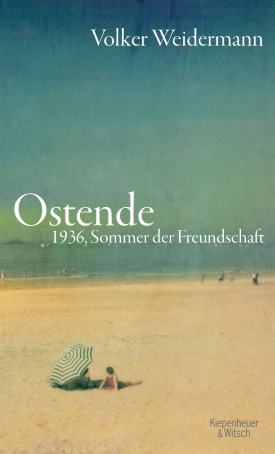
Ostende. 1936, Summer of friendship

glm_iv1


This review is part of the German Literature Month, hosted by Lizzie (Lizzies Literary Life) and Caroline (Beauty is a Sleeping Cat)

The Belgian kings Leopold I and Leopold II liked to spend their summer holidays in the seaside town of Ostende, a place which was famous then and now for its long sandy beaches. What followed in the late 19th and early 20th century was a construction boom: the small harbor town developed into an opulent summer holiday location for the wealthy bourgeoisie and the upper echelons of society. Those who visit Ostende today will realize that a lot of the splendour of those days has gone and many of the gorgeous buildings of that time were destroyed either by the bombings of WWII or by the similarly devastating “modernization” frenzy in the 1950s and 1960s.

But in 1936, the old Ostende was still very much alive. Those who could afford it were packing their things and spending a few weeks here. Among them were also a group of German-language writers. They enjoy the sun, the swimming, the drinks, the company, and their talks about literature. But all of them either lost their homes, or had to prepare for losing it in the near future. They had mostly also lost their by far biggest publication market, Germany, and with it also the biggest part of their income. The small new book by Volker Weidermann, Ostende. 1936 – Sommer der Freundschaft (published this year and not yet translated) describes this summer, the strange atmosphere between holiday mood and depression that most of the writers felt. And it shows also the difficulties to be a writer in exile, and what happened to the friends that met in Ostende during that summer.

I was amazed to read who was in Ostende at exactly the same time – it reads like a part of the Who is who of German literature of that period: Stefan Zweig (with his secretary and lover Lotte Altmann); Joseph Roth; Irmgard Keun; Ernst Toller with his wife, the actress Christiane Grautoff; Egon Erwin Kisch, the famous “Raging Reporter from Prague” with his wife; Hermann Kesten; Arthur Koestler; also Willi Münzenberg, the “Red Press Czar” and founder of one of the biggest media empires of the world was there with his wife and some aides, among them the shady Otto Katz, one of the most notorious GPU agents, also known as Andre Simone.

Weidermann focuses the book mainly on the friendship between Stefan Zweig and Joseph Roth. Zweig, one of the few German-language writers that was not dependent from the German market because his books were popular almost all over the world, was in a similarly privileged position like Thomas Mann, Lion Feuchtwanger, or Erich Maria Remarque: they lived in very comfortable conditions even in exile, but all of them used their wealth and contacts to support the big number of poor colleagues financially or with contacts with publishers. In later years their assistance in getting affidavits and visas was crucial to get many writers out of Europa after the outbreak of the war (Anna Seghers’ Transit gives a haunting description of the emigrants in Marseille).

Joseph Roth was on the other side of the social pyramid of writers: the once well-paid journalist and author had not been very lucky. He was not the kind of person to save money for bad times to come and spent what he earned with full hands, living a life in the most expensive European hotels in the late 1920s and early 1930s. A mental illness of his wife who had to be admitted to an asylum (she was later killed by the Nazis in the framework of the infamous T4 program), his growing problems with alcohol – the book describes Zweig’s caring efforts to feed his friend at least one time or another – and his complete loss of the German and Austrian book market; there was hardly a disaster that didn’t strike Roth in those years. Stefan Zweig proved to be a loyal friend who helped Roth not only financially; he tried to make Roth quit or at least reduce his booze addiction; he discussed manuscripts with him and reminded him to work more slowly and diligently; and he introduced him to his other friends and colleagues in Ostende. Among them was a young and attractive “Aryan” female writer from Germany: Irmgard Keun.

Keun, already an accomplished writer in the early 30s, was caught in an unhappy marriage in Germany from which she ran away, and she had also difficulties to publish in Germany. Her books were banned and the works she wrote during her time in Belgium (for example After Midnight, her probably best book) and on travels would be published in German exile publishing houses. When she met Roth, it was obviously a coup de foudre from both sides. They started a relationship almost immediately after their first meeting, much to the surprise of the other emigrants who couldn’t understand what this attractive woman drew to the hopeless drunkard in tattered clothes. Weidermann describes how they got “to work”: they used to go to the same small bar every day, sit on separate tables with their small typewriters (Keun loved the sun, Roth couldn’t stand it) and ordered some liquor. Or more correctly: a lot of liquor. Yes, also Keun was an alcoholic. But for both of them, it seemed to have been an extremely productive time and both wrote excellent works during their time together.

Also for Zweig the times were not easy. But his were more his private problems and sorrows, not so much the political situation. His marriage with Friederike had failed, his home in Austria was soon to be sold to settle the financial issues following the divorce, and he had also sold his extraordinary collection of autographs. But his relationship with a young woman, Lotte Altmann, whom he hired as an assistant and secretary and who later became his mistress and after the divorce his second wife, also set new energies free in Zweig. He wanted to use the fresh energy he felt to do some serious work on some of his book projects in Ostende and also to think about where to settle in the future. It was also a good opportunity to catch up with friends and colleagues, especially with Joseph Roth with whom he entertained a close friendship.

For Zweig it was not the first time he came to Ostende. He had spent the summer 1914, the days before the outbreak of WWI in Ostende to meet his idol Emile Verhaeren. So overwhelmed was the young Zweig by the meeting with his master in 1914 that he didn’t realize at all that the world was preparing for war and that the world he loved would be doomed. (Verhaeren turned soon after the outbreak of the war into one of the most radical chauvinists, a major disappointment for Zweig)

What drew Zweig to Roth, and vice versa? For Zweig, Roth represented the Ostjudentum, the world of the Jews from the periphery of the Austro-Hungarian Empire, a world about which Zweig knew very little but to which he felt in a strange way attracted. And that Roth, despite his insane alcoholism and his financial dependency from Zweig, was so loyal and honest was for Zweig also very attractive. Roth knew no friendship, no superficial friendliness when it came to questions of literature. When he smelled one wrong expression, one superficial adjective, a weak plot, or something else that his unfailing instinct discovered, he would not hide it and let his friend know. Also vice versa, Roth accepted the professional advice of Zweig on many occasions. Due to the extreme difference in their living conditions one could have expected Roth to be a sycophant at least at times, but it seems that this was never the case. Theirs is a dialogue eye to eye when it came to matters of importance, i.e. to literature.

Weidermann’s book is excellently written. Not only writes he almost like an experienced novelist who arranges his material in an interesting way. He also succeeds in making the motives of his heroes understandable to the reader. And he adds interesting details that you can hardly read in any other book about the German exile – such as the unintentional act of disloyalty Zweig commits when he writes to his American publisher that Roth is suffering from being over-productive (writing too much in a short time) with the result that his exile books are much weaker than the previous one’s (I would disagree with Zweig here). As a result, the American publisher writes Roth that he is cancelling his author’s contract, a financial catastrophe for Roth who lives his last years mainly from Stefan Zweig’s financial support.

Although the other authors are not so much in the centre of the book, they play an important role too and Weidermann shows a great talent to integrate their fates almost effortlessly in his small masterpiece. Ernst Toller, the expressionist poet and dramatist, and his beautiful actress wife add a lot of flair to the weeks in Ostende – but Toller has always a rope with a noose in his suitcase; he suffers from extreme bouts of depression and the reader knows that he will sooner or later use the rope to hang himself. (When it finally happened a few years later, Roth collapsed when he heard the news and died shortly thereafter) Also the Münzenberg/Katz story made me shiver, knowing what later happened; and of course the end of the two main protagonists, so sad and unnecessary, victims of a time that was so opposed to the human values they represented in everything they did and wrote.

I hope for a swift translation of this wonderful book of Volker Weidermann. (The translation rights for the English-speaking edition are already sold to Pantheon/Knopf.) It will be a must for all Stefan Zweig and Joseph Roth aficionados, and for all friends of literature in general. And if you visit Ostende, take this book with you. And don’t miss the house of the painter James Ensor. It plays a small but important role in this book too and is different from any other house you will ever visit.

Ostende

Volker Weidermann: Ostende. 1936, Sommer der Freundschaft, Kiepenheuer & Witsch, Köln 2014

© Thomas Hübner and mytwostotinki.com, 2014. Unauthorized use and/or duplication of this material without expressed and written permission from this blog’s author and/or owner is strictly prohibited. Excerpts and links may be used, provided that full and clear credit is given to Thomas Hübner and mytwostotinki.com with appropriate and specific direction to the original content.
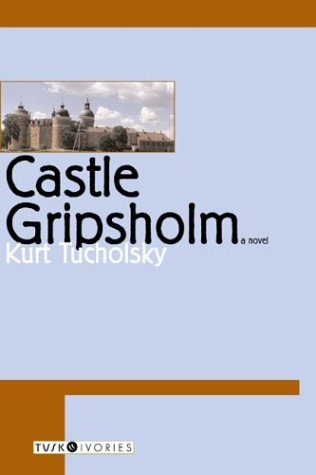
Castle Gripsholm

glm_iv1

This review is part of the German Literature Month, hosted by Lizzie (Lizzies Literary Life) and Caroline (Beauty is a Sleeping Cat)

This is the perfect summer book and that I read it in November makes my longing for the next summer even stronger. It refutes all prejudices that literature written by German authors has to be serious, heavy, distant, humorless, difficult, and boring.

The narrator – who can very easily be taken for the author – is off for his summer holidays. He is an author publishing for Rowohlt, then and now one of the best addresses for writers in Germany and an – invented – correspondence with Rowohlt who is asking his author to write a light summer story gets the story started.

Our author is traveling by train with his girlfriend (called the Princess) from Berlin to Sweden. But they have of course a stop in Copenhagen. The following quote gives a good idea of the playful tone of the book:

“… We looked at everything: the Tivoli Gardens, the beautiful town hall and the Thorwaldsen Museum, where everything looked as though it was made of plaster. “Lydia!” I called, “Lydia! I almost forgot. We absolutely have to visit the Polysandrion!”

“The … what?” 

“The Polysandrion! You’ve got to see it. Come along.” It was a long walk, because the little museum was right outside the city. 

“What is it?” asked the Princess. 

“You’ll see,” I said. “It’s where a couple of Balts built a house for themselves. One of them, Polysander von Kuckers zu Tiesenhausen, imagines he can paint. But he can’t.”

“And we’re going all this way just to see that?”

“No, not exactly. He can’t paint, but he does – and he always paints the same thing, his adolescent fantasies: young boys and butterflies.”

“What’s that supposed to mean?” asked the Princess. 

“Ask him, he’ll be there. And if he isn’t, then his friend will tell the whole story. Because it has to be told. It’s wonderful.” 

“Is it at least improper?” 

“Would I be taking you if it were, my raven-haired beauty?” 

There stood the little villa – it was unattractive, and it didn’t fit in here at all, either; you might have expected to find it somewhere in the south, in Tuscany or somewhere. We went inside. 

The Princess’ eyes grew round as saucers, and I beheld the Polysandrion for the second time. 

Here a dream had become reality – may God protect us from the like! The good Polysander had covered about forty Square kilometers of expensive canvas with paint. There were the youths, standing and reclining, floating and dancing. It was always the same picture, always the same young men. Pale pink, blue and yellow; the youths in the foreground, the perspective at the back. 

“Those butterflies!” exclaimed Lydia, and took my hand.

“Shh!” I said. “Not so loud! The cleaning woman is following us round. She’ll report everything back to the artist, and we don’t want to hurt him.” But really, those butterflies. They fluttered in the painted air, they had landed on the plump shoulders of the young men, and if until now we had thought that butterflies liked to settle on flowers, this was shown not to be the case. These butterflies much preferred to perch on the young men’s bottoms. It was all highly lyrical. 

“Now I ask you …” said the Princess. 

“Be quiet!” I said. “His friend!”

The painter’s friend appeared, quite an old, pleasant-looking man. He was very respectably dressed, but he had the air of despising the standard grey clothes of our grey century. And his suit got its own back by making him look like an emeritus ephebe. He murmured an introduction, and began explaining. In front of us was the picture of a young man who stood very upright with sword and butterfly, his right hand raised in salute. In the most beautiful, lilting Baltic tones, with all the r’s rolled, the friend said, “What you have beforre you is an entirrely spirritualized verrsion of militarrism.” I turned away – quite appalled. We saw dancing lads, in sailor-suits with floppy collars, and over their heads hung a little lamp with tassels – the kind you have in corridors. It was a sort of furnished version of the Elysian Fields. A whole Paradise had blossomed here, little bits of which so many of the painter’s bosom friends carried around in their souls. Whether it was through being unjustly persecuted, or whatever it was, when they dreamed, they dreamed in soft sky blue, the pinkest shade of blue, so to speak. And they indulged in an awful lot of it. On one wall was a photograph of the artist in his Italian phase, dressed only in sandals and a Zulu-type spear. So paunches were all the rage in Capri. 

“It takes your breath away!” said the Princess, once we were outside. “They aren’t all like that … are they?” 

“No, you shouldn’t blame the species for that. That house is just a plush sofa stuck in the 1890s; they’re not all like that by any means. That man could just as well have peopled his chocolate-box paintings with little elves and gnomes … But imagine what a whole museum would be like, full of those fantasies come true – exquisite!” 

“But it’s so … anaemic!” said the Princess. “Well, it takes all sorts! Let’s drink a schnaps to that!” So we did.”

After a few days in Stockholm, the two rent a room in Castle Gripsholm, an old residence near Lake Mälaren (today housing the National Portrait Gallery of Sweden). Sweden with its friendly and polite inhabitants seems just the right place for the two stressed Berliners to enjoy nature, swimming, reading and bantering with each other. The stories the princess is telling about her boss, an obese soap trader and honorary consul are really funny and so are many remarks of the narrator. For a few days, Karlchen, an old friend of the author and a true original, joins them. He and the princess like to communicate in Low German (Plattdeutsch), a language also the author likes even more than High German. After he leaves, the two lovebirds meet Billie, a Swedish girl they both like immediately and who spends the remaining days of the holiday with them (and a threesome night too).

But even Sweden is not paradise. Near the Castle is a boarding school for girls mainly from Germany where a Mrs Adriani is governing with a mixture of strict rules that are ruthlessly enforced, daily verbal and physical abuse, and the absolute absence of empathy and understanding for the children. Mrs Adriani loves only one thing: her absolute power over the frightened children. Especially Ada, a child that the author, the princess and Billie remark on one of their walks, is the favorite victim of this sadistic dictator. How the small team plots to get Ada out of the hands of this cruel woman is exciting and as a reader I hoped very much for a happy end.

The book was published in 1931, a time of crisis. In Germany the Nazis were on the rise, unemployment and misery too. The story of Mrs Adriani shows one thing: the thirst for power is very strong in many individuals – but when you show resistance, their system can collapse. In a boarding school in Sweden and anywhere else.

Kurt Tucholsky was one of the leading journalists of the Weimar Republic and one of the main contributors of the famous journal Weltbühne, a fighter for democracy, civil rights and press freedom, and against militarism – but he was also a poet and a prose writer, whose witty, light and ironic style was unrivaled in German literature. He died 1935 in his Swedish exile (if it was suicide or an accidental overdose of medicine is still not clear) and is buried near Castle Gripsholm.

If you are looking for the perfect summer story, I strongly recommend you this book.

 Gripsholm

Kurt Tucholsky: Castle Gripsholm, transl. by Michael Hofmann, Overlook Press, New York 2004

Other Reviews:
54books
texte und bilder

© Thomas Hübner and mytwostotinki.com, 2014. Unauthorized use and/or duplication of this material without expressed and written permission from this blog’s author and/or owner is strictly prohibited. Excerpts and links may be used, provided that full and clear credit is given to Thomas Hübner and mytwostotinki.com with appropriate and specific direction to the original content.
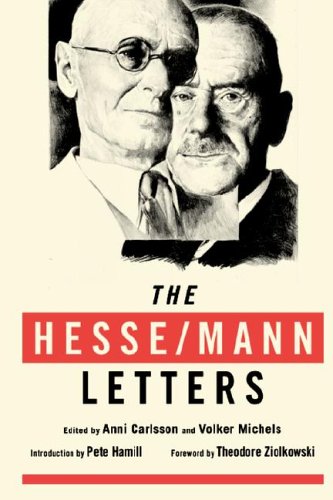
The Hesse/Mann Letters

glm_iv1

This review is part of the German Literature Month, hosted by Lizzie (Lizzies Literary Life) and Caroline (Beauty is a Sleeping Cat)

Thomas Mann received the Nobel Prize for Literature in 1929, Hermann Hesse in 1946. It goes without saying that I was reading the correspondence of these two eminent writers with great curiosity.

It starts in 1910. Hesse has published in his journal Der März a moderately critical review of Mann’s new novel Royal Highness that seemed to him a bit too harsh afterwards. Therefore Hesse is in a way apologizing to Mann in his very first letter. But Thomas Mann is not offended and answers in his typical conciliatory tone that he appreciates Hesse’s “constructive” remarks. He even writes that he considers to submitting something for publication in Der März but mentions also the fact that he is so busy right now.

After this quite hopeful beginning, the communication lingers rather sluggishly between the two for many years, until 1927 or 1928. The reason for this may be partly because they were too immersed in their own writing business but I suppose it had also something to do with principal differences between the two at least during that period.

While Hesse was a pacifist from an early stage of his life who emigrated to neutral Switzerland, distancing himself from Germany also by adopting Swiss citizenship – he was by the way born as a Russian citizen and was technically never a German national – Thomas Mann was during WWI not free from nationalistic feelings, which he expressed most famously in his Reflections of an Unpolitical Man. But while he fell out completely with his brother Heinrich for several years (they later reconciled) for political reasons – Heinrich was for him the principal partisan of superficial French civilisation as opposed to the much deeper German Kultur of which he saw himself as the main representative – the relations with Hesse remained cordial even during this time.

The lost war and the fierce struggle of the young Weimar Republic for survival from the very beginning against radical elements from the left and even more violently from the right caused Thomas Mann to reassess his previous position. He turned into one of the most outspoken defenders of the new democracy against the radical elements in Germany and in the 1920s he became a kind of unofficial intellectual president of the Republic. In this period he not only became close again with brother Heinrich, also the correspondence with Hesse becomes more regular and much more interesting.

They discuss literature – Hesse’s Steppenwolf has just appeared and praised highly by Thomas Mann -, they discuss Literaturpolitik, especially the role of the Prussian Academy. Mann wants to turn this body into a bulwark against the radicals and seeks for Hesse’s support. But Hesse has already disengaged himself completely from Germany. It’s not that he doesn’t care for it. But he simply doesn’t see the point to get involved in the meetings and proceedings of an organization with which he feels no longer any bond.

The probably most interesting part of the correspondence covers the time from 1933 to 1945. While Mann travels abroad to avoid probable arrest, he still has hope that his works will be available to readers in Germany even after the Nazis took power there. Only after the University of Bonn strips him of his doctoral degree honoris causa and after an intervention of his daughter Erika, he breaks “officially” with Germany and makes it clear that he is siding with the emigrants.

It is revealing that some newspapers in Switzerland, where Hesse is residing, attack Mann and the other exiled German writers in a rather rude and disgusting way. The attack was orchestrated by Eduard Korrodi, a mediocre literary critic with whom also Hesse had a previous falling-out.

Family news (especially touching Mann’s reaction on the suicide of his son Klaus), health issues, exchange of evaluations of the actual political situation, difficulties with publishers or the life of an émigré who has to settle in a surrounding that is completely new to him, support to other émigrés who cannot support themselves or need an affidavit for immigration – there are hardly any issues which the two are not discussing in this interesting correspondence. We as readers see also how the mature masterpieces of the two writers, Hesse’s Glass Bead Game and Mann’s Lotte in Weimar, Doctor Faustus and Felix Krull take shape. Mann, although two years older than Hesse and despite the fact that for several years he was “on the road”, seems to be the more vital one. Hesse’s productivity as a writer was seriously reduced by bad health and he mentions frequently how worn out he feels.

This correspondence contains nothing sensational but it gives interesting insights in the lives and workshops of two of the greatest German-language writers of the 20th century. For me it was touching to see how both men, so different they were in many respects, started to develop a friendship. There is not one occasion when you have the feeling that there is a tension between them or a strong disagreement. I don’t want to psychologize but I guess that the two who read each other’s work carefully understood that also the other one had his own share of demons deep inside and that might be one reason why they felt connected. There is also a deep sense of civility in both writers which they both appreciate very much, especially in a time of barbarity. They both saw themselves also as representatives of the “true” Germany – the one that holds culture and humanism high. When Thomas Mann said that

“Where I am, there is Germany. I carry my German culture in me. I have contact with the world and I do not consider myself fallen,”

we can be sure that Hermann Hesse completely agreed with that notion.

It made me also feel a bit nostalgic to read this correspondence. Hesse – who added frequently a small watercolor painting as a header – and Mann were blessed letter writers. Most of the longer letters seem to be carefully composed although the communication flows so freely. The form of address is changing over the years from the very formal Sehr geehrter Herr to Lieber Freund (dear friend) – especially for the son of a Senator from Lübeck this was an extraordinary sign of connectedness; Mann was usually very polite and friendly, but also distanced in most of his correspondence with other partners.

I am wondering if there will be any comparable correspondence of writers in the time of email and other forms of instant messaging – or is this something we have lost for good?

HesseMann

Hermann Hesse / Thomas Mann: The Hesse/Mann Letters, transl. by Ralph Manheim, Jorge Pinto Books, New York 2005

© Thomas Hübner and mytwostotinki.com, 2014. Unauthorized use and/or duplication of this material without expressed and written permission from this blog’s author and/or owner is strictly prohibited. Excerpts and links may be used, provided that full and clear credit is given to Thomas Hübner and mytwostotinki.com with appropriate and specific direction to the original content. 
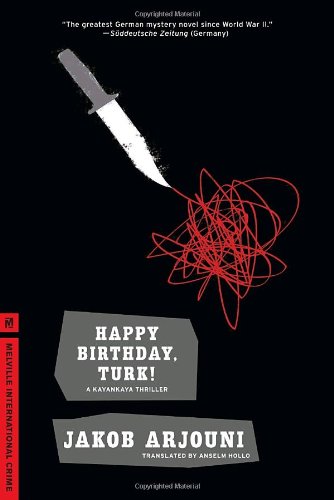
Happy Birthday, Turk!

glm_iv1

This review is part of the German Literature Month, hosted by Lizzie (Lizzies Literary Life) and Caroline (Beauty is a Sleeping Cat)


Kemal Kayankaya – the name is without doubt Turkish. But Kemal doesn’t speak Turkish because he was adopted by a German couple when he was still a toddler. His parents, immigrants from Anatolia in Frankfurt/Main, died young. And so Kemal grew up like any other German child, except for his name.

A very clever choice by the author, I can say. Because it makes the hero of Happy Birthday, Turk! a born outsider – for many Germans he is the Turk who they think cannot speak proper German and should probably work as a garbage collector and for the Turks he is encountering in his work as a private investigator he is the fellow countryman who truly understands them because he has the same background as they do. But both sides are wrong.

In reality this cocky, quick-witted young man in his late twenties with the talent for seeking trouble who after several attempts to find his true vocation somehow acquired a license for his business, and who has an issue with alcohol, is – like many literary heroes of this genre – a romantic to the core. Just scratch a bit on the surface and you will see…

And this is the case with which the Philip Marlowe of Frankfurt has to deal in this book:

Ahmed Hamul, the husband of Ilter, Kayankaya’s client, was found stabbed to death on the streets of Frankfurt’s red light district. Since the police is not very eager to solve the case and because the wife has little trust in them, she is asking her alleged compatriot for help to find out who murdered her husband. Kayankaya accepts and finds himself soon in a case that gets much bigger than he initially thought.

While meeting the family, K. remarks that the brother-in-law has a particularly low opinion of the victim and except for Ahmet’s widow nobody seems really very interested in finding the truth. Also that the family is hiding the youngest daughter under the pretext that she is ill is a hint for the private eye that something is fishy here.

The police proves little willingness to give the needed information to Kemal and his impudent behavior to some of the admittedly racist policemen doesn’t exactly help. Kommissar Futt (a dialect word for vagina by the way), one of the least endearing exemplars in this biotop is leading the investigation and makes it a personal issue to keep Kayankaya, who fooled him once as alleged investigator from the Turkish Embassy, in the dark.

But fortunately, Kayankaya is in friendly terms with the retired police commissioner Löff who is pulling some strings with his former colleagues and is also later of great help. The slightly chaotic Kayankaya and his unofficial assistant who in his very German pedantic way tries to teach his friend some order and discipline and organization are an odd couple and this adds to the humor in the book which is frequently supported by witty dialogues and descriptions.

While some facts are hinting at a conflict in the red light district – Ahmet had obviously a girl friend among the prostitutes there – it is soon obvious that the issue is bigger than Kayankaya thought. It turns out that Ahmet was close with his father-in-law, who got killed in a car accident just months before. Unless the car accident wasn’t exactly an accident as one of the children that witnessed the event, claimed. But Kayankaya cannot ask the child, because it too fell victim to an accident…

I don’t want to give the whole story away, that would spoil the fun for possible future readers of the book. Honestly speaking, the plot was rather conventional and I saw it more or less coming from an early stage of the book.

But when this sounds a bit derogative, I don’t really mean it. Arjouni was 23 when the book was published first and it is quite an accomplishment for such a young author to deliver such a fast-paced classical hard-boiled crime novel with an interesting main character.

And there is more to the book. As someone who has lived in Frankfurt for several years in the 1990s I can say that the book gives an authentic impression of the place to its readers. Starting from the Frankfurt dialect that is used in the German version (yes, Kayankaya “babbelt” frequently in Frankfurterish – how funny is that?) to the description of the locations (“Wasserhäuschen” inclusive – a kind of kiosk open 24/7, literally “little water house”, the typical place for an alcoholic to buy and drink his booze), it all fits. And there are plenty of hilarious situations that give Kayankaya not only opportunity for acerbic or ironic remarks but also for a playful inventiveness on his (and the author’s) side.

Was Frankfurt, the city with the highest percentage of migrants (and the highest crime rate in Germany) really that racist in the 1980s? I cannot really say from my own experience – but I am not a migrant and my living conditions and the milieu in which I lived and worked there a few years later were very different from Kayankaya’s. Since the whole book is so well written and researched, probably it was.

A good decision by the author was also to choose Frankfurt and not Berlin as the location for this novel. In no other place in Germany is the connection between big money and crime so tangible as here, no other city in Germany looks like a miniature version of Metropolis, no other city has this mixture of backwater mentality and delusions of grandeur.

The only bad thing about the book is that it is such a fast read. I finished it in one sitting during a flight from Istanbul to Almaty. But there are four more Kayankaya novels and I am quite sure you will like all of them. (The whole set is translated and available in the Melville International Crime series)

Jakob Arjouni died last year after a long battle with cancer. A real loss for German literature and especially for crime fiction aficionados. I can also strongly recommend his Magic Hoffmann, a crime novel too (but without Kayankaya).

Arjouni

Jakob Arjouni: Happy Birthday, Turk!, transl. by Anselm Hollo, Melville House, New York 2011

 
© Thomas Hübner and mytwostotinki.com, 2014. Unauthorized use and/or duplication of this material without expressed and written permission from this blog’s author and/or owner is strictly prohibited. Excerpts and links may be used, provided that full and clear credit is given to Thomas Hübner and mytwostotinki.com with appropriate and specific direction to the original content.