Tag Archives: Bulgarian literature

Vier Gedichte von Alexander Baytoshev

big-Kucheta

 Вратите 

вратите са отворени –
влезте,
тук е за вас.
Ще се видят
странните ви усмивки.
Останете
по ръбовете на живота,
ще сте добре,
забравили всички.
На това място
няма да би задават въпроси.
Пустините и улиците,
разрушените апартаменти
и счупените пейки –
храмовете на света,
бедни са
без вас –
 
тук сте сами
и вратите са отворени.


Die Türen
 
die türen sind offen –
tretet ein,
hier ist euer platz.
Man wird euer
seltsames lächeln sehen.
Bleibt
an den rändern des lebens,
es wird euch gut gehen,
vergessen werdet ihr alle sein.
An diesem platz
werden keine fragen gestellt.
Die wüsten und straßen,
die zerstörten wohnungen
und zerbrochenen bänke –
tempel der welt,
arm sind sie
ohne euch –
 
hier seid ihr allein
und die türen sind offen.


Кучета
 
Мълчат,
когато им е трудно,
с поглед на изплашен
интелигентен стоик.
 
Не знаят нищо –
но предчустват.
 
Без тяло,
когато опашката е долу,
пресичат на зелено,
понякога пътуват
в градски транспорт.
 
Най-добре ме видят
с периферното си зрение.
Всичко дарят под око.
 
Прибират ги на топка
с лопати,                    
преди да спрат
последното скимтене.


Hunde
 
Sie schweigen
wenn sie es schwer haben,
mit dem blick eines erschreckten
intelligenten stoikers.
 
Sie wissen nichts –
haben aber vorahnungen.
 
Körperlos,
Wenn der schwanz gesenkt ist,
überqueren sie die strasse bei grün
benutzen manchmal
den öffentlichen nahverkehr.
 
Am besten sehen sie mich
aus ihren augenwinkeln heraus.
Allem schenken sie beachtung.
 
Als haufen weggeräumt
mit schaufeln,
vor dem ende
das letzte jaulen. 


Кратко стихотворение за любовта
 
Бих искал да ти подаря нещо
но нямам нищо.
 
Остана ми една здрава връзка от обувка.
 
Само ако ти я подаря,
ще бъда свободен.
 
Знам, че не харесваш връзки от обувки.
Представи си, че е нещо друго.
Представи си, че съм аз.
 
Kurzes gedicht über die liebe
 
Ich möchte dir etwas schenken
aber ich habe nichts.
 
Es bleibt mir ein starkes schuhband.
 
Nur wenn ich es dir schenke,
werde ich frei sein.
 
Ich weiß, dass du keine schuhbänder magst.
Stell dir vor, dass es etwas anderes ist.
Stell dir vor, dass ich es bin.


Едно куче
 
Опустошавам мислите с ръкомахания
После хващам пътя
с повече бръчки по очите.
 
Ще се върна
да разкажа.
 
Ein hund
 
Ich lasse meine gedanken mit gesten aus
Nehme dann die fährte
mit noch mehr falten um die augen auf.

Ich werde wiederkommen
um zu berichten.
 

aus:
Alexander Baytoshev: Kucheta (Александър Байтошев: Кучета), Janet45, Plovdiv 2014
Aus dem Bulgarischen von Thomas Hübner

© Alexander Baytoshev and ИК Жанет45
© Thomas Hübner and mytwostotinki.com, 2014. Unauthorized use and/or duplication of this material without expressed and written permission from this blog’s author and/or owner is strictly prohibited. Excerpts and links may be used, provided that full and clear credit is given to Thomas Hübner and mytwostotinki.com with appropriate and specific direction to the original content.

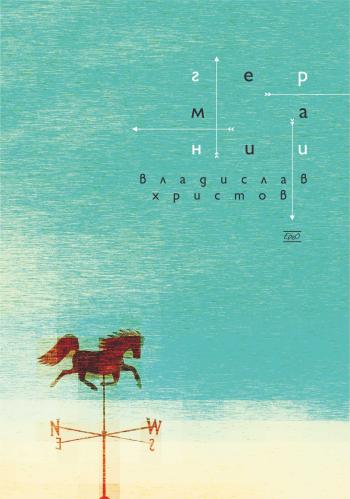
Drei Gedichte von Vladislav Hristov

germanii-cover-vladislav-hristov-350x499


цял ден мета                                                                   
един огромен паркинг
листопадът е в разгара си
не бива да се обръщам назад
да гледам как капят
проклетите листа
германците са учтиви хора
ще кажат довечера
о хер христов
чудесно сте измели
елате утре
половин час
по-рано

den ganzen tag kehre ich
einen riesigen parkplatz
das fallen der blätter ist in vollem gange
ich sollte mich nicht umdrehen
um mir anzusehen wie
das verdammte laub fällt
die deutschen sind höfliche leute
am abend werden sie sagen
oh herr hristov
grossartig haben sie gekehrt
kommen sie morgen
eine halbe stunde
früher


застудя
кучетата ги облякоха
с вълнени пуловери
моя съм го забравил
в българия

es ist kalt geworden
die hunde sind bekleidet
mit wollenen pullovern
meinen habe ich vergessen
in bulgarien


на 2000 километра оттук
доматите зреят
първите череши
вече са на пазара
слънцето влиза
в детската ми стая
през прозореца
който майка всяка сутрин
отваря

2000 kilometer von hier
reifen die tomaten
die ersten kirschen
sind schon auf dem markt
die sonne kehrt ein
in mein kinderzimmer
durchs fenster
das mutter jeden morgen
öffnet

aus: Vladislav Hristov: Germanii (Владислав Христов: Германии), Ergo, Sofia 2014;  aus dem Bulgarischen von Thomas Hübner


© Vladislav Christov and Ergo Books, 2014.
© Thomas Hübner and mytwostotinki.com, 2014. Unauthorized use and/or duplication of this material without expressed and written permission from this blog’s author and/or owner is strictly prohibited. Excerpts and links may be used, provided that full and clear credit is given to Thomas Hübner and mytwostotinki.com with appropriate and specific direction to the original content.

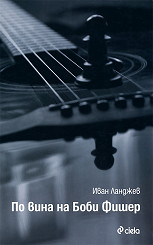
Blame It on Bobby Fischer

A little bit more poetry will be a nice addition to this blog from time to time. And since I am at it to introduce a few internationally not yet very well-known Bulgarian poets here, I am presenting another young contemporary poet today with a few examples of his art.

Ivan Landzhev (born 1986) published his first collection of poetry Blame It on Bobby Fischer (По вина на Боби Фишер) in 2012. The volume was critically acclaimed in Bulgaria and shows an already very versatile and surprisingly mature poet.

The collection that is named (like one of the poems) after the eccentric American chess genius consists like a chess game of three sections: Debut, Mittelspiel, Endspiel, all three are introduced by a quote of Fischer. But of course this threepartition may also stand for the different sections of life, and thus it is not surprising that the author starts his book with a childhood reminiscence:

НЕ ПРЕДИ ТОВА, КОЕТО СЕ СЛУЧИ

на шест години в
двора на къщата
съм си намерил камък

и целеустремено удрям
по медалите на майка ми
от първенствата за девойки

няколко трибагреника са раздрани
от родителските постижения
хвърчат искри

не, не съм бунтар
златотърсач съм
аз просто извличам

славното минало


Not Before What Happened

six years old
in the backyard
I found myself a rock

and with it purposefully
I smashed my mother’s medals
from all her youth championships

a few national flags were torn to pieces
sparks were flying from the parental
achievements

no, I’m not a rebel
I am a gold-digger
I’m just extracting

the glorious past

The chess metaphor plays a role in several of the poems of this book, but it always points at something beyond the experiences on the 64 squares: 

Цитирани автори

Треньорът ми по шахмат
казваше:
„Играй си твоята игра.”

Треньорът ми по бокс
обичаше да казва:
„Лев–лев–десен–ъперкът,
и оня на земята!”

Професорът ми по медиевистика
напомняше, че
„Аз съм Oня, Който съм”.

И тримата са прави
по различно време на деня.


Authors Cited

My chess teacher
used to tell me:
‘Play your own game.’

My boxing coach
would always say:
‘Left-left-right-then uppercut
and he’s down!’

My professor of Medieval studies
reminded me that
‘I am He who is.’

All three of them are right
at a different time of the day.

 One of my favorite pieces in the book is the following: 

Защото ми се струва важно

Силният човек закусва всяка
сутрин по едно и също време,
 
през прозореца поглежда птиците
и всички му се виждат като дивеч.
 
Ако се случи да чете, то
силният човек прочита
Хайдегер
 
и никога Новалис. Нищо
романтично в него няма.
 
Ето:
 
същата жена му се обажда всяка вечер
да отиде в бар, където тя е седнала и
 
се любува най-умишлено на
рамото на друг силен човек,
 
но силният човек така и не разбира.
Разбира се – той просто не отива.
 
Да. А докато времетраят тези и онези
правила и се коват законите, аз си седя.
 
(В подпокривното
студио е нощем.)
 
Аз слагам лед не повече
отколкото ми трябва.
 
Аз слушам силно музика,
създадена от крехки хора.
 
Половината от тях са живи,
обаче като се замисля повечето
май не са…
 
Навън вали, барабани по
капандурите, от капките
 
градът е изтормозен. Сив екран,
разяждан от смущения в сигнала.
 
Когато тракът свърши, ти започваш
и звъниш, сигнализираш ми за себе си,
 
а как ме дразниш само – зная, пак
не аз съм първият ти избор.
 
Вътре – цялото знание в главата ми,
навън – смущения, докато аз
 
отново се обличам
и пристигам
пак!
Да видя
теб
и всичко онова,
което силният човек
си е спестил.
 
Because it seems important to me

The strong man is having breakfast
every morning at the same specific time.
 
He looks at birds out the window
and all of them he sees as game.
 
If it so happens that he reads,
the strong man reads
Heidegger
 
and never Novalis. There’s
nothing romantic about him.
 
Here:
 
The same woman calls him every night
to go to a bar, where she is sitting and
 
she is admiring most deliberately
the shoulder of another strong man.
 
But the strong man never finds out.
Of course – he simply doesn’t go.
 
Yes. And while these and those rules last,
and the laws are being forged, I just sit there.
 
(Inside the attic
studio it’s night-time).
 
I put ice, not more
than I would need.
 
I listen hard to music,
made by fragile people.
 
Half of them are still alive,
but when I think about it, most
of them are not…
 
Outside is raining, it’s drumming against
the skylights, the city is pained by the drops.
 
A grey screen, cankered by
signal disturbances.
 
When the track is over, you start
and you call, you signal me about yourself,
 
and how you just annoy me – I know,
again I’m not your first choice.
 
Inside – all the knowledge in my head,
outside – disturbances, while I
once more put on my clothes
and I arrive
again!
To see
you
and all that which
the strong man
spared himself.

  
In the following poem, the poet uses a pun that is difficult to translate in another language. ‘Samomnenie’ (самомнение) can mean self-esteem, but also vanity, conceit in Bulgarian, whereas ‘samo mnenie’ (само мнение) means ‘just an opinion’; play on words is a frequent happening in Landzhev’s poetry and it adds to the pleasure of the reader:
 

По вина на Боби Фишер

Увереността на маестрото,
който премества леко и
естествено шестнайсетте
си фигури – известна ми е.
 
Вярно е.
 
Аз имам самомнение.
Ти имаш само мнение.
Каква грандиозна разлика
в едничък интервал – оттук
 
до мен.
От Бруклин
до Рейкявик.
 
Е,
не съм ли го заслужил
при такава дистанция,
господин опонент мой,
вездесъщ ерудите?
Не съм ли го заслужил:
по стъпала като спирала да се изкача
най-горе и да се затворя
в къщата си с формата на топ?
 

Through Bobby Fischer’s fault

“I want to live the rest of my life in a house built exactly like a rook”
Robert James Fischer
 
The confidence of the maestro
who moves easily and naturally
his sixteen pieces – I know all about it.
 
It’s true.
 
I have a self-opinion.
You have yourself an opinion.
 
What a grand difference
in a single interval – from here
 
to me.
From Brooklyn
to Reykjavik.
 
Well,
haven’t I deserved it
upon such a distance,
mister opponent of mine,
ubiquitous erudite, you?
Haven’t I deserved it:
to climb the spiral stairs
up top and seal myself
inside my rook-shaped house?

 
 Ivan Landzhev: a young, fresh voice from Bulgaria. It will be interesting to follow his future development as an author.


Landzhev

Иван Ланджев: По вина на Боби Фишер (Ivan Landzhev: Blame It on Bobby Fischer), Siela, Sofia 2012

The English translations are by the the poet. The translations Authors Cited and Not Before What Happened were published 2011 in Granta 128. The two other translations were published on Versoteque.com.

© Thomas Hübner and mytwostotinki.com, 2014. Unauthorized use and/or duplication of this material without expressed and written permission from this blog’s author and/or owner is strictly prohibited. Excerpts and links may be used, provided that full and clear credit is given to Thomas Hübner and mytwostotinki.com with appropriate and specific direction to the original content.

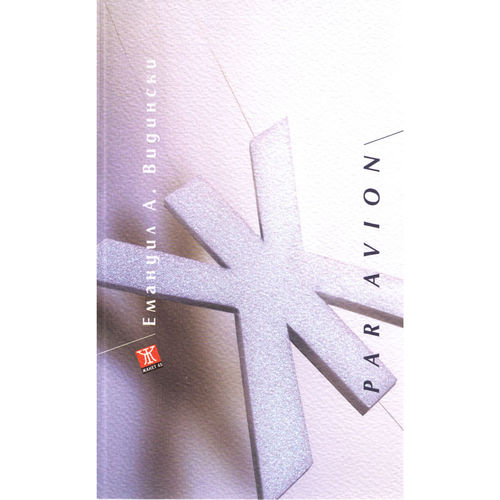
Par Avion

Some time ago I introduced the Bulgarian poet Vladislav Hristov here with some examples of his poetic craft. As regular readers of this blog will know already, I take a particular interest in Bulgarian literature and am frequently reviewing books by Bulgarian authors who deserve it to be read also outside their country. In the field of poetry it seems that Bulgaria has an abundance of talents, but the same goes also for the short prose. And with Georgi Gospodinov Bulgaria has now a writer that “plays in the Premier League” of World Literature – when this sporty metaphor is allowed in this context.

Today I want to share a few poems by another poet of the younger generation in Bulgaria: Emanuil A. Vidinski. Like Vladislav Hristov, Vidinski is not only creative as a poet. He writes also prose, has published a novel and is the translator of Gottfried Benn and Paul Celan in Bulgarian language. Together with fellow poets Peter Tchouhov and Ivan Hristov, he founded the band Gologan. Recently he founded another band, Par Avion, together with his colleague Peter Tchouchov.

The samples of his poetry are from the slender booklet Par Avion (in Bulgarian language) and give a good idea about his major topics. I let them speak for themselves:


“NO.”

doesn’t cry in public
doesn’t complain
doesn’t sulk at the table
doesn’t talk about herself
doesn’t faint and
doesn’t call 911
doesn’t go to a psychologist
doesn’t cut her veins
doesn’t dramatize herself
doesn’t stop working
doesn’t sink into alcohol
doesn’t give in to desperation
doesn’t fake happiness
doesn’t force laughter
doesn’t keep silent on purpose
doesn’t feel aggression
doesn’t feel pity
doesn’t give up smoking
doesn’t change herself
doesn’t take a vacation
doesn’t hitchhike
doesn’t bear an artificial loneliness
doesn’t surround herself with people
doesn’t start writing poems
doesn’t listen to music differently
doesn’t keep a diary
doesn’t stop reading
doesn’t cease making love
doesn’t lose pleasure
doesn’t give up enjoyment
doesn’t miss out on joy
doesn’t bar her laughter
doesn’t long to abscond
doesn’t run away
doesn’t speak of herself
doesn’t sulk at the table
doesn’t complain

just sometimes
feels an overwhelming desire
to disappear into her palms

(translated by Katerina Stoykova-Klemer)

 
——————
 
Малка смърт
не мога да си спомня мириса ти
просто не мога
 
Little death
can’t  remember your scent
I just can’t
 
——————
 
винаги когато цъфнат липите
си припомнят детството
до охлузенотo ти коляно
 
тam прочете
тam потече
и оттогава не спря да вали
 
whenever the linden trees blossom
I recall childhood
till your injured knee
 
there I read
there I flow
and since then it has not stopped to rain
 
—————–
The following poem sums up in a few lines the collective feeling of probably many people in South-Eastern Europe:
 
Балканите
са балконът на Европа
На него понякога излизат
eвропейците
да се порадват малко
на гледката
преди отново да влязат
в подредените си стаи
 
The Balkans
are the balcony of Europe
Sometimes step on it
the Europeans
to take for a little while pleasure
in the view
before re-entering
their orderly rooms

(all other translations by Thomas Hübner)

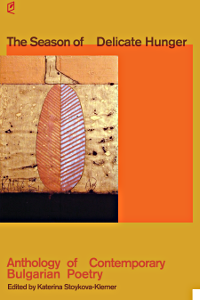
 The translation “NO.” is taken from the anthology The Season of Delicate Hunger that collects 197 poems by 32 contemporary Bulgarian authors. When you want to have an overview about the contemporary poetry in Bulgaria, then this is the book for you.


season_delicate_hunger_frontcover_mdbig-Par-avion_EV_web

Emanuil A. Vidinski: Par Avion, Janet45, Plovdiv 2011

The Season of Delicate Hunger, ed. Katerina Stoykova-Klemer, Accents Publishing, Lexington 2014

© Thomas Hübner and mytwostotinki.com, 2014. Unauthorized use and/or duplication of this material without expressed and written permission from this blog’s author and/or owner is strictly prohibited. Excerpts and links may be used, provided that full and clear credit is given to Thomas Hübner and mytwostotinki.com with appropriate and specific direction to the original content.

To be reviewed

This is my actual “To-be-reviewed” list – which means that I will very probably publish a write-up of these books on my blog within the next months. But don’t be surprised when I add reviews of books that are not on this list. The list is just giving you an idea what you can expect (among others) in the near future on this site.

Tawfik al-Hakim: Diary of a Country Prosecutor

Jim al-Khalili: The House of Wisdom

Fabio Antoldi / Daniele Cerrato / Donatella Depperu: Export Consortia in Developing Countries

Abhijit Banerjee / Esther Duflo: Poor Economics

Joseph Brodsky: On Grief and Reason

Christopher Clark: The Sleepwalkers

Beqe Cufaj: projekt@party

Mahmoud Darwish: Memory of Forgetfulness

Oei Hong Djien:  Art & Collecting Art

Anton Donchev: Time of Parting

Michael R. Dove: The Banana Tree at the Gate

Patrick Leigh Fermor: Mani

David Fromkin: A Peace to End All Peace

Amitav Ghosh: In an Antique Land

Georgi Gospodinov: Estestven Roman

Richard Hamilton: The Last Storytellers

Ludwig Harig: Die Hortensien der Frau von Roselius

Albert Hofmann / Ernst Jünger: LSD

Hans Henny Jahnn: Fluss ohne Ufer (River without Banks)

Ismail Kadare: The Siege

Douglas Kammen and Katharine McGregor (Editors): The Contours of Mass Violence in Indonesia: 1965-1968

Orhan Kemal: The Prisoners

Theodor Kramer: Poems

Sean McMeekin: The Berlin-Baghdad Express

Wilhelm Raabe: Die schwarze Galeere

Deborah Rohan: The Olive Grove

Anthony Shadid: House of Stones

Tahir Shah: In Arabian Nights

Raja Shehadeh: A Rift in Time

Werner Sonne: Staatsräson?


© Thomas Hübner and mytwostotinki.com, 2014. Unauthorized use and/or duplication of this material without express and written permission from this blog’s author and/or owner is strictly prohibited. Excerpts and links may be used, provided that full and clear credit is given to Thomas Hübner and mytwostotinki.com with appropriate and specific direction to the original content.


The Simple Art of Poetry

I admit it: I have a preference for poems written in a simple, almost sparse language. And that say many things with comparatively few words.

Günter Eich’s Inventur (Inventory) was one of the first examples of this kind of poetry I came across when I was very young.

Inventur


Dies ist meine Mütze,
dies ist mein Mantel,
hier mein Rasierzeug
im Beutel aus Leinen. 

Konservenbüchse:
Mein Teller, mein Becher,
ich hab in das Weißblech
den Namen geritzt. 

Geritzt hier mit diesem
kostbaren Nagel,
den vor begehrlichen
Augen ich berge. 

Im Brotbeutel sind
ein Paar wollene Socken
und einiges, was ich
niemand verrate, 

so dient es als Kissen
nachts meinem Kopf.
Die Pappe hier liegt
zwischen mir und der Erde.

Die Bleistiftmine
lieb ich am meisten:
Tags schreibt sie mir Verse,
die nachts ich erdacht. 

Dies ist mein Notizbuch,
dies meine Zeltbahn,
dies ist mein Handtuch,
dies ist mein Zwirn. 


Inventory
 
This is my cap,  
this is my overcoat,  
here is my shave kit  
in its linen pouch.  

Some field rations:  
my dish, my tumbler,  
here in the tin-plate  
I’ve scratched my name.   

Scratched it here with this  
precious nail  
I keep concealed  
from coveting eyes.   

In the bread bag I have  
a pair of wool socks  
and a few things that I  
discuss with no one,  

and these form a pillow  
for my head at night.  
Some cardboard lies  
between me and the ground.   

The pencil’s the thing  
I love the most:  
By day it writes verses  
I make up at night.   

This is my notebook,  
this my rain gear,  
this is my towel,  
this is my twine. 

(Translated by Joshua Mehigan)

Later I discovered many other interesting and beautiful examples of this genre. There are of course too many to quote them all, so I will just present a very few examples here:

Open House

My secrets cry aloud.
I have no need for tongue.
My heart keeps open house,
My doors are widely swung.
An epic of the eyes
My love, with no disguise. 

(Theodore Huebner Roethke a distant relative)

Another one:

Was ich habe, will ich nicht verlieren, aber
wo ich bin, will ich nicht bleiben, aber
die ich liebe, will ich nicht verlassen, aber
die ich kenne, will ich nicht mehr sehen, aber
wo ich lebe, da will ich nicht sterben, aber
wo ich sterbe, da will ich nicht hin:
Bleiben will ich, wo ich nie gewesen bin.

 
What I have, I don’t want to lose, but
where I am, I don’t want to stay, but
the one I love, I don’t want to leave, but
the ones I know, I don’t want to see again, but
where I live, I don’t want to die, but
where I’ll die, I don’t want to go:
I want to stay where I have never been. 

(Thomas Brasch, translated by Thomas Hübner) 

The following poem is already a kind of modern classic:

Was es ist
 
 Es ist Unsinn
sagt die Vernunft
Es ist was es ist
sagt die Liebe
 
Es ist Unglück
sagt die Berechnung
Es ist nichts als Schmerz
sagt die Angst
Es ist aussichtslos
sagt die Einsicht
Es ist was es ist
sagt die Liebe
 
Es ist lächerlich
sagt der Stolz
Es ist leichtsinnig
sagt die Vorsicht
Es ist unmöglich
sagt die Erfahrung
Es ist was es ist
sagt die Liebe
 
What it is
 
It is nonsense
says reason
It is what it is
says love
 
It is misfortune
says calculation
It is nothing but pain
says fear
It is hopeless
says insight
It is what it is
says love
 
It is laughable
says pride
It is frivolous
says caution
It is impossible
says experience
It is what it is
says love 

(Erich Fried, translated by Gwilym Williams) 

 And here is a quite famous example:

This is Just to Say
 
I have eaten
the plums
that were in
the icebox
 
and which
you were probably
saving
for breakfast
 
Forgive me
they were delicious
so sweet
and so cold  

(William Carlos Williams) 

The shortest possible form of a poem is of course the haiku. Therefore here some examples from the great master of the haiku genre, Matsuo Basho:

Waking in the night;
The lamp is low,
The oil freezing.
 –
 It has rained enough
To turn the stubble on the field
Black.

 Winter rain
Falls on the cow-shed
A cock crows.

 The leeks
Newly washed white,-
How cold it is!

 The sea darkens;
The voices of the wild ducks
Are faintly white.

Ill on a journey;
My dreams wander
Over a withered moor. 

(translated by Robert Hass)

These are examples by well-known or even famous authors. But frequently lesser-known (but equally gifted) poets produce works that deserve to be noted, read, distributed and recommended. And I don’t want to conclude this short choice of poems without giving the floor to a poet that is probably unknown to most of you. I discovered this author only recently, after a close friend presented me a copy of his newest collection of poetry. I am talking about the Bulgarian poet Vladislav Hristov (born 1976), and his book Fi (Фи). (Thank you, Eli! And thank you, Vladislav Hristov, for the dedication in my copy!).

Hristov is undoubtedly one of the best haiku poets of our times: 

изгонената котка
само тя
видя звездопада
 
cat shooed away
only she saw
the meteor shower 

(Translated by Maya Lyubenova)

Also in his new collection the tone is laconic, sparse, but always evocative:

дясната ръка
държи книгата
лявата
ръката на любимия
всяка нова страница
е раздяла
 
the right hand
holds the book
the left
the hand of the beloved
each new page
is shared

снимането на ангел
е много лесно:
просто кажи обичам те
преди да натиснеш копчето
 
photographing an angel
is very simple:
just say I love you
before you press the button

сънувах тарковски
седнал на пода
в детската ви стая
андрюша какво правиш тук
той мълчи
вцепених се от ужас:
ами ако ме попита
същото
 
I dreamt Tarkovsky
sat on the floor
in your children’s room
andryusha what are you doing here
he was silent
frozen in horror:
what if you asked me
the same 

(Translations by Thomas Hübner)

Vladislav Hristov is an extraordinarily versatile and talented poet/photographer/artist. He writes also interesting short prose, and it would be nice to see more of his works translated and published in other languages.

Ergo Books, his Bulgarian publisher, is to be congratulated for the efforts they are undertaking to promote contemporary Bulgarian poetry. Beside from Vladislav Hristov, they publish also the poetry of Jana Punkina, Miroslav Hristov, Jordanka Beleva, Dimana Ivanova, Palmi Ranchev, Maria Vasileva, Margarit Zhekov, Kamen Kostov, and Ivaylo Ivanov, amongst others.
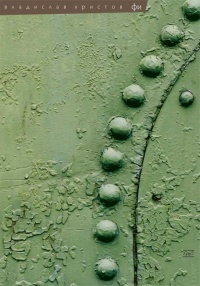
Fi

 Vladislav Hristov: Fi, Ergo Books, Sofia 2013 (in Bulgarian language)


Günter Eich: Abgelegene Gehöfte. Schauer, Frankfurt am Main, 1948 (transl.: Poetry, Apr2009, Vol. 194, Issue 1, p37)

Theodore Roethke: Open House. Knopf, New York, 1941

Thomas Brasch: Die nennen das Schrei. Gesammelte Gedichte. Suhrkamp, Berlin, 2013

Erich Fried: Es ist was es ist. Wagenbach, Berlin 1983 (transl.: http://poet-in-residence.blogspot.com/2009/06/coming-soon-erich-fried.html)

William Carlos Williams: The Collected Poems, Volume I, 1909-1939. New Directions, New York, 1991

Matsuo Basho: Poems, e-book 2004 (http://www.poemhunter.com/i/ebooks/pdf/matsuo_basho_2004_9.pdf)


© Thomas Hübner and mytwostotinki.com, 2014. Unauthorized use and/or duplication of this material without expressed and written permission from this blog’s author and/or owner is strictly prohibited. Excerpts and links may be used, provided that full and clear credit is given to Thomas Hübner and mytwostotinki.com with appropriate and specific direction to the original content.
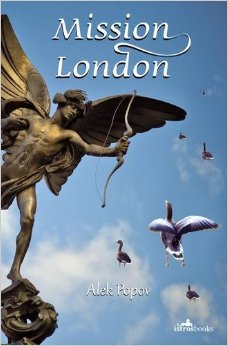
Mission London

Maybe Varadin Dimitrov, the new Bulgarian ambassador in London should have announced his arrival at his duty station earlier. But he prefers to catch his embassy staff by surprise and much to his dismay he realizes that a lot of things are not going too well in this important outpost of Bulgarian diplomacy.

The cook, a crucial person in each embassy as it seems, is not only caught in dubious business deals with a failed actor and his even more doubtful associate of probably Siberian origin; he has also a true Xanthippe as a wife and even worse: he obviously had never access to the treatise “On the hierarchy of the diameter”, a never published dissertation which makes its rounds secretly in diplomatic circles because it explains the difficult art to make sandwiches of the right size – as the Ambassador learns from a guest at his first reception. – We will never know for sure if this guest was poking fun or if he is dead serious.

Also the other embassy staff is quite remarkable: the technical staff is spinning intrigues against the diplomats and vice versa, an important speech is almost lost due to the incompetence of a stagiaire, the embassy building is used as a kind of cheap hotel by Bulgarian guests (such as the mayor of Provadia) and even by fired former embassy staff that rejects to leave this cozy and cheap place.

But the worst are the phone calls that the Ambassador receives from Bulgaria from a certain person that was instrumental in his being posted to this attractive location – this individuum is obsessed by the wish to have an opportunity to meet the Queen in person and is reminding poor Varadin very urgently to pay back for this favor.

Fortunately for the ambassador, there are also a few things that seem to make his stay in London at least partly pleasant: there is Katya, the attractive student that is cleaning his office and who as it turns out has also many other talents, and there is also this nice British MP, a true friend of Bulgaria who gets him acquainted with a seemingly very discreet and efficient PR agency that can resolve his major problem with the Queen…

It would spoil the fun of reading this novel which is full of surprising developments, funny situations and satirical moments, if I would say more about the plot. Alek Popov knows how to develop a story and how to keep his reader’s attention. This is the kind of story that asks on every page to be turned into a movie, and indeed “Mission London” was successfully adapted into a film by Dimitar Mitovski and which was a box office hit in Bulgaria in 2010 (outperforming even Avatar).

In the second half of the book Popov is doing a little bit too much, some developments are too forced and exaggerated for my taste and one or two loose ends are not properly tied up. But it is definitely a lot of fun to read this novel that has plenty of tempo and offers excellent entertainment during the biggest part of the book. Some critics compared him with John Irving or T.C. Boyle. That’s aiming a little bit too high, but Popov is definitely a very talented author. It will be interesting to read more from him.

And, by the way, after I read this book I am glad that I didn’t aspire to go for a career in the diplomatic service. 

Mission London

Alek Popov: Mission London, Istros Books 2014, transl. by Danielle and Charles de M Gill

© Thomas Hübner and mytwostotinki.com, 2014. Unauthorized use and/or duplication of this material without expressed and written permission from this blog’s author and/or owner is strictly prohibited. Excerpts and links may be used, provided that full and clear credit is given to Thomas Hübner and mytwostotinki.com with appropriate and specific direction to the original content.