Category Archives: German literature

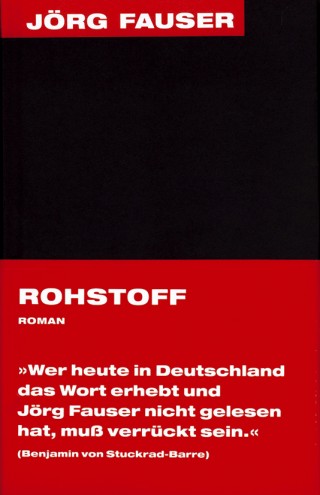
Raw Material

Let’s start with the title. Raw Material is a correct translation of the German word Rohstoff. But Stoff means in German not only material, it is also a slang word for illegal drugs (dope) such as heroin or in this case raw opium.

The story of Jörg Fauser’s novel starts in Istanbul in the second half of the 1960s. The narrator – although it is a novel we may assume that the book is Fauser’s own life story – is living in the (then) run-down Cağaloğlu district, a bit north of the Blue Mosque.

During the 1960s, Istanbul and here more specifically the neighborhoods of Tophane and Cağaloğlu, were favorite hang-out places for all kind of Western young people: would-be writers and painters, drug addicts, petty criminals, political radicals plotting for a somehow diffuse revolution to come, hippies, beatniks. Together with Ede, a painter friend from Stuttgart, the protagonist, a young man with the strong ambition to become a writer, is sharing a tin structure on the roof of a dubious hotel. Life is cheap and so are the drugs. In an odd way a kind of idyll, even during the cold Istanbul winter:

“One poured some gasoline on the stone floor and lit it, and as long as the flames were giving off some warmth, the other looked for a vein. We took everything we could get, primarily it was raw opium, which we cooked, Nembutal for dozing off and all sorts of uppers to get going. When we were going, we had to get more dope and everything else we needed – we lived predominantly on tea and sweets – and then we lay there, wrapped in our blankets, played with the cat and worked. Ede painted, and I wrote.”

The reader is a bit concerned about the fate of this hero. Chances seem to be rather small that he will not end like so many drug addicts. But his genuine passion for writing and not so much the drugs (which he is replacing mainly by alcohol during the course of the story) keep him going and after his return and the start of a relationship with a girl, his life takes a turn, kind of.

In order to support himself, he is writing articles for a number of mostly short-lived magazines that are popular among young people in Germany. He has an opportunity to travel, even to conduct an interview with the famous beat poet William S. Burroughs. The story of the Burroughs interview is hilarious. After some friendly small talk at the beginning, Burroughs comes out with the one subject that really interests him: dope.

“What kind of stuff did you take?” “Oh, Opium mainly.” “What – raw opium? You didn’t mainline, intravenously?” ”Yup.” “Young man”, Burroughs said with the hint of a smile. “You must have been completely off your rocker.”

The literary cut-up technique for which Burroughs was famous is only a minor topic of this conversation. Burroughs comes again back to the subject of drug addiction, and how he was cured from it with the help of a new, but very strange method called the Apomorphine Formula.

“He disappeared into the next room, came back a second later and handed me a magazine-sized brochure wrapped in brown paper: William S. Burroughs: APO-33 Bulletin. The subtitle read: A Report on the Synthesis of the Apomorphine Formula.

“You can keep it”, he said. “My small contribution to healthcare,” and laughed; his choppy ha-ha-ha came from rather shadowy regions. “The apomorphine formula,” he said and sat down, “is a contribution to the cleansing and detoxification of the planet. Detoxification from what? From illness, addiction, ignorance, prejudice and stupidity. The question is: Are the people now in power interested in this detoxification? You know, young man, what the answer is to that.”

The strangeness and obvious paranoia of Burroughs were maybe never described better as in the last paragraph I quoted above.

In the second half of the story, the protagonist moves to Berlin, later to Frankfurt, starting to embark on a more regular life although he is living in an illegally occupied house. An attempt to work as a part of a film crew fails miserably but gives Fauser again an opportunity to show his self-ironic sense of humor.

As we have the feeling that the hero is a more stable person now, the reader’s attention is probably shifting a bit more to what is going on around our protagonist. Frankfurt in the late 1960s was one of the birth places of the German Student Revolt (and also of the brutal terrorism of the so-called Red Army Faction a.k.a. Baader Meinhof Gang). Fauser’s hero, is living through this time more as an amused spectator than as a real part of that student movement. The fake romanticism and annoying self-congratulation of so many literary or autobiographical books on the student revolt by people who participated in it (or later claimed to have participated in it) is completely missing in Fauser’s novel, and that’s one of it’s many strengths.

Fauser, together with Rolf Dieter Brinkmann, was one of the representatives of the Beat Generation in Germany. But we would not do him justice if we saw him as an epigone of a literary movement that he tried to copy. Fauser had his own voice and style. He was also an experienced journalist, and that is also much to the profit of his works. His stories are written without much fuss or affectation, in a precise, matter-of-fact way, with a lot of self-irony and humor, something that was extremely rare among writers of his time. There is a kind of raw energy about this and the other books of this author which make them very appealing to me. I like Fauser’s books a lot.

Fauser was run over by a truck in 1987, while crossing an Autobahn as a pedestrian in the night after his 43rd birthday. (Rolf Dieter Brinkmann was also run over by a car in 1975.)  Fauser’s work deserves to be discovered. For me one of the best German-language authors.

An English edition of Raw Material will be published in November 2014.

Raw Material

Rohstoff


Jörg Fauser: Rohstoff, Alexander Verlag, Berlin 2004; Raw Material (transl. Jamie Bulloch), The Clerkenwell Press/Profile Books (publication date: 13 November 2014) 

(The quotes in this blog are translated by Marc Svetov. © Berlin Verlag 2009)

© Thomas Hübner and mytwostotinki.com, 2014. Unauthorized use and/or duplication of this material without expressed and written permission from this blog’s author and/or owner is strictly prohibited. Excerpts and links may be used, provided that full and clear credit is given to Thomas Hübner and mytwostotinki.com with appropriate and specific direction to the original content.


The Black Gallery

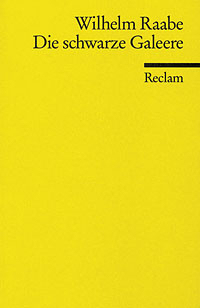
Romance, adventure, a heroic fight for freedom and independence against an army of brutal oppressors, a young couple that is re-united against all odds: this story has it all. No wonder that it was a kind of bestseller for generations in the author’s homeland. It offers entertainment and the heart-warming message that a fight for national independence against foreign rule can be successful in the end. But although this seems to be the message on the surface, there is a much deeper (and darker) hidden meaning in this story.

Jan Norris and Myga van Bergen are inseparable friends since their early youth and everybody expects them to be married one day. But the times are difficult. This is Holland in the late 16th century, the time of the Dutch Independence war against Spain. The couple is separated due to the circumstances and Jan is becoming a member of the so-called Watergeuzen, a group of rebels that is fighting the Spanish on the sea and that has a reputation of being particularly cunning, brave, and cruel.

Despite his young age, Jan is admitted as an officer on board of the “Black Gallery”, a mysterious ship that appears only at night and with whom the Watergeuzen have several spectacular successes against the Spanish fleet and fortresses. In the meantime, the beautiful Myga, now orphaned, is in serious trouble: the captain of the Spanish ship Andrea Doria falls hopelessly in love with her, and there is a plan to kidnap her. But Jan Norris gets by chance some information on the plot and rushes to protect his Myga…

I don’t want to give away the whole story here of course. But I think it is interesting to read Wilhelm Raabe’s The Black Gallery (Die schwarze Galeere) not only as an adventure and romance story.

Raabe, one of the great realistic authors of the 19th century (and today almost forgotten), proves with this early story not only that he knows how to entertain his readers with a colorful action and love story. He introduces also “gothic” elements like the Black Gallery (although based on a real ship it clearly reminds the reader of the Flying Dutchman) into the tale. And there is an interesting figure in this story which deserves particular mentioning: the experienced Spanish officer Jeronimo is a disillusioned old fighter who understands that this war is a useless effort: although the war is raging already since many years and too many soldiers and civilians have died, none of the parties has made any real progress…and for what all this bloodshed? Jeronimo is clearly a mouthpiece of the author in my opinion.

Raabe, deeply influenced by Schopenhauer’s pessimistic philosophy, was anything else but a warmonger and chauvinist. Even the fight for a good cause has in any case very bad consequences and affects the character of each involved person in a very negative way.

It is surprising that Raabe’s story has been read for such a long time as a kind of simple heroic story that supports the virtues of the fighter for a good cause, the national independence.

But it is so obvious that Raabe was far from the intention to write a piece to stir nationalistic feelings. His message is clearly that war brings out the worst in each person. Although in principle sympathetic with the Dutch freedom fighters, he also mentions their immense cruelty, and Jan, the loyal friend and lover sets also a very bad example for killing the already unconcious Spanish officer out of personal revenge: a murder, not a fair fight in battle. The worst is that there is a young generation without the longing for peace – because they don’t know what peace is. Unfortunately this is today true as ever in many places on this planet…

In my opinion, Wilhelm Raabe (1831-1910) is one of the greatest writers of the 19th century and this story is a good opportunity to discover this author. The Black Gallery is as far as I know available in English only in a collection of Sea Stories. A book with Raabe’s stories in English would be a commendable deed by any publisher.

Raabe

Sea StoriesWilhelm Raabe: Die schwarze Galeere, Philipp Reclam jun., Stuttgart 2007

H.M. Tomlinson (ed.): Great Sea Stories of All Nations (2 vol.), Kessinger Publishing 2004

© Thomas Hübner and mytwostotinki.com, 2014. Unauthorized use and/or duplication of this material without expressed and written permission from this blog’s author and/or owner is strictly prohibited. Excerpts and links may be used, provided that full and clear credit is given to Thomas Hübner and mytwostotinki.com with appropriate and specific direction to the original content.
To be reviewed

This is my actual “To-be-reviewed” list – which means that I will very probably publish a write-up of these books on my blog within the next months. But don’t be surprised when I add reviews of books that are not on this list. The list is just giving you an idea what you can expect (among others) in the near future on this site.

Tawfik al-Hakim: Diary of a Country Prosecutor

Jim al-Khalili: The House of Wisdom

Fabio Antoldi / Daniele Cerrato / Donatella Depperu: Export Consortia in Developing Countries

Abhijit Banerjee / Esther Duflo: Poor Economics

Joseph Brodsky: On Grief and Reason

Christopher Clark: The Sleepwalkers

Beqe Cufaj: projekt@party

Mahmoud Darwish: Memory of Forgetfulness

Oei Hong Djien:  Art & Collecting Art

Anton Donchev: Time of Parting

Michael R. Dove: The Banana Tree at the Gate

Patrick Leigh Fermor: Mani

David Fromkin: A Peace to End All Peace

Amitav Ghosh: In an Antique Land

Georgi Gospodinov: Estestven Roman

Richard Hamilton: The Last Storytellers

Ludwig Harig: Die Hortensien der Frau von Roselius

Albert Hofmann / Ernst Jünger: LSD

Hans Henny Jahnn: Fluss ohne Ufer (River without Banks)

Ismail Kadare: The Siege

Douglas Kammen and Katharine McGregor (Editors): The Contours of Mass Violence in Indonesia: 1965-1968

Orhan Kemal: The Prisoners

Theodor Kramer: Poems

Sean McMeekin: The Berlin-Baghdad Express

Wilhelm Raabe: Die schwarze Galeere

Deborah Rohan: The Olive Grove

Anthony Shadid: House of Stones

Tahir Shah: In Arabian Nights

Raja Shehadeh: A Rift in Time

Werner Sonne: Staatsräson?


© Thomas Hübner and mytwostotinki.com, 2014. Unauthorized use and/or duplication of this material without express and written permission from this blog’s author and/or owner is strictly prohibited. Excerpts and links may be used, provided that full and clear credit is given to Thomas Hübner and mytwostotinki.com with appropriate and specific direction to the original content.


From Bulgaria with Love

German Literary Spaces (Nемски литературни простори) is a new collection of essays by the Bulgarian poet, essayist, aphorist, and translator Venzeslav Konstantinov.

Konstantinov is one of those very important mediators between different countries, languages, cultures that make literature or other works from the cultural sphere accessible to us and whose work is so important and frequently underestimated. As for Bulgaria, a considerable part of the classical and modern literature in German language was translated and edited by Konstantinov and his translations are accompanied by essays that help the reader to understand the context of the work and the writer. Konstantinov is a particularly gifted translator of poetry. The “Bulgarian” poetry of Erich Kästner for example is so close to the original that it sounds as if Kästner has written the poems himself in Bulgarian.

A collection of twenty of Konstantinov’s essays on German literature is now published in the new book announced here. Each chapter is devoted to the work of one author, and the range of writers covers the period from the 18th century (the first essay in the book is devoted to Goethe) until today (an essay on Martin Walser concludes the book). All essays are comparatively short (five to ten pages), only the one on Elias Canetti (“From Rustschuk with Love”) is longer. And all of them make the reader curious to discover the work of the writer that Konstantinov is describing in the respective essay.

Konstantinov proves not only to be a congenial translator, but also a successful ‘literature seducer’, someone who knows how to wake up the wish in the reader to discover new literary horizons.

With two small critical remarks I want to conclude this review. First, it would have been great to make it clear that the essays are not dealing with the 20 most important German authors (there is for example no essay on Kafka, and an essay on Katja Mann instead of Thomas or Heinrich Mann). The essays reflect Konstantinov’s interests, and that’s absolutely fine. But they are not (and not meant to be) a systematic introduction to German literature. That’s in no way meant as a criticism of the author, but a short remark in this sense would be useful to readers that are not so familiar with German literature.

Additionally it would have been nice to mention if the essays were written for this book or if it is a collection of previously published articles. Nothing wrong with collecting previously published essays, it is even a commendable deed from the publishing house Iztok-Zapad (East-West) in Sofia. But as a reader I just want to know what exactly I am reading.

These remarks diminish in no way the excellent work by Venzeslav Konstantinov and his publisher. This collection of essays is worth reading and deserves a translation, and of course many Bulgarian readers.

Nemski_literaturni_prostori

Venzeslav Konstantinov: Nemski literaturni prostori (German literary spaces), Iztok-Zapad, Sofia 2014

© Thomas Hübner and mytwostotinki.com, 2014. Unauthorized use and/or duplication of this material without expressed and written permission from this blog’s author and/or owner is strictly prohibited. Excerpts and links may be used, provided that full and clear credit is given to Thomas Hübner and mytwostotinki.com with appropriate and specific direction to the original content.
A Belated Echo

Josef Burg, born 1912 in Wyschnyzja, a small town in the Bukovina, at that time part of the Austro-Hungarian Empire, now belonging to the Ukraine, reached an almost biblical age. He died 2009 at the age of 97 years in the nearby town of Tschernowzy (Czernowitz).

Czernowitz, his home for most of his life, once housed a vibrant German-speaking Jewish community. Czernowitz not only had one of the best universities in Austria-Hungary and an excellent German theater, it had also dozens of newspapers and literary journals. It was, according to the poet Paul Celan who was born there, a place where people and books lived. It is therefore not surprising that Czernowitz was also the home of important German poets like Celan himself, Rose Ausländer, Immanuel Weissglas, Alfred Gong, and several others.

Josef Burg was one of the last of this generation of authors. But contrary to the above mentioned poets, Burg wrote mainly prose – and he wrote exclusively in Yiddish, not German. Yiddish, the traditional language of Eastern European Jews is derived from Medieval German (Mittelhochdeutsch) but has absorbed many Hebrew, Slav, and recently English words. By the educated Western European but also by most Zionist Jews, Yiddish was considered as ‘jargon’, a ‘wrong’ German, a dialect of the uneducated and backward people from the ghettos of Eastern Europe. But this point of view doesn’t do justice to this language – it is rich, colorful, even juicy, and it has produced many eminent writers and an extremely interesting literature. Josef Burg was one of the last authors to write in this language.

In one of his short stories A loschn beazmoj (A language of its own), Burg is describing the surprising reactions of his environment towards Yiddish: as a student in Vienna just before the Anschluss in 1938, he is witnessing how a Jewish student from the East is earning verbal abuse and even open hatred from his Jewish colleagues from Vienna – just because he is addressing them in his native language (which for sure all of his colleagues at least understood).

A short time later the narrator is congratulated by his professor for his excellent German. When the professor asks the foreign student what his native language is, he answers: “Yiddish, Herr Professor!”. The professor, probably a conservative Austrian aristocrat reacts not like the student expects:

I remark that he wants to say something. Maybe the hackneyed “Yiddish is spoilt German”. But he looks at me vividly. Warmth and a certain hesitation are in his gaze. And he says something unexpected. Simple, pure and full of expression: “Yiddish, young friend, is a language of its own.”

(Ich bamerk, as er grejt sich epess sogn. Efscher doss ojssgedroschene “Jidisch is a fardorbn dajtsch!”. Nor er kukt af mir zudringlich. Sein blik is erwoss farzojgn un warem. Un er tut umgericht a sog. Poscher, rejn un saftik: – Jidisch, junger frajnt, is a loschn beazmoj!)

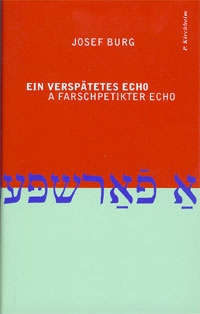
The stories in Josef Burg’s collection of stories A farschpertikter echo (A belated echo) are grouped in three thematic chapters. One is consisting of childhood memories from his poor shtetl and its lumberjacks and rafters. The second deals with the life of the survivors and their attempts to find back to some kind of normality, which for most of them is impossible (Burg for example was the only surviving family member – he lost 50 relatives in the holocaust). And the third is focusing on the time of the persecution.

All of these stories leave a strong impression on the reader. That is partly because of the backdrop of these stories: the genocide. But it is also because of the art of Josef Burg. He leaves everything superficial out and is concentrating on the essential: the fate of the people he is describing, their hopes and fears, their rare joys and frequent sorrows.

In jene teg (In those days) is a good example. On five pages only, Burg is describing the fate of a man he knew in Vienna in 1938. The crippled Galician Jew is like the narrator a regular guest in the Cafe Central, a popular meeting point of intellectuals, writers and artists. The man with the hunchback is one of these luftmentschn that are such a familiar view in many Yiddish stories: someone with an unidentifiable profession (this one seems to be a photographer and a poet, but it is doubtful how he can survive from this almost non-existing income), origin and future, living on the edge of destitution.

The friendly and very modest behavior of this Quasimodo make the narrator curious and he is finally befriending this man. But he is too shy and modest to recite his own poems, as much as the narrator insists. After the Anschluss and the introduction of the “racial” laws in Austria, the Cafe Central has closed its doors for the Jews and on a last occasion before the narrator leaves Austria (he is a foreigner and therefore lucky to find a way out of the mousetrap which Vienna has become for local Jews), he is meeting his friend a last time and his friend is finally giving him a notebook with his poems:

“You wanted my poems? Here you are…Maybe they prove to be useful for you…for sure not for me anymore.”

(“ir hot gewolt majne lider?…Ot hot ir sej…Efscher wet ir sej kenen ojssnuzn…Ich – schojn sicher nit.”)

Some years later, the narrator learns about the fate of his friend from another emigrant: the poet was hiding in a chest, but found while sleeping by the SS. They buried him alive. The manuscript with the poems is handed over to a Jewish publisher in Prague who is later also to become a victim of the Nazis. The notebook is lost without a trace.

“Maybe one day you will remember me!”

(“Efscher wet ir amol mich dermonen!”)

Josef Burg remembered him. And we need to be grateful for this work of a great writer.


BurgCover2jpg

Josef Burg: A фаршпэтиктэр эхо: дэрцейлунген, новелес, фарцейхенунген, Sovetskij pisatel, Moscow 1990

Josef Burg:  A farschpetikter echo / Ein verspätetes Echo, P. Kirchheim, München 1999

Translations from Yiddish to English in this blog by Thomas Hübner


© Thomas Hübner and mytwostotinki.com, 2014. Unauthorized use and/or duplication of this material without expressed and written permission from this blog’s author and/or owner is strictly prohibited. Excerpts and links may be used, provided that full and clear credit is given to Thomas Hübner and mytwostotinki.com with appropriate and specific direction to the original content.


The Making of a Bestseller

Hegemann

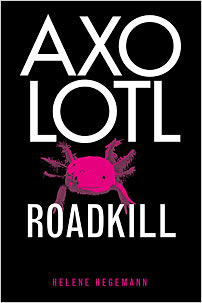
16-year old Mifti, the hero of the novel “Axolotl Roadkill” by Helene Hegemann, is a kind of female Holden Caulfield transferred in time and space to the early 21st century techno clubs of Berlin.

The book was a minor sensation when it came out in Germany in 2010, and the 17-old wunderkind author became the darling of a certain part of the literary feuilleton and media.

I read the book soon after it was published in Germany and was taken aback. What was hyped by some reviewers as the work of a new literary genius turned out to be 200-odd pages of revolting and not very well written fuck-and-vomit prose, mixed with half-digested (and quarter-understood) theory jargon, and the usual name-, label- and location-dropping that is supposed to excite a certain category of Berlin hipsters, but that is simply a sign for an inflated ego of the “author” (Regarding the “authorship” of this book see below). Rarely in my life was I bored more as when I was forcing myself through this book.

It turned out that a very big part of this so-called novel was plagiarized (without mentioning sources) from a variety of books and other texts. Only in later editions, the publisher mentioned all(?) sources. But “theft remains theft”, as the author Helmut Krausser remarked in this context, and to argue that everybody is doing it nowadays shows only a lack of reflection and hints at lustful self-deception.

A well-connected father (Herr Hegemann is a famous dramaturg in Berlin) who can pull a few strings in the publishing and media scene, a publishing house (Ullstein) that was a bit too eager to produce a new literary wunderkind, reviewers that in all seriousness praised the “authenticity” of the plagiarized novel and that are obviously blind when the author fulfills their two main quality criteria (“young and female”), and a girl that knew how to put together a novel mainly with the copy-and-paste function of her laptop – these are the ingredients of this case, the initial big success and the scandal that was following.

What Hegemann and her supporters seem not to understand until today is that there is a difference between intertextuality and plagiarism. That she (and even a reviewer in the “Guardian”) claims until today that she “took” just a few lines from other authors is appalling. I remember that in an article of the Frankfurter Allgemeine it was proved in detail that a very big part of the book is a mechanical copy of texts written by people other than Fräulein H.

Sorry when I sound a bit misogynic this time. But I found it extremely annoying that this rag of a book took so much attention from other much more worthy works of contemporary literature (also by female authors).

“Axolotl Roadkill” is interesting as a media phenomenon but not as a novel. Zero out of five stars. ‘Nuff said.


Helene Hegemann: Axolotl Roadkill, transl. by Katy Derbyshire, Constable & Robinson 2012

© Thomas Hübner and mytwostotinki.com, 2014. Unauthorized use and/or duplication of this material without expressed and written permission from this blog’s author and/or owner is strictly prohibited. Excerpts and links may be used, provided that full and clear credit is given to Thomas Hübner and mytwostotinki.com with appropriate and specific direction to the original content.


The Simple Art of Poetry

I admit it: I have a preference for poems written in a simple, almost sparse language. And that say many things with comparatively few words.

Günter Eich’s Inventur (Inventory) was one of the first examples of this kind of poetry I came across when I was very young.

Inventur


Dies ist meine Mütze,
dies ist mein Mantel,
hier mein Rasierzeug
im Beutel aus Leinen. 

Konservenbüchse:
Mein Teller, mein Becher,
ich hab in das Weißblech
den Namen geritzt. 

Geritzt hier mit diesem
kostbaren Nagel,
den vor begehrlichen
Augen ich berge. 

Im Brotbeutel sind
ein Paar wollene Socken
und einiges, was ich
niemand verrate, 

so dient es als Kissen
nachts meinem Kopf.
Die Pappe hier liegt
zwischen mir und der Erde.

Die Bleistiftmine
lieb ich am meisten:
Tags schreibt sie mir Verse,
die nachts ich erdacht. 

Dies ist mein Notizbuch,
dies meine Zeltbahn,
dies ist mein Handtuch,
dies ist mein Zwirn. 


Inventory
 
This is my cap,  
this is my overcoat,  
here is my shave kit  
in its linen pouch.  

Some field rations:  
my dish, my tumbler,  
here in the tin-plate  
I’ve scratched my name.   

Scratched it here with this  
precious nail  
I keep concealed  
from coveting eyes.   

In the bread bag I have  
a pair of wool socks  
and a few things that I  
discuss with no one,  

and these form a pillow  
for my head at night.  
Some cardboard lies  
between me and the ground.   

The pencil’s the thing  
I love the most:  
By day it writes verses  
I make up at night.   

This is my notebook,  
this my rain gear,  
this is my towel,  
this is my twine. 

(Translated by Joshua Mehigan)

Later I discovered many other interesting and beautiful examples of this genre. There are of course too many to quote them all, so I will just present a very few examples here:

Open House

My secrets cry aloud.
I have no need for tongue.
My heart keeps open house,
My doors are widely swung.
An epic of the eyes
My love, with no disguise. 

(Theodore Huebner Roethke a distant relative)

Another one:

Was ich habe, will ich nicht verlieren, aber
wo ich bin, will ich nicht bleiben, aber
die ich liebe, will ich nicht verlassen, aber
die ich kenne, will ich nicht mehr sehen, aber
wo ich lebe, da will ich nicht sterben, aber
wo ich sterbe, da will ich nicht hin:
Bleiben will ich, wo ich nie gewesen bin.

 
What I have, I don’t want to lose, but
where I am, I don’t want to stay, but
the one I love, I don’t want to leave, but
the ones I know, I don’t want to see again, but
where I live, I don’t want to die, but
where I’ll die, I don’t want to go:
I want to stay where I have never been. 

(Thomas Brasch, translated by Thomas Hübner) 

The following poem is already a kind of modern classic:

Was es ist
 
 Es ist Unsinn
sagt die Vernunft
Es ist was es ist
sagt die Liebe
 
Es ist Unglück
sagt die Berechnung
Es ist nichts als Schmerz
sagt die Angst
Es ist aussichtslos
sagt die Einsicht
Es ist was es ist
sagt die Liebe
 
Es ist lächerlich
sagt der Stolz
Es ist leichtsinnig
sagt die Vorsicht
Es ist unmöglich
sagt die Erfahrung
Es ist was es ist
sagt die Liebe
 
What it is
 
It is nonsense
says reason
It is what it is
says love
 
It is misfortune
says calculation
It is nothing but pain
says fear
It is hopeless
says insight
It is what it is
says love
 
It is laughable
says pride
It is frivolous
says caution
It is impossible
says experience
It is what it is
says love 

(Erich Fried, translated by Gwilym Williams) 

 And here is a quite famous example:

This is Just to Say
 
I have eaten
the plums
that were in
the icebox
 
and which
you were probably
saving
for breakfast
 
Forgive me
they were delicious
so sweet
and so cold  

(William Carlos Williams) 

The shortest possible form of a poem is of course the haiku. Therefore here some examples from the great master of the haiku genre, Matsuo Basho:

Waking in the night;
The lamp is low,
The oil freezing.
 –
 It has rained enough
To turn the stubble on the field
Black.

 Winter rain
Falls on the cow-shed
A cock crows.

 The leeks
Newly washed white,-
How cold it is!

 The sea darkens;
The voices of the wild ducks
Are faintly white.

Ill on a journey;
My dreams wander
Over a withered moor. 

(translated by Robert Hass)

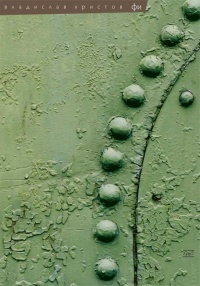
These are examples by well-known or even famous authors. But frequently lesser-known (but equally gifted) poets produce works that deserve to be noted, read, distributed and recommended. And I don’t want to conclude this short choice of poems without giving the floor to a poet that is probably unknown to most of you. I discovered this author only recently, after a close friend presented me a copy of his newest collection of poetry. I am talking about the Bulgarian poet Vladislav Hristov (born 1976), and his book Fi (Фи). (Thank you, Eli! And thank you, Vladislav Hristov, for the dedication in my copy!).

Hristov is undoubtedly one of the best haiku poets of our times: 

изгонената котка
само тя
видя звездопада
 
cat shooed away
only she saw
the meteor shower 

(Translated by Maya Lyubenova)

Also in his new collection the tone is laconic, sparse, but always evocative:

дясната ръка
държи книгата
лявата
ръката на любимия
всяка нова страница
е раздяла
 
the right hand
holds the book
the left
the hand of the beloved
each new page
is shared

снимането на ангел
е много лесно:
просто кажи обичам те
преди да натиснеш копчето
 
photographing an angel
is very simple:
just say I love you
before you press the button

сънувах тарковски
седнал на пода
в детската ви стая
андрюша какво правиш тук
той мълчи
вцепених се от ужас:
ами ако ме попита
същото
 
I dreamt Tarkovsky
sat on the floor
in your children’s room
andryusha what are you doing here
he was silent
frozen in horror:
what if you asked me
the same 

(Translations by Thomas Hübner)

Vladislav Hristov is an extraordinarily versatile and talented poet/photographer/artist. He writes also interesting short prose, and it would be nice to see more of his works translated and published in other languages.

Ergo Books, his Bulgarian publisher, is to be congratulated for the efforts they are undertaking to promote contemporary Bulgarian poetry. Beside from Vladislav Hristov, they publish also the poetry of Jana Punkina, Miroslav Hristov, Jordanka Beleva, Dimana Ivanova, Palmi Ranchev, Maria Vasileva, Margarit Zhekov, Kamen Kostov, and Ivaylo Ivanov, amongst others.

Fi

 Vladislav Hristov: Fi, Ergo Books, Sofia 2013 (in Bulgarian language)


Günter Eich: Abgelegene Gehöfte. Schauer, Frankfurt am Main, 1948 (transl.: Poetry, Apr2009, Vol. 194, Issue 1, p37)

Theodore Roethke: Open House. Knopf, New York, 1941

Thomas Brasch: Die nennen das Schrei. Gesammelte Gedichte. Suhrkamp, Berlin, 2013

Erich Fried: Es ist was es ist. Wagenbach, Berlin 1983 (transl.: http://poet-in-residence.blogspot.com/2009/06/coming-soon-erich-fried.html)

William Carlos Williams: The Collected Poems, Volume I, 1909-1939. New Directions, New York, 1991

Matsuo Basho: Poems, e-book 2004 (http://www.poemhunter.com/i/ebooks/pdf/matsuo_basho_2004_9.pdf)


© Thomas Hübner and mytwostotinki.com, 2014. Unauthorized use and/or duplication of this material without expressed and written permission from this blog’s author and/or owner is strictly prohibited. Excerpts and links may be used, provided that full and clear credit is given to Thomas Hübner and mytwostotinki.com with appropriate and specific direction to the original content.

Poetry: the Abyss

“The Abyss” is the name of the journal in which the young would-be poet Karl Eugen Eiselein is publishing his works – and the name seems to be program since this journal is publishing the works without paying royalties and only after Eiselein is renewing the yearly subscription. It is Eiselein’s shopkeeper parents who pay for their only son’s education and his expensive fancies…and who have to throw more and more money into this abyss called “poetry”.

In a moment when he starts to doubt his vocation, young Eiselein is writing letters to the two symbolist poets he admires – and they answer, one of them in the “symbolist” style of his poems, the other one surprisingly bold and direct: he is asking for a loan from the young admirer (and reducing Eiselein’s illusions regarding the life style of a poet considerably by telling him that his object of admiration is surviving rarely by doing some hackwork as – a sports journalist!).

Hesse’s early story is balancing between the two possible outcomes: tragedy and comedy. His ironic description of the life of the Eiselein family with a benevolent but weak father and a strong and more realistic mother who shifts the “power balance” in the family to her favor as the story enfolds, his acerbic remarks about the literary fashions of the time (his particular targets are Oscar Wilde and the not explicitly mentioned but easily recognizable Stefan George) and his sympathy with (and ridicule for) the hero who has a lot in common with the young Hesse himself make this 60-pages story still a nice read for an evening.

The story was originally published 1903 in the “Neue Zuercher Zeitung” and later included in Hesse’s collection of stories “Neighbors” (1908). Suhrkamp published the story a few years ago as a separate book with the reproduction of a neat Hesse watercolor on the title. It seems that there is so far no English translation. It would be worth it. The story is one of Hesse’s best early works.

KarlEugenEiselein

Hermann Hesse: Karl Eugen Eiselein, Suhrkamp, Frankfurt am Main 1985

© Thomas Hübner and mytwostotinki.com, 2014. Unauthorized use and/or duplication of this material without expressed and written permission from this blog’s author and/or owner is strictly prohibited. Excerpts and links may be used, provided that full and clear credit is given to Thomas Hübner and mytwostotinki.com with appropriate and specific direction to the original content.

“And so they are ever returning to us, the dead”

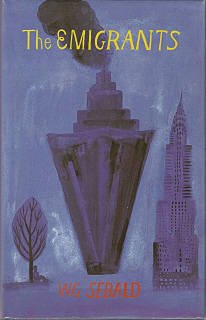
Is it fiction? Is it documentary literature? It’s a little bit of both and the impression of something hybrid is even strengthened by the many black-and-white photos that are inserted into the text without explanation or description. W.G. Sebald’s book “The Emigrants” (“Die Ausgewanderten”) is maybe the masterpiece of this author who came to England in 1966 and who spent the rest of his life as a lecturer and professor teaching at universities in England. His career as a prose writer (in his native German language) started when he was already in his mid-forties.

Sebald1993

The Emigrants” is a collection of four long stories. Dr. Henry Selwyn, born as Hersch Seweryn in a shtetl near Grodno in Lithuania has come to England as a child and has against all odds made a career as a surgeon. The narrator, whose living conditions, opinions and favorite books coincide with W.G. Sebald’s gets to know Dr. Selwyn as a retired doctor leading a secluded life mainly in his garden when he is renting a flat in Dr. Selwyn’s house. A distanced friendship between the author and Dr. S. is developing and finally the doctor is telling the author the story of his life. The marriage of S. with a girl from Switzerland where he studied is not happy, maybe because S. kept his Jewish origin too long hidden from her, maybe because they just lost the love that was between them in the beginning. The happiest period of his life was according to S. his study times in Switzerland, when he used to go hiking with an old Swiss alpinist (who disappeared in the mountains one day). S. seems to be strangely detached from life, melancholic and living for his memories.

After a return from a visit in France, the narrator receives the message of the suicide of S. Years later, during a sojourn in Switzerland, a local newspaper reports that the body of an alpinist was found that was missing since more than 70 years. It turns out to be the missing hiking partner of Dr. S.  

“And so they are ever returning to us, the dead. At times they come back from the ice more than seven decades later and are found at the edge of the moraine, a few polished bones and a pair of hobnailed boots.”

The story “Unexpected Reunion” (Unverhofftes Wiedersehen) by Johann Peter Hebel comes to mind, an author with whom Sebald was familiar since early childhood because his maternal grandfather introduced him to this Alemannic writer.

Hebel plays also a role in the second story that was inspired by one of Sebald’s school teachers. In the story his name is Paul Bereyter, a “born” teacher who was able to turn every school lesson into something interesting and who was known for his unconventional but very inspiring way to teach. The narrator mentions for example that he introduced Hebel’s “Calendar Stories” to the pupils instead of the textbook lessons that he seemed not to consider as worthwhile for the children.

Bereyter knew already in his youth that he wanted to become a teacher and nothing else and he succeeded to achieve his aim in the 1930s. But as a “quarter-Jew” (one grandfather was Jewish) he lost his position during the Nazi era. After the war (which he survived as a soldier) he was re–installed as a schoolteacher, but something had changed within Paul, as everyone called him.

“The seasons and the years came and went…and always…one was, as the crow flies, about 2,000 km away – but from where? – and day by day, hour by hour, with every beat of the pulse, one lost more and more of one’s qualities, became less comprehensible to oneself, increasingly abstract.”

In his later years, Paul is haunted by memories. After his early retirement he is spending more and more time in France (where he lived for a few years as private teacher in the 1930s). There he makes friends with a Mme Landau who shares his interest in literature (Paul is approaching her after he sees her reading a Nabokov biography). From Mme Landau the narrator receives more information about the later years of Paul – also he was an emigrant, haunted by the ghosts of his past and by the fact that nobody in his small home town pretended that something had happened to the “disappeared” Jews even decades after the war was over.

Also the last two stories seem to be based on the lives of real persons. One is the story of a granduncle of Sebald who emigrated to America and who became a butler in a rich Jewish family. With the son of the family he traveled around the world shortly before WWI and they have obviously had a homosexual relationship. After the outbreak of a mental illness and the early death of his friend, the author’s granduncle devotes his life to the family of his friend until in his last years he is retiring to a mental hospital (without actually being ill in the classical sense – Robert Walser comes to mind), even wishing to be completely annihilated by an extreme form of electroshock therapy that was en vogue in the 1950s.

The last story, about the German-British painter Max Ferber (inspired by Frank Auerbach, whom Sebald met when he was a young student in Manchester – in the first German edition the name of the character was Max Aurach), doesn’t end with the death of the protagonist but since Ferber who came to England without his parents (who were killed in the Concentration Camps in the east) gives the narrator a diary of Ferber’s mother which she kept until her marriage, the narrator decides to undertake a study tour to Bad Kissingen, the home town of Ferber’s mother, which is not really a homecoming but a very disturbing experience.

In the meantime, Max Ferber has made a name of himself in the art world, but he almost never leaves his studio in a dilapidated area of Manchester. Only once he goes on a visit to Colmar to see the Isenheim Altarpiece by Matthias Grünewald. The work of this strange man proves to be the intuition of the extreme power of pain in Ferber’s oeuvre.

Beside the already mentioned literary influences, the reader has also to think of Thomas Bernhard (especially when Sebald is describing his visit in Bad Kissingen in the last story), but also of Georges Perec and of Vladimir Nabokov.

The passionate butterfly collector Nabokov is making an appearance in all four stories (in the last one even twice), and here Sebald is in my opinion doing a little bit too much. This “running gag” is not necessary for the dramaturgy of the stories and a bit of a cheap effect. But this is a minor flaw in this extraordinary collection of stories that has great qualities. Sebald is an excellent prose writer that is clearly inspired by Stifter or Gottfried Keller. The hybrid mixture of documentation, diary, photo novel and story seems to be the appropriate form to speak about the fate of these “emigrants” (Goethe’s “Unterhaltungen deutscher Ausgewanderten” echoes also in the title of the book). And indirectly the book is also a book about the friendship of Sebald with his maternal grandfather because in all four stories a friendship between a young and a much older man plays an important role (Sebald’s relation to his father seems to have been strained in the contrary).

The book received very high praise by literary critics and was also a big success on the German and international (especially English-speaking) bookmarket. Susan Sontag, Antonia Byatt, Michael Ondaatje or Salman Rushdie considered Sebald as one of the most important authors of our times.

Very few critics, like the German novelist Georg Klein have voiced their reservations about Sebald’s books. Klein was speaking about Sebald’s “sweet melancholic masochism towards the past”, which claims a “false intimacy with the dead”. Sebald also seems not to have noticed the changes in Germany following 1968 (he visited the country very rarely after 1966) which made some of his statements regarding his home country a bit out of time and place and for my taste sometimes a bit too self-righteous.

But be this as it may, Sebald was a very important and excellent writer and “The Emigrants” is definitely one of the great books about the historical and personal disasters of the 20th century and therefore I recommend it very strongly.

sebald-emigrants-harvill

W.G. Sebald: The Emigrants, Harvill 1996 (transl. by Michael Hulse); Die Ausgewanderten, Eichborn 1993

A very interesting essay about Sebald’s biographical sources of his work by the American germanist Mark M. Anderson sheds additional light on “The Emigrants” and other works of Sebald: http://www.wgsebald.de/vaeter.html 

Other Reviews: 
Tony’s Reading List 

© Thomas Hübner and mytwostotinki.com, 2014. Unauthorized use and/or duplication of this material without expresseded and written permission from this blog’s author and/or owner is strictly prohibited. Excerpts and links may be used, provided that full and clear credit is given to Thomas Hübner and mytwostotinki.com with appropriate and specific direction to the original content.


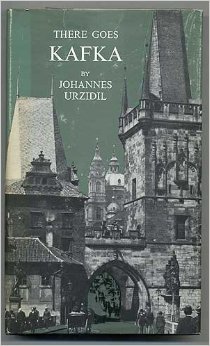
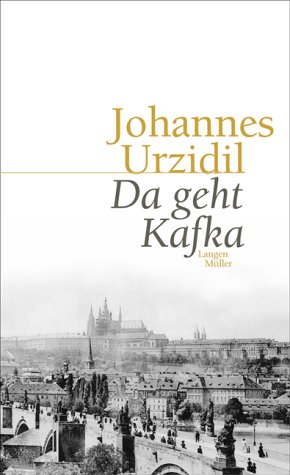
There Goes Kafka

There Goes Kafka” is a small but interesting collection of essays related to Franz Kafka and the circle of friends in the early 20th century Prague to which also the book’s author, Johannes Urzidil, belonged. Although a strictly biographical reading is not appropriate for an understanding of Kafka’s works, it helps to know about the background of his life and work and here Urzidil can add quite a lot of material that seems to be interesting to me.

Kafka is asking a friend in 1916, shortly after the publication of Metamorphosis (“Die Verwandlung”):

“What have you to say about the dreadful things going on in our house?” –

There Goes Kafka” is full of such details and it sheds also a light on some lesser known literary figures of the “Prague Circle”, an extremely interesting and productive group of (mostly Jewish) German-speaking authors. Ok, now we have the ultimate biography on Kafka by Reiner Stach, but I still like the small work by Urzidil – his “Goethe in Bohemia” is also excellent.

ThereGoesKafka

Urzidil’s style was very elegant and elaborated. Unfortunately the English translation is so awkward that it sounds sometimes almost like a parody. That’s a real pity. So, if you can, read the German original and let’s hope a publisher will give Urzidil’s work a new chance in the English-speaking world by commissioning a new – and better! – translation.

Johannes Urzidil: There Goes Kafka, Wayne State University Press 1968; Da geht Kafka, Langen & Mueller 2004

Da geht Kafka


© Thomas Hübner and mytwostotinki.com, 2014. Unauthorized use and/or duplication of this material without expressed and written permission from this blog’s author and/or owner is strictly prohibited. Excerpts and links may be used, provided that full and clear credit is given to Thomas Hübner and mytwostotinki.com with appropriate and specific direction to the original content.