Category Archives: Books

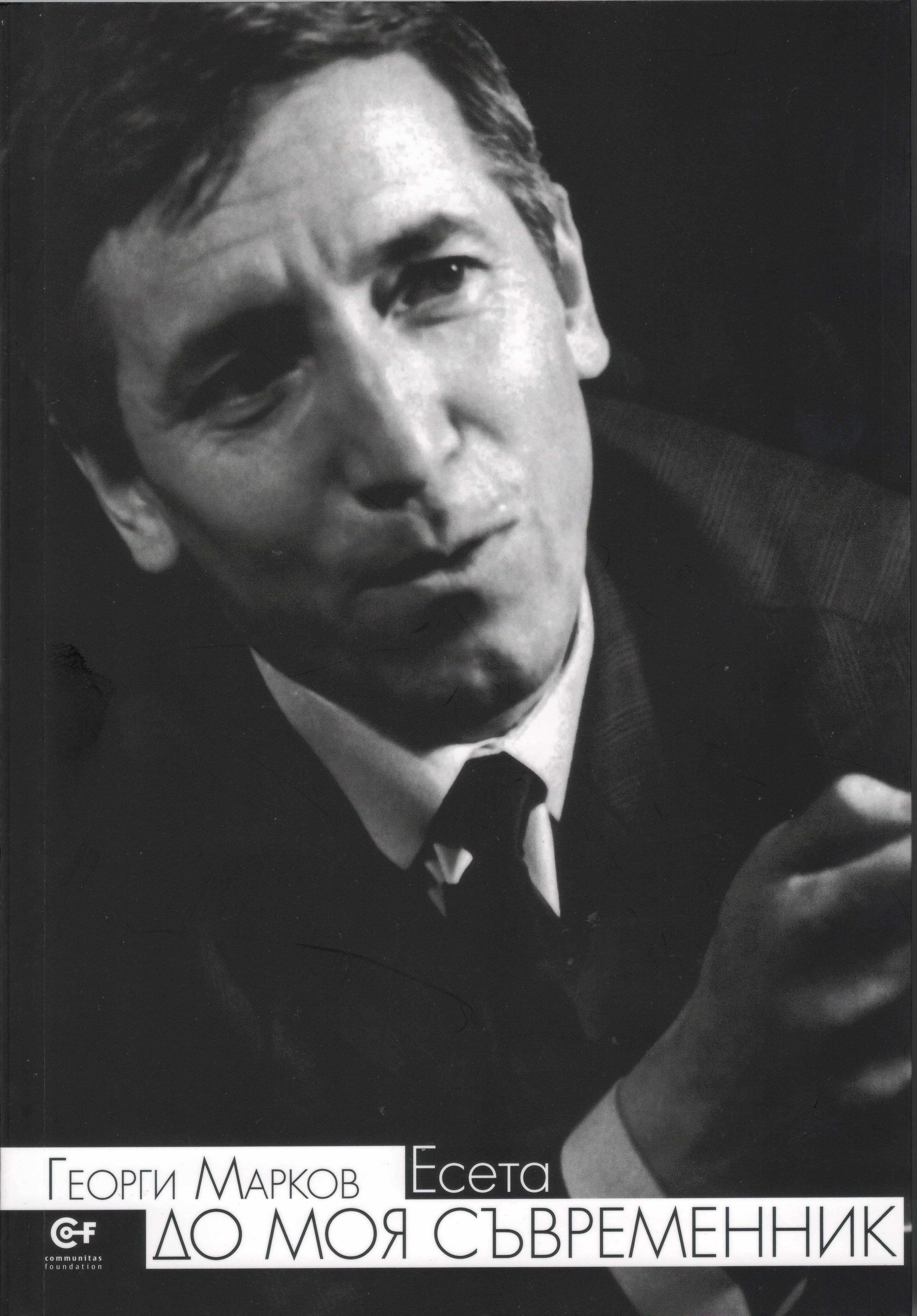
Georgi Markov – a footnote on a recent edition

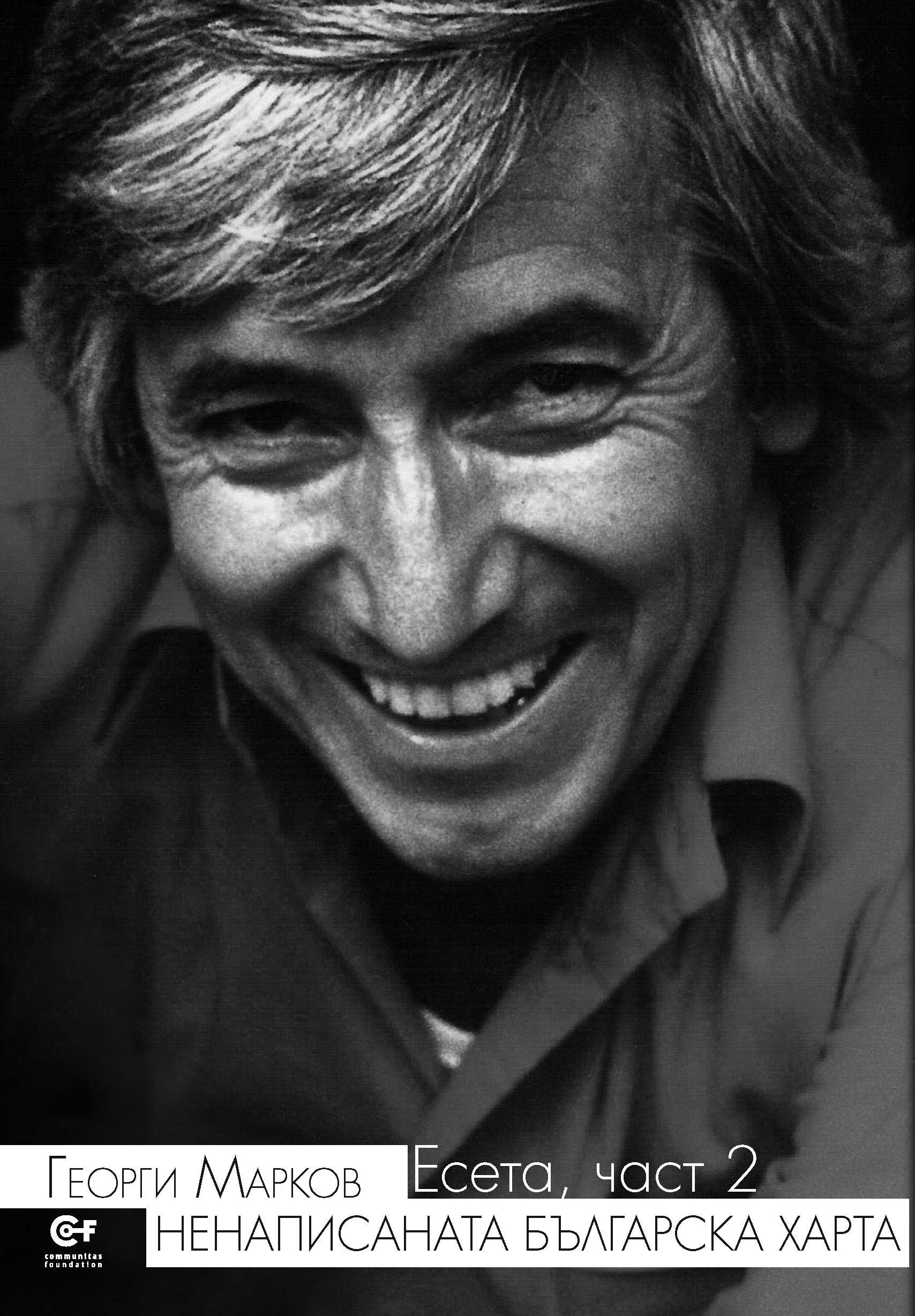
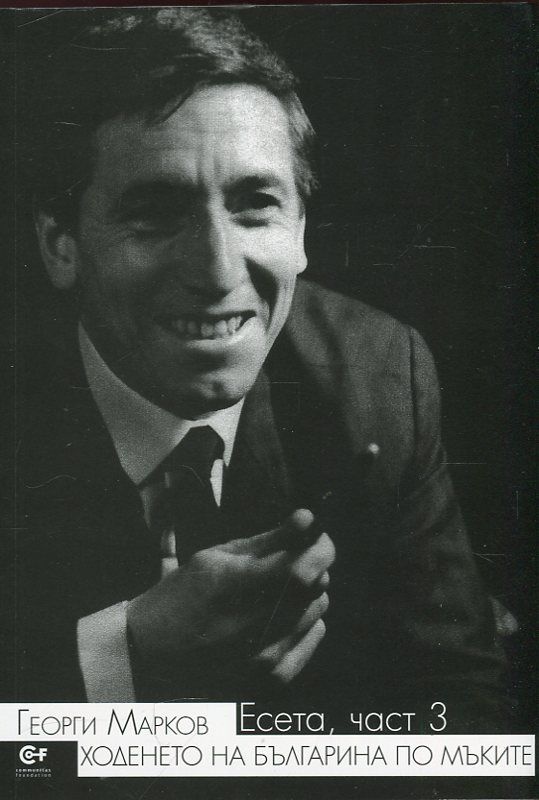
I am reading right now (in Bulgarian) a three-volume edition of the essays of the Bulgarian dissident Georgi Markov, who is for me one of the most remarkable Eastern European intellectuals of the time between the end of WWII and the Fall of the Berlin Wall. Unfortunately he is in the West mainly known for the fact that he was assassinated in a rather bizarre way by a hit-man in the service of the Bulgarian State Security, and not for his work and the brilliant analysis of the Bulgarian and other regimes in Eastern Europe.

The edition contains many essays that are – according to the information in the books – published here for the first time in print, and it is remarkable how fresh and highly relevant these essays that are at least four decades old, are today. A fact that says also something very unpleasant about the situation in Bulgaria – still very much run by the networks of people with links to the former Bulgarian State Security and their underlings – and most other Eastern European countries.

The publisher, who brought recently among others also Varlam Shalamov, Yevgenia Ginzburg, and works of Alexander Solzhenitsyn to the Bulgarian readers, has to be praised for this deed.

However, I have also to mention that the footnotes are to me very annoying. While some of them are ridiculously inadequate – is it really necessary to try to explain in two lines who Thomas Mann or Pablo Picasso were, and does the fact that the publisher added these footnotes mean that this edition is intended for an audience that is missing even an elementary Bildung? -, others are inaccurate, and even manipulative.

One example: Pablo Neruda is described in a footnote as an author that was “occupied by communist ideas”, which is clearly a strong understatement; he was in reality a Stalinist hardliner and active GPU/NKWD agent with blood on his hands; he played a big role in the Trotsky assassination, and allegedly some others, and he personally took care of deleting non-Stalinist leftists from the list of people that would be granted a place on a rescue ship and visa to Chile, people desperately trying to leave unoccupied France in 1940; Neruda knew perfectly well that his selection (I am almost tempted to write Selektion here) was in fact a death sentence for almost all of them, executed either by the Nazis, or by the assassination squads of Stalin (Victor Serge has written in detail about such murderous “intellectuals” as Neruda). The footnote about Neruda is in this context extremely misleading.

Another example is Günter Grass, who according to the footnote was a “far-left” writer. For those who don’t know it, Grass was a life-long supporter of the German Social Democrats, even when he left the party for few years out of disappointment; he wrote speeches for his close friend, Chancellor Willy Brandt, one of the most fervent German anti-Communists, and he was himself a lifelong anti-Communist. The German Social Democrats, and also Grass himself, were never “far-left”, and the footnote is either reflecting a completely uninformed editor, or is – what I don’t hope, but cannot completely dismiss as a possibility – intentionally manipulative, “far-left” being in Bulgaria a common epithet for a Communist sympathiser.

On the other hand, it is mentioned that Salvador Dali left Spain after the Civil War, but “refrained from political activities”; those who don’t know who Dali really was, might get the impression that he was an active anti-fascist who left the country to avoid persecution – while the truth is exactly the opposite: he showed a servile attitude towards the dictator Franco and open sympathies for fascism, and he had even the bad taste to (figuratively speaking) spit on the grave of his former best friend Garcia Lorca, who was murdered by Dali’s new friends. There was a reason why Max Ernst crossed the street when he got sight of Dali during his emigration, and it was not only for artistic reasons that he didn’t want to face his shameless plagiarist!

Unfortunately, all intellectuals with sympathies for the (democratic) left seem to be described in a way similar to Grass, while in cases of intellectuals or artists with fascist sympathies a sudden amnesia seems to have taken hold of the editors. 

But not only when it comes to Western artists and intellectuals, this edition goes astray; almost all Bulgarian authors – most of them household names for the readers of this edition; even the famous Blaga Dimitrova has her two-line resume – have a footnote; only Lyubomir Levchev, a key figure of Bulgarian literary life in the time of Communism is not worthy(?) of a footnote. This gifted poet, a close friend of Markov while the later dissident was still living in Bulgaria, who made a career as an orthodox Communist literary functionary, played for example a very active role in the persecution and partly expulsion of the Turkish minority in Bulgaria in the 1980’s (euphemistically called “Revival process” by the Communists), a role in which he seems to take pride until today.

I doubt very much that the missing footnote for Lyubomir Levchev was an editorial oversight (I have privately my suspicion for which reason the footnote is missing), and this missing footnote, together with the other inadequate, wrong, and manipulative footnotes decrease my pleasure in this otherwise great and valuable edition very much. I hope that this edition will see many reprints, and that many especially young Bulgarians will read it – but with more appropriate and correct footnotes!

Георги Марков: До моя съвременник; Ненаписаната българска харта; Ходенето на българина по мъките (3 volumes), Communitas Foundation, Sofia 2015-2016

My remarks are mainly based on the first of the three volumes, which I have finished so far.

© Thomas Hübner and mytwostotinki.com, 2014-7. Unauthorized use and/or duplication of this material without expressed and written permission from this blog’s author and/or owner is strictly prohibited. Excerpts and links may be used, provided that full and clear credit is given to Thomas Hübner and mytwostotinki.com with appropriate and specific direction to the original content.

Kiril Vasilev: Bann

Bann 

Ausscheidungen von küchenschaben
auf dem weissen einband des buchs
mit gedichten von Paul Celan

das nichts getrennt durch punkte
und wieder verbunden durch kommata
vor den worten und danach

ich stellte das buch wieder hinter den schrank
nun lasst uns darüber streiten ob die erlösung
unsere stimmen überdauern wird

———————————————————–

Заклинание

Изпражнения на хлебарки
върху бялата корица на книга
със стихове на Паул Целан

нищото разделено с точки
и свързано отново със запетайки
преди думите и след тях

върнах книгата зад шкафа
нека  спорът за спасението
да надживее гласовете ни
 

Übersetzung aus dem Bulgarischen von Thomas Hübner

Kiril Vasilev: Provintsii, Small Stations Press, London Sofia 2015 

© Kiril Vasilev and Small Stations Press, 2015.
© Thomas Hübner and mytwostotinki.com, 2014-6. Unauthorized use and/or duplication of this material without expressed and written permission from this blog’s author and/or owner is strictly prohibited. Excerpts and links may be used, provided that full and clear credit is given to Thomas Hübner and mytwostotinki.com with appropriate and specific direction to the original content.

Krasimir Vardiev: erstickte worte

erstickte worte
rauchwolken
nasse straßen
trübe schatten
vage klänge
was fehlt
über die stille hinaus
ich will
jemanden berühren
fühlen mir einprägen
gib mir feuer
sei mein licht
im dunkel
nur für eine weile


задушаващи думи
димни завеси
мокри улици
мътни сенки
смътни звуци
недостигащи
отвъд мълчанието
искам да докосна
почуствам запомня
някого
дай ми огънче
бъди ми светлина
в мрака
само за малко 

———————————————–

Übersetzung aus dem Bulgarischen von Thomas Hübner

Image may contain: 1 person, text

Krasimir Vardiev: s(r)amota, DA, Sofia 2016

© Krasimir Vardiev and DA Publishers, 2016.
© Thomas Hübner and mytwostotinki.com, 2014-6. Unauthorized use and/or duplication of this material without expressed and written permission from this blog’s author and/or owner is strictly prohibited. Excerpts and links may be used, provided that full and clear credit is given to Thomas Hübner and mytwostotinki.com with appropriate and specific direction to the original content.

Krasimir Vardiev: varna 3

varna 3
 
varna
ist keine stadt
sondern ein zustand
den du
vergessen willst
und nicht kannst

—————————————

варна 3
 
варна
не е град
а състояние
да искаш
да забравиш
и да не можеш


Übersetzung aus dem Bulgarischen von Thomas Hübner

Image may contain: 1 person, text

Krasimir Vardiev: s(r)amota, DA, Sofia 2016

© Krasimir Vardiev and DA Publishers, 2016.
© Thomas Hübner and mytwostotinki.com, 2014-6. Unauthorized use and/or duplication of this material without expressed and written permission from this blog’s author and/or owner is strictly prohibited. Excerpts and links may be used, provided that full and clear credit is given to Thomas Hübner and mytwostotinki.com with appropriate and specific direction to the original content.

Krasimir Vardiev: unsichtbar

unsichtbar
 
du sagst
dass es leichter ist sich zu schneiden
am papier
in diesem haus der stumpfen messer
und der aus allen ecken
sprießenden bücher
ich sage
dass es leichter ist
 
du sagst
dass du sterben kannst
vor lauter faulheit
es gibt wenig platz
und schon wieder ist es staubig
ich sage
dass ich sterben kann
 
du sagst
dass es zeit ist dass dein leben
irgendwohin führt
du verschwendest dich
vollkommen vergeblich
an deine und der leute
launen
und an einige bastarde
ich sage
dass es zeit ist
 
so reden wir
schon lange
und irgendwie
sind wir froh
dass nichts
sich geändert hat
unsichtbar zufrieden

—————————————————–
 

невидимо

казваш
по-лесно е да се порежеш
на хартия
в тази къща с тъпи ножове
и извиращи книги
от ъглите
казвам по-лесно е
 
казваш
може да умреш
от мързел само
мястото е малко
и пак е прашасало
казвам
може да умра
 
казваш
време е животът ти
да поеме нанякъде
пилееш се твърде
и напразно
по свои и хорски
приумици
и за разни гадове
казвам
време е
 
така си говорим
отдавна
и сме доволни
някак
че нищо
не се променя
невидимо доволни


Übersetzung aus dem Bulgarischen von Thomas Hübner

Image may contain: 1 person, text

Krasimir Vardiev: s(r)amota, DA, Sofia 2016

© Krasimir Vardiev and DA Publishers, 2016.
© Thomas Hübner and mytwostotinki.com, 2014-6. Unauthorized use and/or duplication of this material without expressed and written permission from this blog’s author and/or owner is strictly prohibited. Excerpts and links may be used, provided that full and clear credit is given to Thomas Hübner and mytwostotinki.com with appropriate and specific direction to the original content.

Probably tomorrow

“Lichtenberg was prone to procrastination.” (Wikipedia)

I have to write down a few thoughts about that. Probably tomorrow.

© Thomas Hübner and mytwostotinki.com, 2014-6. Unauthorized use and/or duplication of this material without expressed and written permission from this blog’s author and/or owner is strictly prohibited. Excerpts and links may be used, provided that full and clear credit is given to Thomas Hübner and mytwostotinki.com with appropriate and specific direction to the original content.

#germanlitmonth 2016 – Robert Seethaler: The Tobacconist

The Tobacconist (Der Trafikant) is after A Whole Life (Ein ganzes Leben) the second novel by Robert Seethaler that was published in English translation. I read it in the original German, therefore my review cannot do justice to the English translation.

The year is 1937. Franz Huchel, the main character of the book, is a 17-year-old from the Austrian countryside, who grows up as a single child of a single mother. At the beginning of the book, Franz is very much a protected child, a namby-pamby, but after the unexpected death of his mother’s wealthy lover, the days of dreaming are over: he is sent to Vienna for work. His employer, Otto Trsnjek, is also a former lover of his mother from pre-WWI days, and is running a trafik, a shop where people can buy tobacco, newspapers, stationery. Otto Trsnjek lost a leg in the war and with his shop he is a well-known presence in the neighborhood; he is teaching Franz how to properly read and understand the newspapers, but also the psychology of the different customers of the shop, and the characteristics of the different varieties of cigars they are selling (although none of the two is a smoker); and a few lessons about life in general. Otto’s tobacco shop becomes the new home of Franz, and it is from there where he learns to adapt to the big city.

With his mother Franz stays in touch via the picture postcards they are writing each other; it is from these postcards his mother learns about the major changes in Franz’ life: Franz falls in love with Anezka, a girl from Bohemia, and he gets acquainted with an old gentleman who is a regular customer of the tobacco shop: Sigmund Freud who is living nearby in the Berggasse, is buying cigars from Otto Trsnjek.

While the buxom Anezka with the charming tooth gap is awakening Franz’ sexuality and lust, the professor, who is taken in by the persistence with which the simple country boy is asking him for advice regarding his sorrows related to love and lust, is reassuring Franz. The frailness of the old professor, his fight with old age and the illness from which he is suffering since many years – the permanent pain and the problems with his jaw prosthesis are a recurring theme -, but also his frankness about how little he actually knows about the human psyche, impress Franz very much and the moment when the professor teaches him how to enjoy the smoking of a cigar on a park bench belong for sure to Franz’ most happy moments.

What would be in other times a normal coming-of-age story gets a twist because of the political events that are taking place in Austria at the time the story of Franz unwinds: 1938 is the year of the “Anschluss”, Austria is uniting with Nazi Germany, a development that is changing things forever in the lives of many people. Professor Freud is emigrating in the last moment (thanks to the organizational skills of his daughter Anna), socialists and other leftists are arrested or forced into suicide, and the tobacco shop is vandalized, and finally Otto Trsnjek is arrested by the Gestapo, a development that is seen by some neighbors with obvious glee, particularly by the rather disgusting butcher from next door, a sadistic figure as if from a play by Ödön von Horvath.

And Franz? He is still in doubt about Anezka, who appears and disappears without note on various occasions, and who displays her naked body in a “Varieté” (a kind of music hall), finally starting a relationship with a young SS officer for whom she is deserting Franz. When Franz is arrested in the tobacco shop which he is running after Otto’s death in the hands of the Gestapo, he locks the doors of the trafik because “you never know”. But when Anezka passes by the shop in March 1945, briefly before a major bombing raid, all that is left from the previous tobacco shop are some chairs and a note on which Franz had noted a dream he had, a habit he developed after Freud convinced him of the usefulness of this practice. Obviously, Franz never came back after his arrest, and it is easy to guess why.

Did I like the book? Yes, very much! There are a number of reasons for this. Seethaler writes a beautiful, elegant, effortless prose, and I hope that also the English translation will give a good idea of his stylistic abilities. As a professional actor (you can see him here in the movie Youth), Seethaler has obviously a good ear for dialogues and for the individual way of expression of each of his characters. He succeeds with very simple means to give the reader a clear indication about how each of the major figures in the book is speaking. Anezka for example comes from Bohemia, a region whose people were famous for their problems with the German umlauts, and a very few examples are already enough to have her voice practically in your ear. Another beautiful element are the postcards between Franz and his mother which in the beginning are full of platitudes but which develop into a real correspondence parallel to the process of Franz’ intellectual and sensual awakening. The atmosphere of the growing paranoia after the Anschluss, the outbursts of personal violence and sadism on a large scale of otherwise “normal” citizens that was without precedence even in Nazi Germany; the seemingly im-probable and “impossible” friendship between the simple Franz and the sophisticated Professor Freud; and the fine characterization of the inhabitants of Vienna – all this made me enjoy the book.

Franz is a hero in the typical German tradition of the simple, good-hearted, noble fool (“reiner Tor”); but contrary to Eichendorff’s Good-for-Nothing, The Tobacconist has no ending in which “everything, everything was delightful” – the exact opposite is true in this case. A Happy End is not possible in the time of Nazism.

It was particularly interesting for me to read this book for this year’s German Literature Month after I reviewed last year The Tortoises by Veza Canetti, a work that covers the same period in Vienna. Considering the recent very strong support of right-wing extremists by the voters of those political forces in Austria who represent the ugly side of the Austrian national character in the latest elections in the country, the book had also sometimes a chilling effect on me. The mentality that showed its ugly face after the Anschluss in 1938 is still existing and very widespread in Austrian society; however, the wave of successful political movements which are based on hatred of certain groups within a society is unfortunately not limited to Austria alone these days.
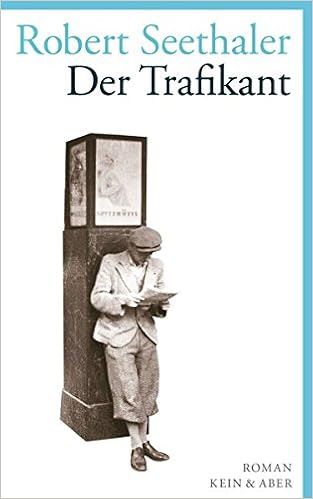
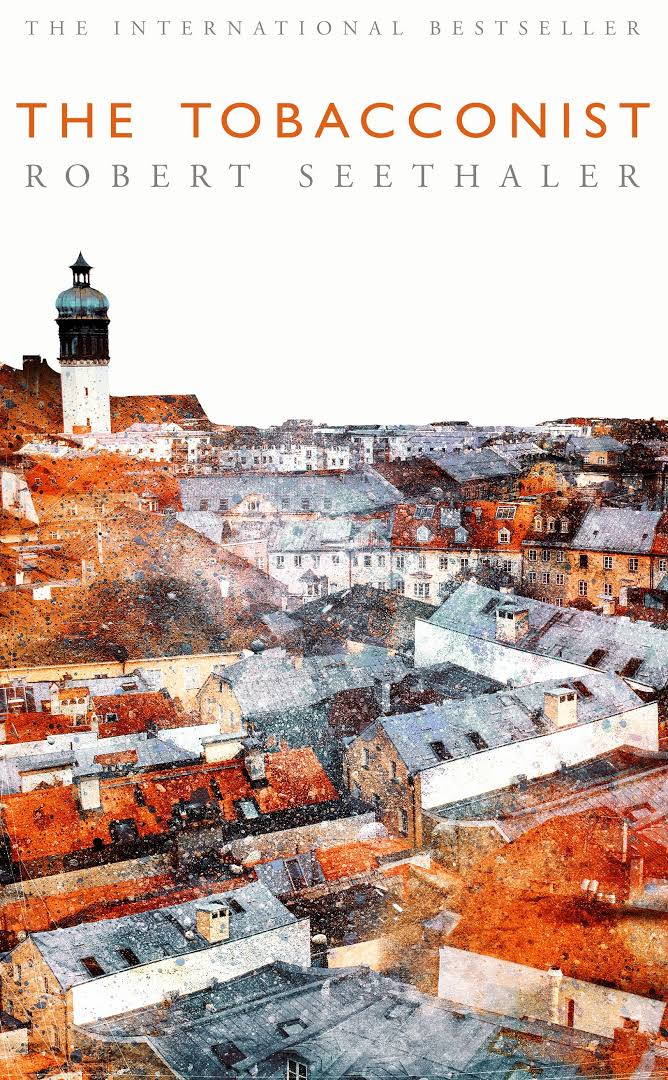


Robert Seethaler: Der Trafikant, Kein & Aber, Zürich 2012; The Tobacconist, Picador 2016, translated by Charlotte Collins

#germanlitmonth

(This review is part of the German Literature Month, again hosted by my two blogger colleagues Caroline@beautyandthecat, and Lizzy@lizzysiddal, who are doing a great job promoting German literature in translation since years.)

© Thomas Hübner and mytwostotinki.com, 2014-6. Unauthorized use and/or duplication of this material without expressed and written permission from this blog’s author and/or owner is strictly prohibited. Excerpts and links may be used, provided that full and clear credit is given to Thomas Hübner and mytwostotinki.com with appropriate and specific direction to the original content.


Everything has a price

Today I bought five Bulgarian second-hand books at a book stall at Slaveykov Square in Sofia, all of them with personal dedications of the respective authors to the previous owner of these books, X., himself an important Bulgarian author and very influential person in the literary scene in Bulgaria.

The enthusiasm of the dedications, the evocations of friendship, respect, brotherly love by the authors to their colleague X. contrast very nicely with the more than nonchalant way, by which he got rid of these dedication copies, at a retail price of two leva (approximately one Euro) per piece. 

Everything has a price. The friendship, respect, brotherly love among authors can be bought sometimes at Slaveykov Square for two leva.

© Thomas Hübner and mytwostotinki.com, 2014-6. Unauthorized use and/or duplication of this material without expressed and written permission from this blog’s author and/or owner is strictly prohibited. Excerpts and links may be used, provided that full and clear credit is given to Thomas Hübner and mytwostotinki.com with appropriate and specific direction to the original content.


Nobel Prize for Literature 2016 for Bob Dylan

Robert Allen Zimmerman, a.k.a. Bob Dylan, will receive the Nobel Prize for Literature 2016. Congratulations!

I am really amazed by the echo of this news in the electronic and print media and in the social networks. Since a few days, the choice of Dylan by the Nobel Committee in Stockholm and the following discussion, the question if Dylan has “deserved” the prize or not, and why not a “real” author has received the award, has side-lined much more important events in the world.

And since everyone did it, I feel somehow also entitled to give my two stotinki regarding the question of the “worthiness” of this years’ Nobel Prize Winner.

Just for clarification: I grew up with Bob Dylan’s songs, I love and adore him, and without the shadow of a doubt he is one of the most important living cultural icons on this planet. I am not saying more, just this: Bob Dylan is in a way larger than life, and for sure also much more relevant than an award or the people who decided to give him this prize according to criteria that are usually difficult to understand.

Let me say a few words about the criteria on which the decision for the award is based. This prize is not a kind of “Writer’s World Championship” where the best author with the best literary work is supposed to win. The surprise of the public that Dylan has won this year comes in my opinion from the fact that few people are aware of the criteria. The testament of Alfred Nobel that defines the criteria that should be the basis for the award, is very unclear. The two main reasons to award the prize to an author seem to be a certain literary value of the work, and the ideal/idealistic direction of the work – again: this is a very vague and in the original Swedish very unclear formulation; are there any interesting or valuable works of literature that are not idealistic?

Are those people wrong who argue that – without being disrespectful to Bob Dylan – the Nobel Committee should have awarded the prize to someone who devoted his life to produce “serious” literature, not a singer-songwriter? I admit, these people have a point, but they missed what I said in the previous paragraph: this award is NOT primarily a literary excellence award, and therefore such an argumentation (Dylan vs. “real” authors) is futile.

Should we take the Nobel Prize for Literature for so important as most of us obviously do? I think not. It comes with a lot of money – good for the author! -, but it comes also with a lot of obligations (speeches, interviews, requests, media attention, etc.) that make it more difficult for the prize winner to produce anything meaningful after he/she got the award, simply because it will be much more difficult after the award to focus on his/her work. So it is a very mixed blessing, but I am sure Bob Dylan will survive also that.

The main reason why I am not so interested in this prize anymore is the very long list with decisions that have obviously nothing to do with the literary value of the author and his/her work. A committee that awards Mommsen instead of Cechov; Prud’homme instead of Tolstoy; Benavente instead of Kafka; Pearl Buck instead of Joyce; Echegaray instead of Proust; Heyse instead of Henry James; Eucken instead of Musil; Spitteler instead of Edith Wharton; Quasimodo instead of Cavafy; Churchill instead of William Carlos Williams; Scholochov (for a book that was written not by him) instead of Babel; Solzhenitsyn instead of Shalamov, Avram Terz, or Herling; Cela instead of Borges or Nabokov; or Neruda, the NKWD henchman and member of the Trotsky assassination team, instead of Mandelstam, Sutskever, Celan, or Ingeborg Bachmann? I just don’t think very highly of the competences of a committee that comes to such decisions. 

Another reason why I am upset about the choices of the Stockholm Committee is the quota according to certain criteria that obviously exist. Or statements like that of a very influential member of the Committee who bluntly stated years ago, that American literature and American authors (from the United States) are in general uninteresting and shallow and not worthy to receive a Nobel Prize, and that as long as he is in charge never ever will such an author be considered for the prize. It seems that the Nobel Committee wanted to say this year: “OK, we cannot any longer ignore American literature, and Bob Dylan was the best author we could find. Leonard Cohen would have been of course the much better poet among the singer-songwriters, but you know, this year we had to give it to an U.S. author.” – Obviously, this award is also meant as a slap in the face of all important living American authors, as Aleksandar Hemon pointed out correctly.

The Nobel Prize for Literature has a lot to do with (literature) politics, and comparatively little with literature. The discussion about the Nobel-worthiness (or un-worthiness) of Dylan is therefore a rather pointless matter. The Nobel Prize for Literature has been awarded a few times to authors who deserved it, and many times to people who were just second-rate authors. Therefore, we shouldn’t consider the award as something necessarily related to literary excellence.

If Bob Dylan, a life-long pacifist, should accept the Prize that is funded with money that comes from the royalties for the invention of deadly weapons, is another question. He doesn’t need the money, so it would be great to see him standing true to some of his early convictions and politely refuse the Nobel Prize.

The best comment I read on the Nobel Prize for Literature this year, because it is making fun of the Committee in Stockholm that considers itself as oh-so-important, comes from Gary Shteyngart. On Twitter he commented: “I totally get the Nobel committee. Reading books is hard.”

© Thomas Hübner and mytwostotinki.com, 2014-6. Unauthorized use and/or duplication of this material without expressed and written permission from this blog’s author and/or owner is strictly prohibited. Excerpts and links may be used, provided that full and clear credit is given to Thomas Hübner and mytwostotinki.com with appropriate and specific direction to the original content.
Twilight of the Eastern Gods

Moscow, 1958. A young and talented Albanian author is sent to the centre of the Communist world in order to complete his literary education at the renowned Gorky Institute. The bustling atmosphere of the Soviet capital with all its interesting opportunities in the cultural sphere (despite the limitations that the communist ideology imposes), the chance to meet with fellow writers from diverse backgrounds, the less puritan lifestyle in Moscow compared to the more and more paranoid atmosphere in Enver Hoxha’s Albania, and its (then) backwater capital Tirana, and the elevated feeling to belong visibly to the chosen intellectual elite of the future in the communist world – all this should make this stay a pleasant experience for someone who aspires to be a professional writer.

And indeed we see our hero/narrator (who shares many experiences and characteristics with the book’s author) at a writer’s holiday retreat on the Baltic sea – a previous one at the Crimea is mentioned -, enjoying romantic infatuations with several young women, indulging in “typical” student’s activities in Moscow at that time, like getting terribly drunk on several occasions, and so on. In between, we follow our hero to lessons at the Gorky Institute, which are moderately interesting, or we read his talks, discussions or overheard rumors that usually centre around the Russian literary elite; Yevtushenko asks the hero on one occasion in the corridor of the student’s building, if he has seen Bella (Akhmadulina) – that’s the kind of every day experience the narrator has. And yet, for the main character Moscow and particularly the Gorky Institute and the literary circles become a serious disappointment, for various reasons.

When Lida Snegina, the hero’s love interest for most of the book mentions to him that she doesn’t like living but only dead authors, it sounds a bit provoking first. But somehow this casual remark is a kind of trigger for some soul-searching and analysis of the authors and would-be authors that surround the hero at the Gorky Institute: the majority of them mediocre figures, willing to sell their souls and to change their convictions immediately if a new party line requires it. And their works: books that have got almost nothing to do with the real life of the people in the Soviet Union or their respective homeland, most of them idyllic descriptions of a non-existing communist paradise without any literary value.

There is of course another literature in Russia at that time, but it’s a literature that is banned, and circulated only in Samizdat, copied secretly and handed over clandestinely from friend to friend. In an abandoned tract of the student’s building, the narrator finds an incomplete manuscript of Boris Pasternak’s Doctor Zhivago, the famous banned novel for which Pasternak was awarded the Nobel Prize for Literature. Once the news regarding this award is public, a ferocious, well-orchestrated, nation-wide campaign against Pasternak is let loose, a campaign that is so vicious that the narrator asks himself how it must feel when one is at the receiving end of so much hate propaganda, venom, and even threats against one’s own life. No wonder, that his opinion about most of his colleagues at the Gorky Institute becomes free of any illusions:

“At long last, after overcoming their adversaries, having accused them of Stalinism, liberalism, bourgeois nationalism, Russophobia, petty nationalism, Zionism, modernism, folklorism, etc., having crushed their literary careers and banned the publication of their works, having hounded them into alcoholism or suicide, or, more simply, having had them deported, that is to say, after having done what had to be done, they had been inspired to come to the Gorky Institute to complete their literary education.”

While this evaluation may be true for the big majority of students, there are a few of his colleagues with whom the narrator develops a distanced friendship. One of them, the Greek Antaeus, a veteran of the Greek Civil War, and by coincidence a one-time patient of a hospital in Gjirokaster, the narrator’s home town, reminds the narrator of the besa, this Albanian obsession about the keeping of a once given word under all circumstances, and even when it means to rise again from the dead, as it happens in the old Albanian legend of Kostandin and Dorutine; this legend that plays a certain role in this novel was later made the theme of The Ghost Rider, another Kadare novel. There are more references to Kadare novels that obviously are brain-childs of his stay in Moscow: The General of the Dead Army, The Niche of Shame, and The Three-Arched Bridge. The world of the Kadare novels is full of cross-references, and The Twilight of the Eastern Gods is no exception.

I mentioned it in another review of a Kadare book: it rains a lot in Kadare’s novels – as much as it does in the movies of Andrey Tarkovsky. Twilight of the Eastern Gods is no exception, but it gives a hint why this is a recurring theme in all of Kadare’s books. In the books that were typical for the Socialist Realism of the 1950s it would hardly ever rain, the sun was always shining over the Worker’s Fatherland. The insistence on rain is also an act to distance himself from this kind of fantasy literature that was expected from writers who had graduated from the Gorky Institute; at least this is how I understand Kadare.

In the end, Albania and the Soviet Union start to distance themselves; everybody seems to realize it before the narrator does it. We know what will happen: the narrator will have to return home, and experience his own, even worse dictatorship again.

Maybe Twilight of the Eastern Gods is not exactly on the same literary level as some of his masterpieces (Broken April, The Pyramid, Palace of Dreams, The General of the Dead Army, Chronicle in Stone, The Winter of our Discontent), some of the characters are a bit flat, but still it is a good novel that gives valuable insights in the world of this giant of contemporary world literature. It is his most autobiographical book and I can recommend it to anyone with an interest in Kadare’s works.

One word about the translation, and about the translations of Kadare’s books in general. The reviewed edition in English is translated by David Bellos from the French translation by Jusuf Vrioni – similarly to The Siege that I reviewed here previously. Overall not a bad effort, although I am in principle opposed to this kind of translations that are for me only acceptable when there are no translators at all for a given combination of languages; so for this edition there is no excuse based on availability of translators. There are excellent translators from Albanian to English. But the case of Kadare is a bit more complicated, and – very typical for this author – even a bit ambiguous.  

All books of Kadare that were published in Albania before 1992 were subject to censorship. Some of his books were even banned after publication in Albania, despite having undergone careful reading by the censors. At the same time, Kadare could publish some of his novels abroad or in Albania in translations. His translator in French was Jusuf Vrioni, also an author and close friend of Kadare. Kadare speaks French and worked usually closely together with Vrioni in the process of translation to French. After the fall of communism in Albania, Kadare started to review his books and included in new editions also banned paragraphs and pages. Therefore, the updated French language editions of Vrioni would contain more authentic versions of Kadare’s novels than the originally published Albanian versions. At a later stage the expanded, uncensored French versions were then published in Albanian, in Kadare’s favourite publishing house Onufri. The German translations of Kadare novels on the other hand are exclusively translated directly from Albanian, based on the versions that Kadare authorized.

There is another reason why Kadare (or his agent, Mr Andrew Wiley) usually favors a translation of his older novels from the French translation, and not from the Albanian originals, I suppose. Albania has become very late a member of the relevant international agreements on authors’ rights and copyright. As a result, authors of Albanian works that were published prior to the ratification of these agreements by Albania, have no copyright protection. Kadare wouldn’t see a penny of royalties for a translation of any of his earlier novels, unless a publisher would – for ethic, not for legal reasons – decide to compensate him. The French translation is considered according to these agreements as a new work (because it includes many changes compared to the original Albanian text), and is therefore subject to royalties. Not that it affects in any way the literary value of Kadare’s works, but this background is important to know, if one wants to understand the strange translation practice of his work in the Anglophone world.

Ismail Kadare: Twilight of the Eastern Gods, tr. David Bellos, from the French translation by Jusuf Vrioni, Canongate Edinburgh London 2015

© Thomas Hübner and mytwostotinki.com, 2014-6. Unauthorized use and/or duplication of this material without expressed and written permission from this blog’s author and/or owner is strictly prohibited. Excerpts and links may be used, provided that full and clear credit is given to Thomas Hübner and mytwostotinki.com with appropriate and specific direction to the original content.