Author Archives: admin

About admin

"Origin, resume - all nonsense! We all come from some small town Jüterbog or Königsberg and in some Black Forest we will all end" (Gottfried Benn) Therefore just a stenogram: Thomas Huebner, born in Germany, studied Economics, Political Science, Sociology, German literature, European Law. Consulting firm in Bulgaria. Lived in Germany, Bulgaria, Albania, Egypt, Turkey, Syria, Indonesia and Jordan. Now residing in Prishtina/Kosovo. Interested in books and all other aspects of human culture. Traveler. Main feature: intellectual curiosity

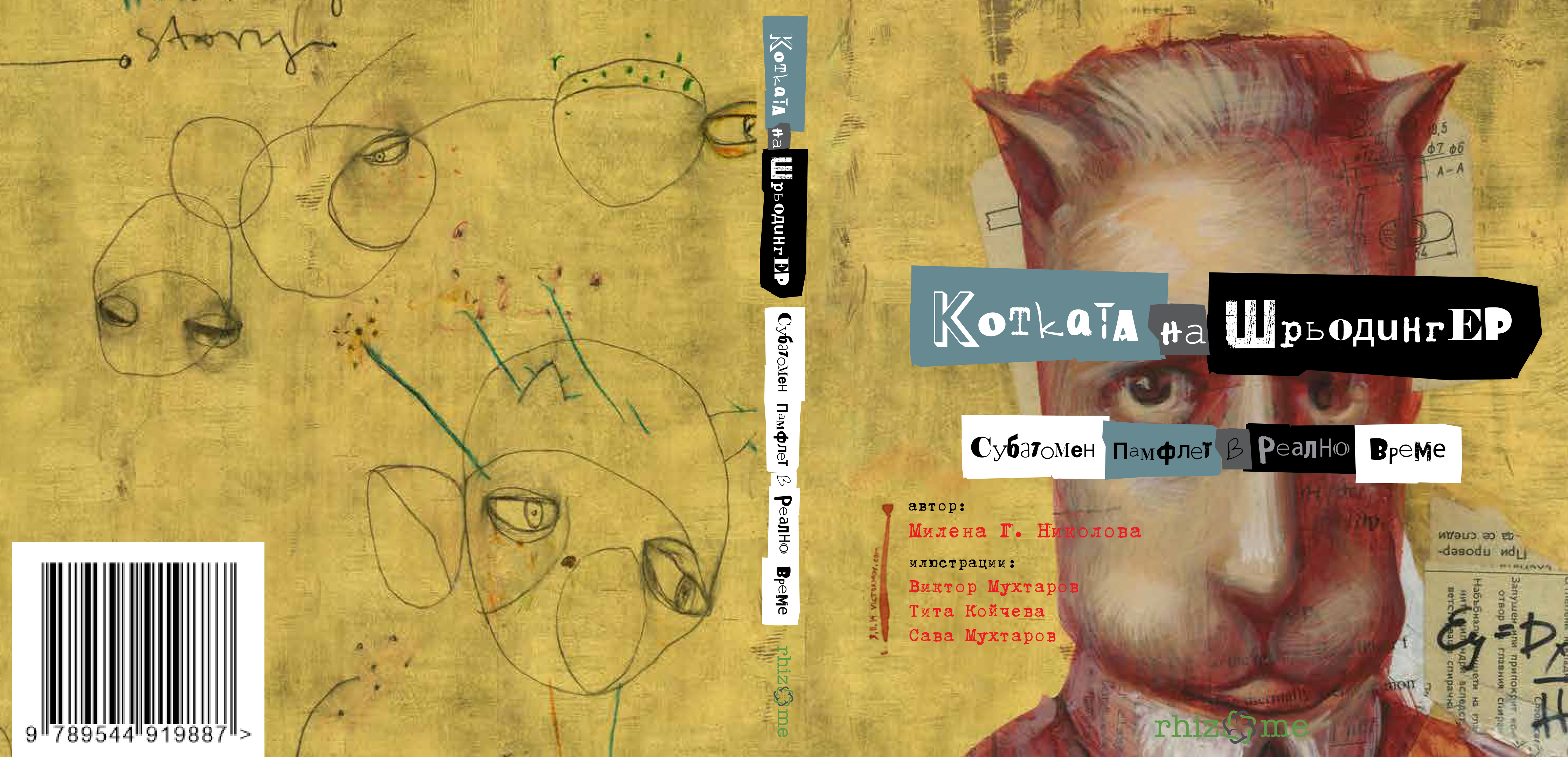
Котката на ШрьодингЕР – Schrödinger’s Cat

Our first book project is ready and is being published these days:
Cat_S_cover

“Schrödinger’s cat, one of the most eccentric protagonists of quantum mechanics, philosophizes in a loud and lyrical manner over its schizophrenic state. Locked up in a box together with a deadly mechanism that can be triggered by the decay of a radioactive nucleus the cat is in a superposed, undecidable state: both dead and alive.

In this paradoxical and hopeless situation the cat begins to analyze itself at various levels. It realizes, for example, that its state of indecision and in-between-ness also bears terrific advantages: it frees from the responsibility to necessarily make a decision. To be – not to be, either – or, male – female, one cat – other cat, nothing but binary codes! Meow! The cat uses this unique opportunity to indulge in rhetorical games by mixing gender, political, cultural, linguistic and racial identity-related differences.

As fleet-footed and playful as a cat, the illustrations made by Victor Muhtarov, Tita and their son Sava lead us through the cat’s pamphlet full of profound black humor.”

Един от най-ексцентричните персонажи на квантовата механика, котката на Шрьодингер*, размишлява на глас, лирично, над шизофреничното си състояние. Затворено от Шрьодингер в кутия с летален механизъм съдържащ атомно ядро в период на полуразпад и отрова, котето, поради липса на алтернативи, е изпълнено с мазохистична любов към безпощадния си създател. То знае, че е част от мисловен експеримент, в който съдбата му е свързана със състоянието на полуразпадналото се атомно ядро. Докато кутията е затворена и наблюдателят не вижда развитието на събитията в нея то е ни живо – ни умряло.
Парадоксалната ситуация на котето, (което само по себе си е само една парадоксална мисъл на един учен) го подтиква към самоанализ на много различни нива. Оказва се, че състоянието на междинност и неопределеност има своите предимства. Отпада отговорността да се вземат решения, отваря се пространство за реторични игри и смесвания на полови, културни, политически, езикови и расови различия в идентичността. Вътрешните конфликти се появяват отново едва при случайната конфронтация с външни наблюдатели изискващи от котето да заеме конкретна позиция. Но диалозите с тях също така му помагат да достигне до новo, съществено прозрение: усещането за право на личен избор и мнение е илюзорно. Всичко зависи от състоянието на атомното ядро в механизма. При тези обстоятелства котето е просто един киборг, сливащ биологични и механични компоненти в една система. Спасение или изход за него може да има само ако системата се отвори.
––––––––
*Котката на Шрьодингер е мисловен експеримент от квантовата механика, представен от Ервин Шрьодингер през 1935 г., с цел да покаже, че пренасянето на понятия от квантовата механика в макросистемите, например обекти с размерите на котка, създава неочаквани проблеми. Според класическата физика, подлежаща основно на законите на Нютон, един обект от макроскопичния свят може да се намира само в едно от множество възможни състояния, а не в няколко състояния едновременно. В квантовата механика, за разлика от класическата физика, една частица може да се намира в няколко състояния едновременно.

(from the book’s FB page)

Котката на ШрьодингЕР – субатомен памфлет в реално време / Schrödinger’s Cat – a subatomic pamphlet in real time

Автор / Аuthor : Милена Г. Николова / Milena G. Nikolova
Илюстрации / Illustrations: Виктор Мухтаров, Тита Койчева, Сава Мухтаров / Victor Muhtarov, Tita Koicheva, Sava Muhtarov
Издател / Publisher: Ризома / Rhizome, София / Sofia

ISBN 978-619-90544-0-6

Information about the book launching event will follow. 

My special thanks to Milena, Victor, Tita, Sava, our editor Kris Enchev and of course to my co-publisher Elitsa Osenska to whom I am deeply indebted.

Translation rights, more information and a pdf file of the English translation are available on request.

© Thomas Hübner and mytwostotinki.com, 2014-6. Unauthorized use and/or duplication of this material without expressed and written permission from this blog’s author and/or owner is strictly prohibited. Excerpts and links may be used, provided that full and clear credit is given to Thomas Hübner and mytwostotinki.com with appropriate and specific direction to the original content.


За Кьолн и социални медии в България

Голяма част от коментарите за събитията в Кьолн и в други градове в Германия които прочетох в FB на български са отвратителни, ехидни, злобни, пълен с подлост и аз съм много разочарован от много хора които изпускат такива коментари за тази тема.

Колко сте злорадо, самодоволни – ужасно!

От къде идват вашата патологична омраза към другите хора?

Защо се радвате толкова много когато на други хора се случи нещо лошо?

И аз не говоря за 3-4 коментари, но за стотици.

homo homini lupus: “Човек за човека е вълк”- това е много несправедливо за вълците които са повече по-солидарно помежду си отколкото повечето хора.

© Thomas Hübner and mytwostotinki.com, 2014-6. Unauthorized use and/or duplication of this material without expressed and written permission from this blog’s author and/or owner is strictly prohibited. Excerpts and links may be used, provided that full and clear credit is given to Thomas Hübner and mytwostotinki.com with appropriate and specific direction to the original content.

Bulgarian Literature Month June 2016

Regular readers of this blog will know that Bulgarian literature is very dear to me. This year, I am planning to devote one month to reading exclusively Bulgarian literature.

Since Bulgarian is a so-called “small” language (small regarding the number of speakers, but not of course regarding the literary potential) and is not located in a region that is usually very much in the centre of attention, not much Bulgarian literature is being translated. But there are a few hopeful developments. The Elizabeth Kostova Foundation supports the translation of Bulgarian literature in English, the Traduki program sponsors translations in German and South-Eastern European languages and there are now also translation grants from the Bulgarian Ministry of Culture/National Cultural Fund plus a few smaller initiatives that also support translations in specific languages.

One of my own modest attempts to support and promote Bulgarian literature is this blog where I frequently review Bulgarian books or translate as a teaser a few lines of poetry by various authors. I firmly believe in the potential of the Bulgarian literature also to be interesting for an international audience. Therefore I will this year have my personal Bulgarian Literature Month in June.

During this month I will publish reviews, a few translations, and maybe a few other things related to Bulgarian literature. More details will follow in May, but for busy readers and bloggers, this early announcement might give you time to think about if you would like to join with at least one post.

There will be no rules, except that the posts need to be related to Bulgarian literature in the widest sense; non-fiction is allowed too, as are books written by Bulgarian-born authors that write in another language, or other works that have in the widest sense a connection with Bulgaria.

If you are a book blogger and you are interested to join, send me a short note. If you don’t have a blog of your own but would be interested to review a book, email me as well. I am considering also to allow guest posts during this month.

In May I will make a few reading suggestions and post more information. A few ideas you can get already from an article by Svetlozar Zhelev in Words Without Borders, but there is more to discover.

It is an experiment and it will be interesting to see if someone is joining in this somehow exotic reading month. 

© Thomas Hübner and mytwostotinki.com, 2014-6. Unauthorized use and/or duplication of this material without expressed and written permission from this blog’s author and/or owner is strictly prohibited. Excerpts and links may be used, provided that full and clear credit is given to Thomas Hübner and mytwostotinki.com with appropriate and specific direction to the original content.
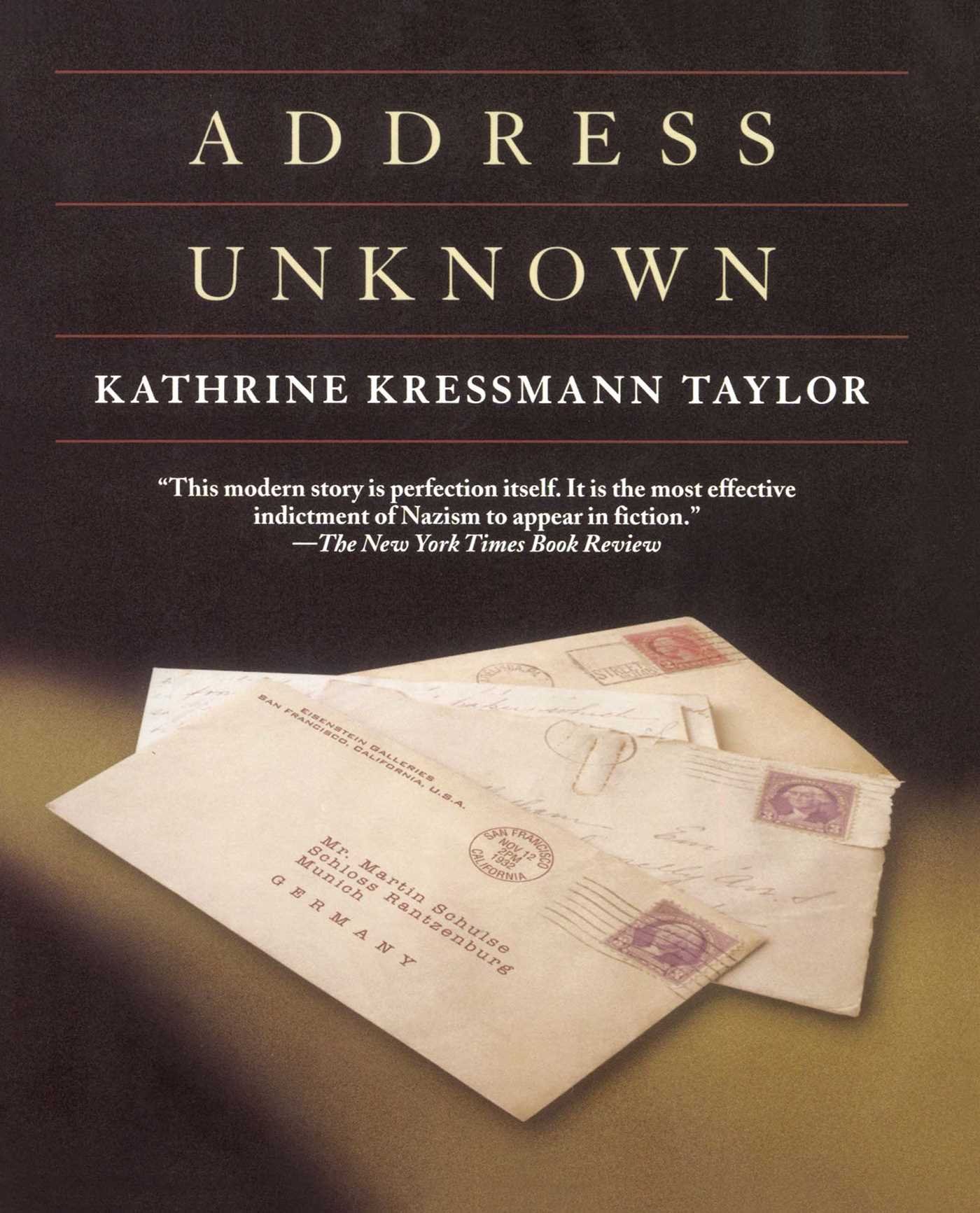
Address Unknown

Address Unknown is a short epistolary novella with a fascinating plot and a strong message; it was first published in 1938 and its author, Kressmann Taylor, is today almost forgotten.

Max and Martin own a successful art gallery in San Francisco. They are not only business partners but best friends. The bachelor Max is a frequent and welcome guest at Martin’s home and quasi a member of the family; the delicate situation that Max’ sister and Martin have an affair about which Max is aware but keeps quiet to Martin’s wife adds an element of complicity to the relationship between the two friends.

Martin, who has never succeeded in becoming a real American, decides to return to Germany with his growing family. It is the year 1932, and a catastrophe is casting already its long shadows on Germany and Europe. What we read are the fictitious letters and a telegram between Max and Martin, which are an exemplary document for the shocking developments on a large scale in Germany.

The first letters contain the exchange of joint pleasant memoirs, some business news, family developments and also a growing amount of political statements. The friendship between the two once close friends doesn’t survive very long the seizing of the power by the Nazis on 30 January, 1933.

Although Martin has in San Francisco never voiced anti-Semitic opinions, he suddenly talks about the inferiority of the Jews as a race, patronizes local Nazi leaders and finally requests from his former close friend to stop communicating with him. Max reluctantly agrees, but asks for a last time desperately for help from his former friend. His sister has disappeared from her Berlin home and Max’ last letter has returned to him with the stamp “Address Unknown” on it which makes Max fear the worst.

When Martin writes in one of his letters to Max that the pogroms happen because “you (i.e. the Jews) are lamenting all the time, but you don’t have the courage to fight back”, he is committing a serious error that will cost him dearly.

As readers we can relate to both main characters, even to Martin. He is neither a sadist nor a born Jew-hater. He is a victim of the times and political circumstances in which he is entangled; he is a weakling and coward; he has too much to lose and he loves his wealth which he likes to show off a little bit too much – the combination of these characteristics make him the perfect Nazi follower and tool of their policy – just as millions of others that would have been in all probability decent persons and good friends, were it not for the specific circumstances in which they lived.

In a time of growing racism, populism and fascism in many countries, I would like to see this small book read much more; it is an antidote against these evils – and it sets an example that indeed individuals can fight back the Nazis or similar regimes and their followers; maybe not all is lost as long as people are aware that they are usually not completely powerless and can sometimes fight back with success.

A small and very impressive book.

(Kathrine) Kressmann Taylor: Address Unknown, Washington Square Press 2001

© Thomas Hübner and mytwostotinki.com, 2014-6. Unauthorized use and/or duplication of this material without expressed and written permission from this blog’s author and/or owner is strictly prohibited. Excerpts and links may be used, provided that full and clear credit is given to Thomas Hübner and mytwostotinki.com with appropriate and specific direction to the original content.


An everyday occurrence

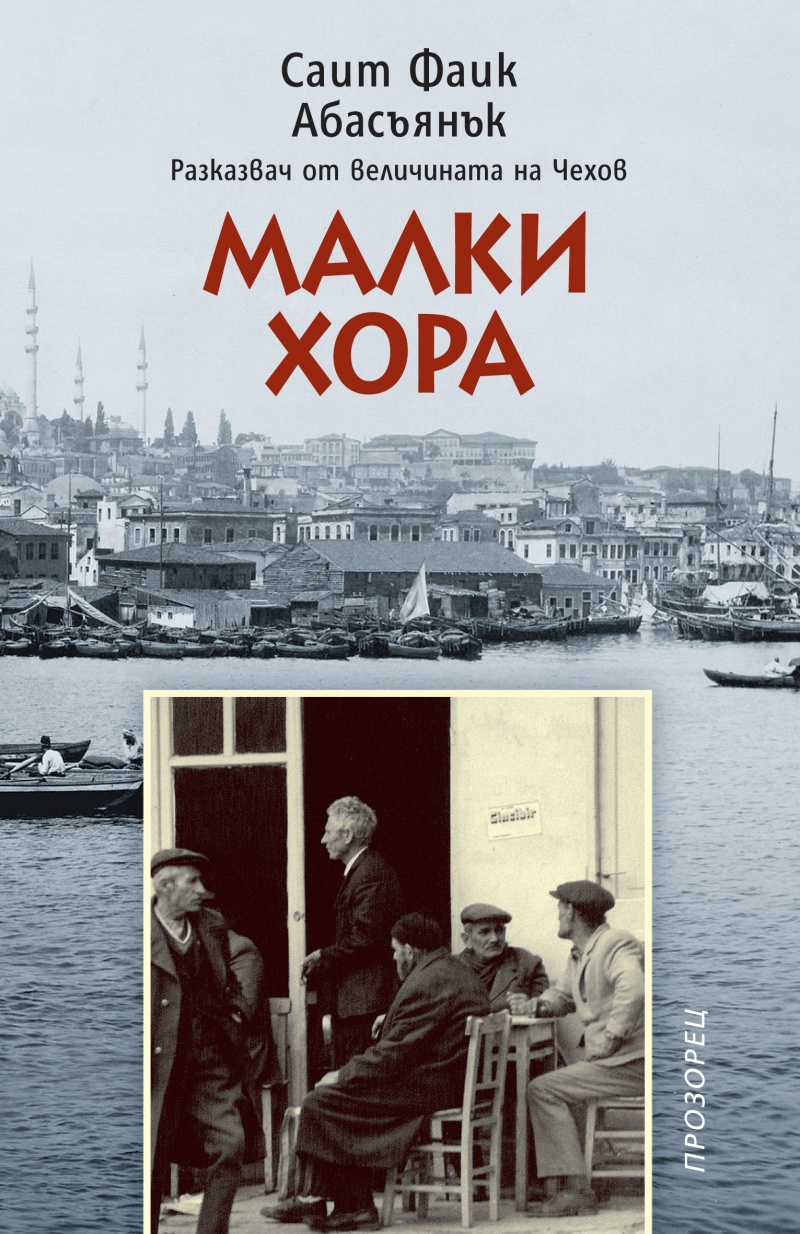
Малки хора

An excellent book by one of my favourite Turkish authors! I am happy that this book is available now also in Bulgarian.

But why does the Bulgarian publisher use three photos on the cover and the back and is not even mentioning the photographer (most probably Ara Güler)? – this is a very bad, disrespectful habit, and it is infringing the moral right of the author of these photographs. Maybe it was an oversight, but in any case I wish publishers in Bulgaria would be more sensitive regarding intellectual property rights and the moral rights of an author. Bulgaria has signed international conventions and is a member state of relevant international bodies – so this is not something that can be treated the way it is in this case and even more outrageous in another case that occurred recently where a big part of the content of a book was copied and re-published without mentioning even the original authors – an obvious act of theft.

It would be good if the Bulgarian Book Association would enforce a Code of Ethics that excludes and penalizes such practices – instead of issuing high penalties to exhibitors on the Book Fair in Sofia that leave their booth on the last day a few minutes before the official closing.

Do you know about similar cases of copyright fraud or lack of acknowledgement of the moral and intellectual property rights of authors in your country?

Sait Faik Abasıyanık: Malki Hora (Саит Фаик Абасъянък: Малки Хора), transl. Kadrie Dzhesur, Prozoretz, Sofia 2015  – a German edition, published by Unionsverlag in 1991 under the title Ein Lastkahn eines Lebens seems to be out of print; there is no English translation according to my knowledge.

© Thomas Hübner and mytwostotinki.com, 2014-6. Unauthorized use and/or duplication of this material without expressed and written permission from this blog’s author and/or owner is strictly prohibited. Excerpts and links may be used, provided that full and clear credit is given to Thomas Hübner and mytwostotinki.com with appropriate and specific direction to the original content.

Подкрепете Ашраф Фаяд – осъден на смърт защото пише поезия!

Ашраф Фаяд е палестински поет който е бил осъден на смърт от Кралство Саудитска Арабия.

Престъплението за което той е осъден на смърт: той пише поезия!

На 14 януари ще се проведе в света прочит на поезията му в много страни да подкрепят Ашраф Фаяд и свободата на словото.  

На 14 януари ще стартира Sofia MENAR фестивал – и ще има четене!  Радвам се много! Благодаря на Мая Ценова и организаторите на Sofia MENAR фестивал – успех!

Призовавам моите български приятели и всички хора за които свободата на словото е нещо важно, за да подкрепят Ашраф Фаяд. Елате!

Повече информация тук и тук:

A List: Global Readings for Poet Ashraf Fayadh, Sentenced to Death in Saudi Arabia


© Thomas Hübner and mytwostotinki.com, 2014-6. Unauthorized use and/or duplication of this material without expressed and written permission from this blog’s author and/or owner is strictly prohibited. Excerpts and links may be used, provided that full and clear credit is given to Thomas Hübner and mytwostotinki.com with appropriate and specific direction to the original content.

My (sometimes) twisted perception

The perception of what I think I see in my surrounding is sometimes a bit twisted and it is maybe even interesting for a psychologist to explain why my mind works like this. In any case it leads sometimes to funny misunderstandings that usually don’t last long.

When I read for example the German word Fallbeispiel (case study), you can be sure that my twisted mind will add unconsciously an l and as a result I read Fallbeilspiel (guillotine game) – although I am usually not prone to bouts of legastheny.

Similar cases happen to me also when other languages are concerned. Today I saw a note in Bulgarian that said На 1 януари хлебари не работят – on 1 January the bakers are not working – but what made the little funny man inside me make out of it unconsciously? It added a k: На 1 януари хлебарки не работят – on 1 January the cockroaches are not working! – Maybe an overdose of Kafka recently, I suppose and as a result the cousins of Gregor Samsa are already following me on the streets of Sofia! (Sorry, dear bakers, not at all your fault!)

And, did I tell you already – beware of the Chinese! Step by step these industrious people are taking over the economy even in my small Balkan country. You want a proof? There is for example now a chain of exchange offices, run by a family Chang in my town – ah ok, just in time the missing -e on the neon sign started to blink and I was suddenly cured from my conspiracy theory and paranoia attack…In such cases I have to laugh about myself!

Do you have similar experiences?

© Thomas Hübner and mytwostotinki.com, 2014-6. Unauthorized use and/or duplication of this material without expressed and written permission from this blog’s author and/or owner is strictly prohibited. Excerpts and links may be used, provided that full and clear credit is given to Thomas Hübner and mytwostotinki.com with appropriate and specific direction to the original content.


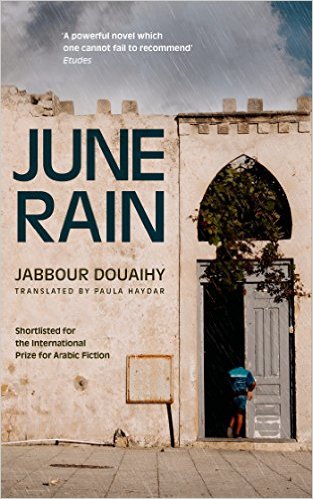
June Rain

16 June 1957 – a rainy day but always to be remembered as a black day in the lives of all families in a small town at Mount Lebanon, the stronghold of the Maronites in Lebanon, the day when everybody’s life changed forever in this community.

The rivalry between the two dominating clans, the Al-Ramis and the Al-Semaanis had been lingering since a long time despite the fact that intermarriage between the clans was not rare and that all were Christians of the same denomination. In a church, the conflict that is triggered by political and personal issues, explodes – and in the end 24 men are dead.

Eliyya, the son of one of the victims, comes back to his home town for a visit after having lived for more than twenty years in the United States. He wants to meet his old and nearly blind mother – and to find out who his father – a man whom he has never met – was, and why and how he died. But this is not an investigation that aims in finding a culprit, as the two Armenian photographers suspect that were witnesses of the church massacre and that may or may not have shot photos from the gunfight. For Eliyya it is also an attempt to find out why his mother has sent him away from the small town so early on in his youth, first to school in Beirut and then to study abroad. And what about the rumors that he was conceived after his fathers death?

Eliyya wants to find out where he comes from and why his life in exile is so unhappy and the sense of purpose is drifting away from him because he is for some reason unable to create lasting friendships or relationships with people. He goes to different areas of the town where the two clans live and talks to people who were either witnesses of the events or knew the victims of the massacre intimately. What we read is therefore a mosaic of voices told by different characters.

While reading the book, I realized that some of the traits of the people in the community that the author is describing are typical for many areas in the Mediterranean. The machismo of the small town and its men has a lot in common with what one could find also in Sicily or the Accursed Mountains in Albania for example. An exaggerated pride in traditions and an allegedly prominent lineage (frequently invented), the badmouthing of and gossiping about “the others”, to whom all possible negative characteristics are attributed, the widespread misogyny, the contempt for those who don’t join in the frequent violent skirmishes between the clans, the cult of the gun that plays such a dominating role in this society – it has very little to do with the usual stereotypes (the “bad guys”in this book, if we may call them like this, are all Christians – Muslims are practically absent in this novel) we are used to when we come from a “Western” country.

The author got the inspiration to this novel from a murder in his home town, and he goes to great length to present us a multi-faceted story; the complicated relationship between the people is revealed by the life stories of some of the minor characters, for example the baker who lived during the civil war on the “wrong side” of the town, i.e. surrounded by people from the other clan – being only a baker didn’t protect him in the end. The tailor who takes so much interest in his good looks and his gun. Or the two Armenians, descendants of survivors of the genocide in 1915 whose ancestors found refuge amongst Arabs, but who feel estranged from the community in which they live after the catastrophe in the church. There is Muntaha, a neighbor of Eliyya’s family and the best friend of Kamileh, Eliyya’s mother, who knows a few things that the others don’t know. And there are of course Eliyya’s parents: Yusef, his father, a gambler and womanizer and there is, most importantly Kamileh, Eliyya’s mother who is in a way the real centre of this novel. We get to know her well as readers and we begin to understand that there is also another side to her than that of the constantly bickering, stubborn, and harsh old woman. But as a result of the events she had to go through, she was never able to share this side with her husband or her son or anybody else.

The novel has a very elaborate structure and the author knows obviously exactly about what he is writing. The motives of his characters, as difficult as they seem to be understandable in the beginning, make much more sense while the story moves on. It is also a story of exile – not only Eliyya spends his life abroad, also many of the other characters have been emigrating at least temporarily to some godforsaken place in Brazil, Venezuela or Australia, some of them just coming home in time to become part of the group of men that perished in the church massacre (the “incident”, as it is called by almost everyone).

One of the aspects of this novel that I found most interesting was the author’s analysis of the already mentioned machismo of this very traditional society. It is not only about guns, but also about cars, something to which most of us can relate probably much more easily. The author mentions a rather revealing development – at a certain moment in the late 1950’s, early 1960’s, American cars are getting more and more replaced by German cars:

“…it was tempting to say that they found in German cars a kind of toughness and durability they had missed in the American cars…Mixed in with all of that praise for mechanics was also a general fascination with the German nation for having confronted the whole world by itself in WWII, which was a reason enough for pride, despite its eventual loss.” – (The Falange, the fascist Lebanese party that has as an almost exclusive power and support basis in the Maronite community in Mount Lebanon was never hiding the fact that they were inspired in many respects by the Nazis, SS-like uniforms of their paramilitary militias that are responsible for some of the worst crimes in the Middle East included.)

One of the most interesting paragraphs in the book for me was when the author is explaining how the people were getting used to the sound of the different kinds of gunfire – with the single shot at point blank range being the most chilling since the distance is too short to fail. But there are even absurd cases like those people who are sending a tape with recorded gunfire to a brother in Australia – the poor guy is allegedly living in a place where he is deprived of that sound! That is so grotesque, it is even funny. 

“And then there was the unverified claim that Abu Saeed’s neighbours and relatives started shooting into the air one day, refusing to tell the reason for their joy. The secret didn’t come out until days later, thanks to some women who sent out news outside the quarter that Abu Saeed had been experiencing a constant erection and was worried sick about it. He’d consulted numerous doctors and the day it finally ‘slept’ for him, as they say, all his family and neighbours fired their rifles in celebration.”

I couldn’t help but bursting out laughing when I imagined the whole family and neighbourhood celebrating the receding erection of their leader – hilarious!

Jabbour Douaihy, a professor for French literature in Beirut, was a new name to me. I am glad I read this multi-layered and -voiced novel that didn’t only give me a much better insight and understanding in the reasons for the violence in Lebanon and the Middle East in general, but that is also due to the great abilities of the author as a storyteller a book that will stay very long with the reader. It can be also read as a kind of Bildungsroman of its main character, but that is only one of the various approaches to this rich and thoughtful book. 

In the end we see Eliyya saying good-bye to Kamileh, and it is very probably the final farewell. On his way back to the United States, Eliyya is getting rid of some excess baggage. That is sometimes very helpful – not only while traveling, but in life in general.

June Rain

Jabbour Douaihy: June Rain, transl. by Paula Haydar, Bloomsbury Qatar Foundation Publishing, Doha 2014 

© Thomas Hübner and mytwostotinki.com, 2014-6. Unauthorized use and/or duplication of this material without expressed and written permission from this blog’s author and/or owner is strictly prohibited. Excerpts and links may be used, provided that full and clear credit is given to Thomas Hübner and mytwostotinki.com with appropriate and specific direction to the original content.


Fünf kurze Kurzgeschichten von Ugo Untoro

Dua lembar baju, celana, 3 celana dalam, dan handuk kecil kumasukkan
dalam tas. Lewat pintu belakang aku keluar, satpamku juga tertidur dekat
dengan kurungan herder. Tetapi terlelap.
Anakku, istriku kalau mau ketemu dengan aku tontonlah sirkus keliling.

Ich legte zwei Hemden, ein Paar Hosen, drei Unterhosen und ein kleines Handtuch in meine Tasche. Ich ging durch die Hintertür hinaus. Mein Wachmann befand sich neben dem Zwinger mit dem Schäferhund. Beide schliefen. Mein Sohn, meine Frau, wenn ihr mich sehen wollt, kommt und schaut euch die Zirkusvorstellung an.

—————————————————————————————————-

Dasar aku memang klepto, aku di kamar kecil Kereta Api (Train Urinoir) dan aku mencuri papan yang tertulis “Pergunakanlah hanya waktu kereta jalan.” Tidak berhasil karena pecah, bautnya terlalu kencang, BAJINGAN!!

Ich bin wirklich ein Kleptomane, ich war im Zugurinal und stahl das Schild auf dem steht „Nur benutzen wenn der Zug fährt.“ Es ging schief, denn es zerbrach, der Bolzen saß zu fest. BASTARD!!

—————————————————————————————————-

Telpon berdering.
“Halo, siapa?”
“Selli mas!”
“Selli?!”
Bekas pacarku dulu sekali, waktu aku masih ingusan dan pemalu banget.
Pegang jarinya saja sudah gemetar, ngomong juga jarang, jadi surat-suratan
terus.
“Berapa anakmu sekarang Sell?”
“Dua mas, cewek-cowok”
“Suamimu dimana?”
Dia ngomong lagi ngebor minyak di Riau. Kami janjian bertemu, dua hari
lagi. Di tengah hujan lebat, di bawah beringi, kutiduri ia dalam mobilku.
Aku tidak pemalu lagi.

Das Telefon klingelte.
„Hallo, wer ist dran?“
„Hier ist Selli!“
„Selli?!“
Sie war meine Freundin als ich noch ganz jung und schüchtern war.
Zu jener Zeit zitterte ich sogar, wenn ich nur ihre Hand hielt. Wir sprachen kaum jemals miteinander, aber wir schickten uns lange Zeit Briefe.
„Wie viele Kinder hast du jetzt, Sell?“
„Zwei, ein Mädchen und einen Jungen.“
„Wo steckt dein Mann?“
Sie sagte, ihr Mann wäre in Riau beim Ölbohren. Wir verabredeten uns für den übernächsten Tag. Im strömenden Regen, unter einem Banyan-Baum, fickte ich sie in meinem Auto.
Ich war nicht mehr schüchtern.

—————————————————————————————————-

Anjing hitam tak tau apa yang harus dia perbuat ketika dilihat tuannya
mencari-cari tali, mengikatnya di kusen pintu dan meletakkan kursi rendah di
bawahnya.

Der schwarze Hund wusste nicht, was er tun sollte als er sah, dass sein Herrchen nach einem Seil suchte, es dann am Türrahmen festband und einen Stuhl darunter stellte.

—————————————————————————————————-

Nahkodanya kapal Nuh terlalu banyak minum Rum. Sebuah ombak besar
datang menghantam dan langsung tenggelam. Nabi Nuh tidak bisa berenang
dan semua binatang yang dikumpulkannya mati. Hanya sepasang Gagak
yang sempat menyelamatkan diri.
Mereka terbang dan mencari sarang. Beranak pinak, anak cucunya ada
yang kawin sama ikan, gurita, kerang, ubur-ubur, penyu, dan kitalah
keturunannya.

Der Kapitän von Noahs Arche trank zu viel Rum.  Eine gewaltige Welle krachte ins Schiff und es sank sofort. Noah konnte nicht schwimmen und alle Tiere an Bord der Arche wurden getötet. Nur ein Krähenpaar hatte genug Zeit zu fliehen.
Sie flogen davon und suchten nach einem Nistplatz. Dann brüteten sie; einige ihrer Kinder und Enkel heirateten Fische, Tintenfische, Austern, Quallen, Schildkröten, und wir sind ihre Nachfahren.

Aus dem Indonesischen übersetzt von Thomas Hübner

Give Me a Cross

Ugo Untoro: Give Me a Cross, Ölfarbe und Kohle auf Leinwand, 150x100cm, 2008  (Photo Biasa Art Space)

Ugo Untoro: Cerita Pendek Sekali (Kurze Kurzgeschichten), Museum dan Tanah Liat, Bantul, Yogyakarta 2006

© Ugo Untoro, 2006-2008
© Biasa Art Space, 2008 (Photo) 
© Thomas Hübner and mytwostotinki.com, 2014-6. Unauthorized use and/or duplication of this material without expressed and written permission from this blog’s author and/or owner is strictly prohibited. Excerpts and links may be used, provided that full and clear credit is given to Thomas Hübner and mytwostotinki.com with appropriate and specific direction to the original content.

My blogging year 2015 – some figures

This was my blogging year 2015 in a few numbers (in brackets the figures for 2014):

Posts total: 87 (83) – +4.8%
Posts in English: 71 (81) – -12.3%
Posts in German: 15 (2) – +750%
Posts in Bulgarian: 1 (0)
Number of unique visitors: 38,331 (19,261) – +99%
Number of visits: 94,639 (82,672) – +14.5%
Number of visited pages: 300,456 (299,447) – +0.3%
Number of page hits: 580,619 (477,390) – +21.6%
Number of countries of location of visitors: 164 (134) – +22.4%
Top five countries page hits: USA, Albania, Germany, France, Ukraine (China, USA, Albania, Ukraine, Serbia)
Number of FB followers: 478 (306) – +56.2%
Number of Twitter followers: 1026 (565) – +81.6%
Most popular blog post: A case of revisionism
Original language of the reviewed/quoted book: German 49 (47), Bulgarian 25 (9), English 10 (51), French 7 (6), Russian 4 (6), Indonesian 3 (2), Arabic 2 (4), Spanish 2 (4), Dutch 2 (1), Japanese 1 (4), Italian 1 (2), Portuguese 1 (1), Yiddish 1 (1), Chinese 1 (0), Serbian 1 (0), Albanian 0 (3), Turkish 0 (3), Greek 0 (2), Lithuanian 0 (1), Norwegian 0 (1)

All the best and a Happy New Year 2016 for all readers!

© Thomas Hübner and mytwostotinki.com, 2014-6. Unauthorized use and/or duplication of this material without expressed and written permission from this blog’s author and/or owner is strictly prohibited. Excerpts and links may be used, provided that full and clear credit is given to Thomas Hübner and mytwostotinki.com with appropriate and specific direction to the original content.
