Category Archives: Books

Bulgarian Literature Month 2016 – a few suggestions

As already announced some time ago, Mytwostotinki will host a Bulgarian Literature Month in June. In case you are a reader with or without blog, here are a few suggestions for that month in case you want to participate. Additional suggestions and information on how to participate will follow very soon.

Very little is available in print in English language from the non-contemporary Bulgarian belletristic literature. Among the classical works presently available in print are:

Ivan Vazov: Under the Yoke (various editions available) – the most famous classical work in Bulgarian and the first Bulgarian novel, written 1888 and based on Vazov’s own experience and historical events related to the so-called April uprising against the Ottoman rule. Full of action and romanticism, a story that is still read by almost every Bulgarian (usually at school) and that is therefore having a great influence on how Bulgarians see their own history (and themselves).

Aleko Konstantinov: Bai Ganyo (University of Wisconsin Press 2010) – originally published 1895; the adventures and misadventures of the rose oil trader Bai Ganyo are a satirical masterpiece. Bai Ganyo knows always where to find a free lunch in Vienna, Dresden, Petersburg and how to bribe, bully and rig elections in Bulgaria. No wonder not all Bulgarians like this book and its author (who was murdered in 1897), especially since not all has changed very much since Bai Ganyo’s days.

By the same author, a travel account – one of the first by Bulgarian authors:

Aleko Konstantinov: To Chicago and Back (Abm Komers 2004)

The poet Nikola Vaptsarov had a short and tragic life. His poems are available in English:
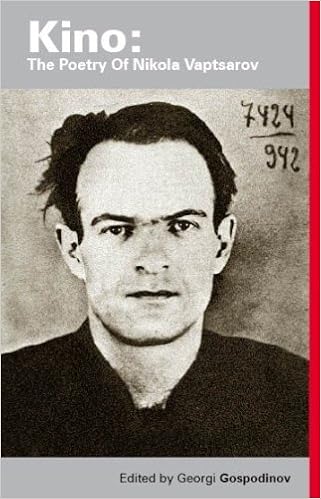
Nikola Vaptsarov: Kino (ed. Georgi Gospodinov) (Smokestack Books 2014)

The grand old lady of Bulgarian literature was without doubt Blaga Dimitrova. Available by her:

Blaga Dimitrova: Forbidden Sea (2002), and Scars (2003), both by Ivy Press Princeton – Dimitrova was one of the most beloved and prolific writers in Bulgarian language after WWII and after the fall of communism she was for some time Vice-President of the country. Two of her longer poems are available in bi-lingual editions. Dimitrova wrote also prose but in this moment, none of her works in prose seems to be available.

Since we are at poetry, here are a few more titles (mostly in bi-lingual editions):

Konstantin Pavlov: Capriccio for Goya
Konstantin Pavlov: Cry of a Former Dog
Alexander Shurbanov: Frost-Flowers
Danila Stoianova: Memory of a Dream
Edvin Sugarev: Secret Senses
Edvin Sugarev: Kaleidoscope (all titles by Ivy Press Princeton)

Shearsman Books, another small publisher, has two Bulgarian poetry books:

Tzvetanka Elenkova: The Seventh Gesture, and
At the End of the World – Contemporary Poetry from Bulgaria (ed. Tzvetanka Elenkova)

Translator is in both cases Jonathan Dunne who is with Tzvetanka Elenkova, his wife, also the publisher of Small Stations Press.

Another excellent anthology of Bulgarian poetry:

The Season of Delicate Hunger (ed. Katerina Stoykova-Klemer), Accents Publishing 2014

The following poetry works are published by small publishers – if you are interested in them let me know; these books are probably not available via the usual distribution channels in your country:

Boris Hristov: Book of Silence (Mythographies, 2008)
Ivan Hristov: American Poems (DA, 2013)
Kiril Kadiiski: Poetry (Sofia University Press, 2006)
Toma Bintchev: The Sea is Blue (Augusta 2008)
Dimitar Minkov: Contemplation (Initsiali 2014)
Karol Nikolov: Shared Spaces (ZOF 2009)
Lyubomir Nikolov: Street Poems (Carnegie Mellon University Press 2005)
Kristin Dimitrova: A Visit to the Clockmaker (Southword Editions 2005)

German readers can also try:

Elin Rachnev: Zimt (Leipziger Literaturverlag 2012)
Anna Zlatkova: fremde geografien (edition exil 2014)
Tzveta Sofronieva: Gefangen im Licht (Biblion 1999)
Boris Paskov: Zehn Traumgespanne (Biblion 2001)
Gerhard Gesemann(Hg.): Zweiundsiebzig Lieder des bulgarischen Volkes (Biblion 1996)
Radoj Ralin: Späte Brombeeren (Avlos 1999)
Mirela Ivanova: Versöhnung mit der Kälte (Das Wunderhorn 2004)
Pejo Jaworow: Den Schatten der Wolken nach (Weihermüller 1999)

The most renowned contemporary Bulgarian writer is Georgi Gospodinov. His two excellent novels (The Physics of Sorrow was just nominated for the Best Translated Book Award 2016) and a book with stories are available in English:

Natural Novel (Dalkey Archive Press 2005)
And Other Stories (Northwestern University Press 2007)
The Physics of Sorrow (Open Letter Books 2015)

Gospodinov is translated in many languages. In German the following books by him are also translated:

8 Minuten und 19 Sekunden (Droschl 2016)
Kleines morgendliches Verbrechen (Droschl 2010)
Gaustin oder Der Mensch mit vielen Namen (Wieser 2004)

The other internationally well-known name in translated contemporary Bulgarian literature is Alek Popov. His two fast-paced novels (the first one previously reviewed by me favourably) contain a lot of – sometimes black – humour, and it is not surprising that the first one was already adapted as a successful movie:

Mission London (Istros Books 2014)
The Black Box (Peter Owen Books 2015)

Again, German readers have more choices. Apart from the two books just mentioned they can also read the following by the same author:

Für Fortgeschrittene (Residenz 2009)
Schneeweisschen und Partisanenrot (Residenz 2014)

One of the most interesting female authors from Bulgaria is Virginia Zaharieva. As regular readers of this blog will remember, I enjoyed her first and so far only novel a lot:

Nine Rabbits (Istros Books 2012; Black Balloon Publishing 2014)

A publishing house that has various translated titles in his excellent program is Open Letter Press. Apart from The Physics of Sorrow it published also an excellent novel by Zachary Karabashliev (favourably reviewed by me):

18% Grey (Open Letter 2013)

Other titles from Open Letter Press:
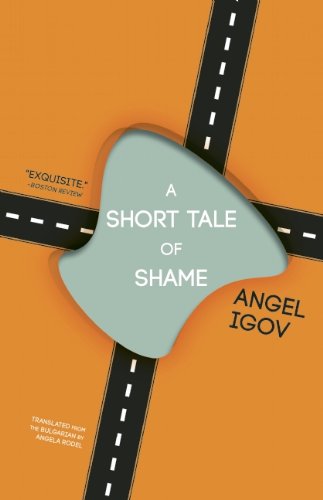
Angel Igov: A Short Tale of Shame (Open Letter Books 2013) – Igov is one of the most interesting younger Bulgarian authors. His second – and so far untranslated – novel Krotkite was recently nominated as Best Bulgarian novel 2015.

Milen Ruskov: Thrown into Nature (Open Letter Books 2011) – a brilliant picaresque historical novel

Albena Stambolova: Everything Happens as it Does (Open Letter Books 2013) – a novel that was not completely unjustified compared to Albert Camus’ The Stranger.

Georgi Tenev: Party Headquarters (Open Letter Books (Open Letter Books 2016) – a novel about the turbulent time of transition in Bulgaria in the 1980s and 90s.

Deyan Enev is one of the masters of Bulgarian short prose. One of his collections is translated in English:

Circus Bulgaria (Portobello Books)

The following two books by Bulgarian publishers are maybe not great literature, but light and humorous summer reads:

Boyan Bioltchev: Varoe’s Amazon (Bulgarian Bestseller 2007)
Mikhail Veshim: The English Neighbour (Siela 2015) – a must-read for all foreigners who plan to buy a house in the Bulgarian countryside and want to live there

A young author that published a story collection whose main protagonist is the city Sofia itself – I like this book very much:

Alexander Shpatov: #LiveFromSofia (Siela 2014)

Another book by the same author is available in German:

Fussnotengeschichten (Wieser 2010)

Nikolay Fenersky is another interesting writer of short stories. The following short book is available as an ebook:

The Apocalypse is a Private Affair (Fenersky 2014)

Ludmila Filipova is a bestseller author in Bulgaria, her most popular book available in English is:

The Parchment Maze (Create Space 2013)

Another popular book is this novel about a Bulgarian emigrant in Paris:

Marko Semov: The Price (Bulgarian Bestseller 2006)

Dimitar Tomov has published a collection of Gypsy stories that is available in English:

The Eternal Katun (Bulgarian Bestseller 2004)

One of the most remarkable Bulgarian movies of the last decades is Dzift by Javor Gardev. This film noir is based on an equally remarkable novel I can recommend heartily:

Vladislav Todorov: Zift (Paul Dry Books 2010)

Many good Bulgarian authors are not translated in English, some not at all. German readers are comparatively lucky, since they have access to excellent authors such as Vladimir Zarev, Lea Cohen, or Christo Karastojanov, to name just a few. Here is an overview without further comments regarding some more remarkable titles available in German translation:
Bozhana Apostolowa: Kreuzung ohne Wege (Dittrich 2010)
Boika Asiowa: Die unfruchtbare Witwe (Dittrich 2012)
Dimitar Atanassow: Die unerträgliche Freiheit (Dittrich 2012)
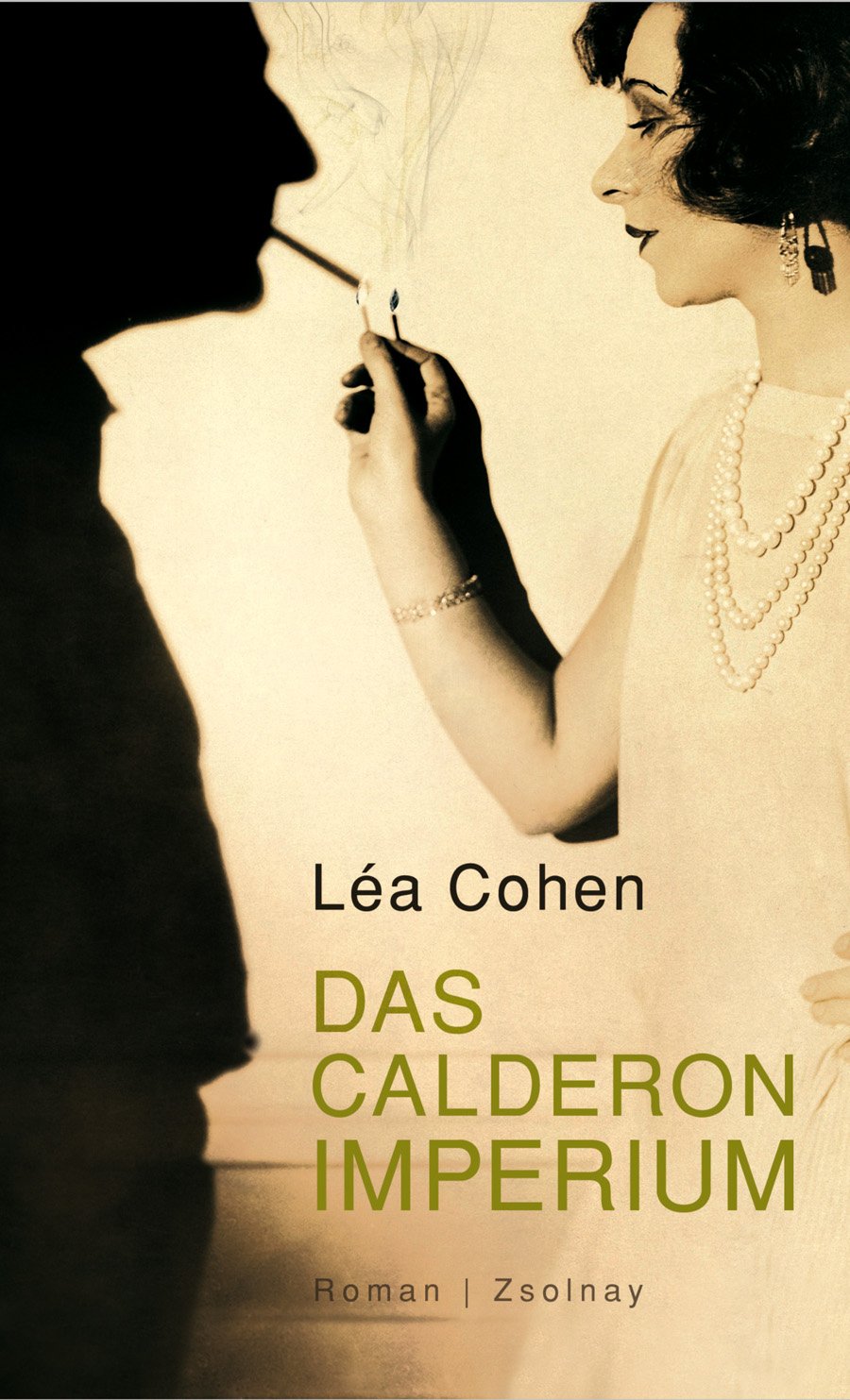
Lea Cohen: Das Calderon-Imperium (Zsolnay 2010)
Georgi Danailov: Ein Haus jenseits der Welt (Wieser 2007)
Kristin Dimitrova: Sabazios (IG Elias Canetti)
Thomas Frahm (Hg.): Gegenwarten: Bulgarische Prosa nach 1989 (Chora 2015)
Georgi Grozdev: Beute (IG Elias Canetti)
Georgi Grozdev: Unnütz (IG Elias Canetti)
Konstantin Iliev: Die Niederlage (IG Elias Canetti)
Jordan Iwantschew: Die Farben des Grauens (Dittrich 2011)
Jordan Jowkow: Ein Frauenherz (Biblion 1999)
Christo Karastojanow: Teufelszwirn (Dittrich 2012)
Viktor Paskow: Autopsie (Dittrich 2010)
Palmi Ranchev: Der Weg nach Sacramento (Dittrich 2011)
Maria Stankowa: Langeweile (Dittrich 2010)
Kalin Terziyski: Alkohol (INK Press 2015)
Kalin Terziyski: Wahnsinn (IG Elias Canetti)
Todor Todorov: Hexen, Mörder, Nixen, Dichter (Größenwahn Verlag 2012)
Angel Wagenstein: Leb wohl, Shanghai (Edition Elke Heidenreich bei C. Bertelsmann)
Angel Wagenstein: Pentateuch oder Die fünf Bücher Isaaks (btb 2001)
Vladimir Zarev: Familienbrand (dtv 2013)
Vladimir Zarev: Feuerköpfe (dtv 2014)
Vladimir Zarev: Seelenasche (dtv 2015)
Vladimir Zarev: Verfall (Kiepenheuer & Witsch 2009)

In a second blog post I will give very soon a few recommendations related to books by Bulgarian authors writing in a foreign language, and also a few non-fiction book recommendations related to Bulgaria.

A third blog post will give finally additional information on how you can participate in the Bulgarian Literature Month – and stay tuned: there will be also some giveaways!

PS: In case you are a publisher – you can contact me for more information on the books and authors, sample translations and translation rights’ information.

© Thomas Hübner and mytwostotinki.com, 2014-6. Unauthorized use and/or duplication of this material without expressed and written permission from this blog’s author and/or owner is strictly prohibited. Excerpts and links may be used, provided that full and clear credit is given to Thomas Hübner and mytwostotinki.com with appropriate and specific direction to the original content.


Das BGH-Urteil zur VG-Wort-Ausschüttung

Es ist schon ein wenig überraschend, wie sich in Deutschland die Diskussion über das jüngste BGH-Urteil zum Urheberrecht und zur Verteilung der Kopierabgabe (und der finanziell weit weniger ergiebigen Bibliotheksabgabe) durch die VG Wort gestaltet: da wird von Vielen so getan, als ob uns der BGH etwas Neues sagt, was nicht schon längst auf europäischer Ebene geklärt war (siehe EuGH-Urteil HP vs. Reprobel), da giften sich Autoren, die die Verleger in ihrer Haltung unterstützen und Autoren, die die Verleger als Ausbeuter ansehen in sozialen Medien und anderen öffentlichen Stellungnahmen in manchmal recht unfeiner Weise an – häufig ohne verstanden zu haben, um was es eigentlich geht. Und dann teilen uns auch noch Philosophen(!) ihre maßgebliche Interpretation schwieriger urheberrechtlicher Fragestellungen mit – das hat durchaus manchmal etwas Belustigendes, auch wenn das Thema natürlich für alle Beteiligten sehr ernst ist. 

Dass das deutsche System der Verteilung der Urheberrechtsabgaben auf Kopien in seiner gegenwärtigen Form – Aufteilung auf Autoren und Verlage zu gleichen Teilen – europarechtswidrig ist, war im übrigen seit dem o.g. Reprobel-Urteil längst klar. Aus demselben Urteil geht auch hervor, dass wir hier nicht nur Zeuge einer Umverteilung von Geldern von den Verlegern hin zu den Autoren werden, sondern auch, dass die eingesammelten Beträge der Kopierabgabe europaweit in Ländern mit vergleichbaren Systemen (also z.B. Deutschland, Frankreich, Belgien, Niederlande) einen starken Rückgang erleben werden (aufgrund des Verbots der doppelten Abgabenerhebung pro Gerät und Kopie bei Kopierern), von der hauptsächlich die Gerätehersteller und –importeure dieser Geräte profitieren werden; ein weiterer Grund für den starken Rückgang der Ertragskraft der Kopierabgabe liegt in der wachsenden Bedeutung von virtuell gespeicherten Kopien – die Cloud unterliegt nun mal keiner Kopierabgabe und die Bedeutung der klassischen Speichermedien wird auch in Zukunft weiterhin drastisch abnehmen.

Aus all dem ergibt sich daher ohnehin schon, dass das bestehende System der Verteilung der Kopierabgabe durch die VG Wort nicht nur rechtswidrig, sondern auch aus technologischen Gründen nicht zukunftsfähig ist und man früher oder später über ein grundlegend neues System der Autorenentlohnung für “fair use”-Kopien nachdenken muss.

Länder wie Norwegen oder Finnland sind da schon sehr viel weiter. Dort gibt es vom Steuerzahler finanzierte Fonds, aus denen die Autoren für Kopien ihrer Werke kompensiert werden, und man muss kein Hellseher sein um zu verstehen, dass auch in Deutschland früher oder später ein nicht nach Speichermedien diskriminierendes und von tatsächlichem Kopieren unabhängiges System eingeführt werden wird, welches aus Steuermitteln getragen sein wird. 

Dass das Reprobel-Urteil und sein BGH-Folgeurteil selbstredend zu einer starken Reduktion publizierter Titel – insbesondere “riskante” weniger marktgängige Titel – und sehr wahrscheinlich auch zu einem tendenziellen Absenken der generellen Autorenhonrare in Deutschland führen wird, sei nur nebenbei bemerkt. Einige Verlage werden wegen erheblicher rückwirkender Forderungen wohl in die Insolvenz getrieben werden. Es sei denn, man findet schnell ein vernünftiges Nachfolgemodell.

Anstatt sich also in unsinnigen Zankereien zu verlieren, sollten alle Beteiligten sich schnellstmöglich zusammensetzen und ein zukunftsfähiges und nachhaltiges Nachfolgemodell entwickeln; dabei muss selbstverständlich auch der Gesetzgeber einbezogen werden. Zum Nulltarif, d.h. ohne finanzielle Einbeziehung der öffentlichen Haushalte und des Steuerzahlers wird eine vernünftige und rechtskonforme Lösung im Sinne aller Beteiligten wohl nicht zu haben sein. 

© Thomas Hübner and mytwostotinki.com, 2014-6. Unauthorized use and/or duplication of this material without expressed and written permission from this blog’s author and/or owner is strictly prohibited. Excerpts and links may be used, provided that full and clear credit is given to Thomas Hübner and mytwostotinki.com with appropriate and specific direction to the original content.
100 Grams of Vodka

100 Gramm Wodka: a book about a three-month trip through Russia and Kazakhstan, written by Fredy Gareis, a German journalist who was born in Almaty (then Alma-Ata) but who emigrated with his family to Germany, the home country of his ancestors when he was still a toddler.

As a child, Fredy Gareis was not particularly interested in the stories and discussions about the past of the family in the Soviet Union. That his mother obviously wanted to completely wipe out any memories of her past didn’t help little Fredy to understand where he really came from and what was the story behind those long kitchen meetings with relatives that were a part of his childhood in Germany. But while growing older and becoming a journalist, the wish to get to know more about the country in which he was born (now divided into several independent states, then the Soviet Union) and to reconnect himself with his and his family’s past became stronger.

The passing on of several older relatives within a short period, and the feeling to have missed a chance to learn more from them finally triggered an urgent wish to visit Russia and Kazakhstan, partly to see how life is now in this vast region, but mainly driven by the wish to see the places in Kazakhstan and Siberia where his family came from and suffered in the Stalin era and thereafter as descendants of those Germans who came to Russia and the Ukraine after Catherine the Great had invited her fellow countrymen to settle there. Once held in great esteem for their industriousness, with their own Autonomous Soviet Republic at the Volga, WWII was the big catastrophe for this community that catapulted those who survived it to Siberia or the Central Asian Republics, frequently as slave labourers in the GULag.

100 Gramm Wodka is an interesting book which contains insightful travel notes and also reports about many meetings with different people from a big variety of geographic and social origins, and therefore a kind of mosaic of this part of the world. A deep dive into the history of the Russian Germans who were considered as Germans in Russia, and who are now – after the biggest part of them has re-emigrated to the homeland of their ancestors – considered to be Russians by their fellow countrymen in Germany; it seems to be their fate to never really belong to the community within which they live and to be always considered as outsiders. A road and railroad trip past thousands of kilometers of steppe, heading to Magadan and Vladivostok at the Pacific – and a love declaration to the incredible people that live in this region. But how on earth could the author possibly survive all this Vodka that the hospitable local people offered him together with huge amounts of food on all kind of occasions?

A translation of this excellent piece of travel journalism is recommended. After reading it, the probability is very high that you will plan to go on a visit there. And if you are more of an armchair traveller, you will still enjoy this trip from Saint Petersburg to Moscow, Lake Baikal, Kazakhstan, the Raspberry Lake, and the wide expanse of Siberia, a terra incognita even for most Russians.

Fredy Gareis: 100 Gramm Wodka, Malik 2015

© Thomas Hübner and mytwostotinki.com, 2014-6. Unauthorized use and/or duplication of this material without expressed and written permission from this blog’s author and/or owner is strictly prohibited. Excerpts and links may be used, provided that full and clear credit is given to Thomas Hübner and mytwostotinki.com with appropriate and specific direction to the original content.
Coup de Grâce

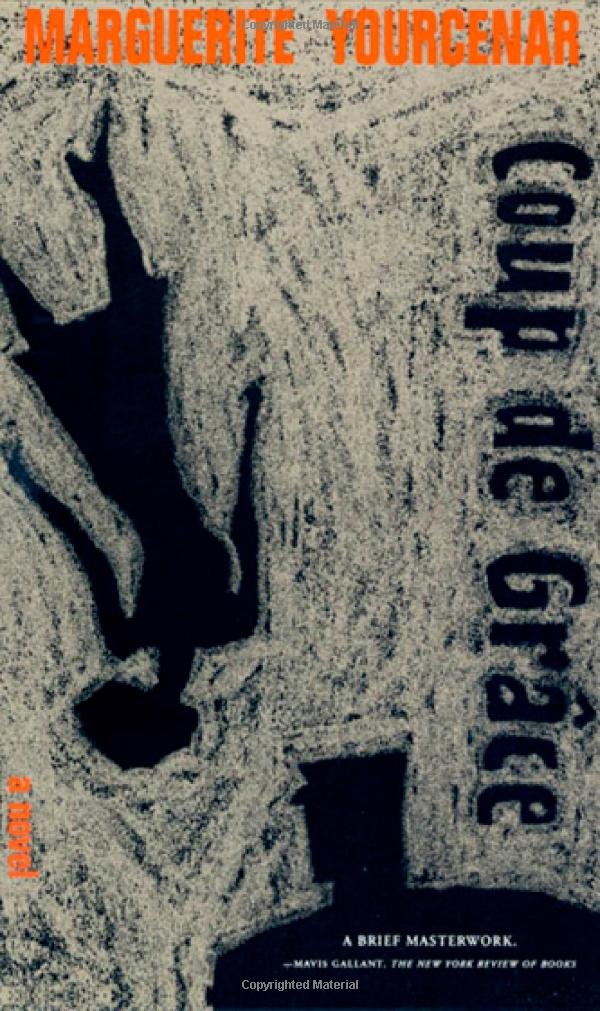
Coup de Grâce is a short novel by Marguerite Yourcenar, published a few months before the outbreak of WWII. It is the account of the tragic relationship of three people, as told by one of them in retrospect.

Erich von Lhomond, the narrator, is a German officer of the Legion Condor who was wounded in the Spanish Civil War and is recovering in Italy which gives him an opportunity to look back at events that happened briefly after WWI, events that had a lasting impact on his life.

Erich and his close childhood friend Conrad took part in the fighting in the Baltics in 1919 between the Red and the Czarist Army; the so-called White Russians were supported in this civil war by German Freikorps (in which Erich and Conrad serve as officers), paramilitary groups with strong nationalist, anti-communist, and frequently anti-Semitic convictions (many later Nazi leaders served in Freikorps units); the situation was rather complex since there were already independent states in Estonia, Latvia, and Lithuania who were caught somehow in between. The fighting in the Baltics with its atrocities, summary executions of prisoners, or massacres of people who were just suspected of being sympathetic to the other side foreshadowed in many respects what was to come about twenty years later. It is despite its great importance for the understanding of the history of this century a today almost forgotten episode.

The action of the biggest part of the book takes place in Kratovice, the castle-like family home of Conrad and his sister Sophie, whom Erich and Conrad meet again after a long time. In their youth and adolescence, the three of them formed a very close triangle, and they used to share their thoughts, dreams, and secrets. But the war and their growing-up has changed their relationship. While Erich and Conrad share a homoerotic attachment to each other, Sophie falls in love with Erich and declares her feelings very openly to him – but Erich is not responding to her feelings.

Yourcenar focuses the narrative on the development of the relationship of these three young people, who are tormented by their feelings and also the political situation. An additional complication is the fact that Sophie has sympathies for the communists, and doesn’t hide it. After being rejected by Erich, she starts a number of short affairs with other soldiers, probably in the hope to arouse Erich’s jealousy. But Erich keeps his calm at least on the outward. Only once, after another compromising short affair of Sophie, he gives her a dressing-down that destroys her last hopes in ever arousing a serious interest in her:

“Toutes les réponses eussent été bonnes, sauf celle sur quoi je trébuchai par irritation, par timidité, par hâte de blesser en retour. Il y a au fond de chacun de nous un goujat insolent et obtus, et ce fut lui qui riposta:

– Les filles de trottoir n’ont pas à se charger de la police des mœurs, chère amie.”

“All responses would have been good except the one on which I stumbled by irritation, by shyness, by aiming to hurt back. Deep within each of us there is an insolent and obtuse bounder, and it was he who replied:

– Pavement princesses do not have to take on the vice squad, dear friend.”

This moment seems to mark the turning point of Sophie’s feelings; she is soon leaving Kratovice without giving note to anyone, obviously with the intention to join the communists.

What follows is the evacuation of Kratovice and the withdrawal of Erich’s unit, skirmishes in which Conrad is mortally wounded, and a truly breathtaking last meeting of Erich and Sophie who has been taken prisoner. I prefer not to reveal more of the story here, but the title of the book gives already away a lot.

This short novel is in my opinion one of the really great works of French 20th Century literature. There are many reasons to consider this book as at least very remarkable.

One reason is the intelligent choice of the central “hero” of the book. The narrator and main character Erich is an ambiguous and therefore interesting character. With his refined and chivalrous manners and his interest in literature and art, he is not the heel-clicking stereotype of a German soldier you can see in many Hollywood movies, but probably a more typical example of the old Prussian military elite that was predominantly of French-Huguenot origin – like Erich himself.

Although being historically on the “wrong” side – as part of the military machinery that was responsible for the rise of fascism in Europe and other parts of the world – he is an intelligent man able of introspection and empathy. That is self-evident from his relations with Sophie, but also from his opinion about Grigori Loew, the man with whom Sophie was living while siding with the Reds. Loew is a Jew and convinced communist, but nevertheless Erich thinks more highly of him than of most his own brothers-in-arms:

“…il avait sur lui un exemplaire du Livre d’Heures de Rilke, que Conrad aussi avait aimé. Ce Grigori avait été probablement le seul homme dans ce pays et à cette époque avec qui j’aurais pu causer agréablement pendant un quart d’heure. Il faut reconnaître que cette manie juive de s’élever au-dessus de la friperie paternelle avait produit chez Grigori Loew ces beaux fruits psychologiques que sont le dévouement à une cause, le goût de la poésie lyrique, l’amitié envers une jeune fille ardente, et finalement, le privilège un peu galvaudé d’une belle mort.”   

“… he had a copy of the Book of Hours by Rilke with him, that Conrad also had loved. This Grigori had probably been the only man in this country and at that time with whom I could have conversed nicely for a quarter of an hour. It has to be recognized that this Jewish obsession to rise above his father’s thrift had produced at Grigori Loew these beautiful psychological fruits like the dedication to a cause, the taste for lyric poetry, the friendship toward a fiery young girl, and finally the somewhat overused privilege of a beautiful death.”

In retrospect, Erich realizes that the communist Russian Jew Grigori Loew was in a way his own mirror image; he also realizes that Sophie’s last wish to which he had complied, was indeed an act of revenge that would overshadow Erich’s whole future existence. His life after the catastrophic events seems to matter very little to him; he is also aware of the fact that his engagement in diverse conflicts all over the world (Manchuria, Latin America, Spain) has turned the once honourable soldier into a mercenary and adventurer (who will in all probability be soon part of the Nazi aggression in WWII).

There are many other reasons to estimate Yourcenar’s book very highly: the crisp and elegant language, the deep psychological insights in the motivation and the different psycho-sexual orientations of the characters, the dialogues and atmospheric depth of the setting in the family castle of the de Reval family – I enjoyed this gem of a book very much. It made me curious to read more by Yourcenar.

I read the book in the original French; it turned out to be a surprisingly easy read.

An interesting movie is based on the novel: Der Fangschuss (1976), by Volker Schlöndorff (cinematography: Igor Luther).


Marguerite Yourcenar: Le Coup de Grâce, Folio 2016
Marguerite Yourcenar: Coup de Grâce, translated by Grace Frick, Farrar, Straus and Giroux 1981
The text quotes in this blog post are translated from the French by Thomas Hübner.
© Thomas Hübner and mytwostotinki.com, 2014-6. Unauthorized use and/or duplication of this material without expressed and written permission from this blog’s author and/or owner is strictly prohibited. Excerpts and links may be used, provided that full and clear credit is given to Thomas Hübner and mytwostotinki.com with appropriate and specific direction to the original content.
Mortality

About 40% of the people that live in the United States – the situation in other industrialized countries is not very different – develop at least once in their lives cancer and although the 5-year survival rate has drastically increased for various types of cancer in the last years as a result of new cures and more efficient treatment, it is still the single most important lethal disease beside heart and coronary-related diseases. Almost anyone of us, even when we are lucky and never get ill from cancer ourselves, have a close person that is or will be ill with this life-threatening disease. Apart from the medical aspects, the main question in this context is: how are we dealing with such a diagnosis? And on a more philosophical level: how are we coming to terms with our own mortality in the face of cancer?

Christopher Hitchens was a kind of rock star among the journalists in the Anglo-Saxon world. He was an extremely prolific author on various topics, editor and contributor to the most important and intellectually most stimulating periodicals, author of about 25 books. His most popular works are probably his autobiography Hitch-22, his critical essay about Mother Teresa The Missionary Position, his attack on Henry Kissinger whom he considered a war criminal in The Trial of Henry Kissinger, and his book against religions God is Not Great. There was hardly any public debate which didn’t see Hitchens involved, his outspokenness, his quick-wittedness, his intelligence and charisma, and his ability to write a light-hearted yet passionate prose that gave every reader the feeling that Hitchens was speaking to him personally made him a unique figure with many devoted readers, but also with many opponents or even enemies.

On June 8, 2010, while on a book promotion tour for his book Hitch-22, Hitchens felt suddenly an excruciating pain in his chest and thorax. A medical emergency team arrived at Hitchens’ hotel room and brought him to the hospital.

“I had the time to wonder why they needed so many boots and helmets and so much heavy backup equipment, but now that I view the scene in retrospect I see it as a gentle and firm deportation, taking me from the country of the well across the stark frontier that marks off the land of malady.”

From now on, Hitchens was an inhabitant of what he calls “Tumortown”. With his usual professionalism he decided to write about his experience and the book Mortality we have in our hands as readers is the result of this professional approach. The book is a slightly edited version of a series of articles that appeared during Hitchens’ illness in Vanity Fair, a last chapter written by him consists of aphoristic jottings that are related to the text of these articles but which the author could not edit – Hitchens died on December 15, 2011 from esophageal cancer.

Although the book doesn’t hide the authors’ sufferings, his hopes for a successful treatment, his ordeal of going through a long series of chemotherapies, it is also the story of a man who doesn’t cower in the face of his fate, a man who tries to keep his dignity until the very end.

The most interesting parts of the book were for me those pages in which the author describes how the cancer affected his relation to the people around him, particularly to his family and close friends. Another strong part of the book is the description of the stages through which probably each mortally ill person has to go. And it is probably very good when one can – like Hitchens – answer the question “Why me?” very quickly with a “Why not?”, and focus on more important questions and problems. Cancer is for sure not a punishment for allegedly committed sins, even when some disgusting fundamentalist pseudo-“Christian” activists were cheering loudly when the cancer diagnosis of Hitchens became public.

One of the really fascinating parts of the book deals with what the author calls “cancer etiquette”. How should we talk to a cancer patient? What kind of remarks are appropriate, what kind are not? Too much interest in the details of the disease and the state of affairs of the patient can be really painful for the ill person – but too little interest as well. How to keep the right balance? Also the question if we should pray for a sick person and let him/her know it is rather tricky – in particular when the patient is like Hitchens an atheist.

The chapter that deals with Hitchens’ atheism was for me the least interesting. Also in his other books where he was attacking religions or religious leaders, it was never clear to me why he took anecdotal evidence of misbehaviour of clerics, or any religiously motivated violence as a proof for the non-existence of God. Not that I cannot understand someone who is an atheist, but Hitchens’ line of argumentation seemed to me always rather shallow, and his description of the famous bet by Blaise Pascal is completely misrepresenting the brilliant French mathematician and believer. (I admit that I disagree with quite a lot of Hitchens’ standpoints, and found his unconditional support of the Iraq war as shameful as some of his radically anti-Zionist statements that crossed in my opinion the line to anti-Semitism.) I cannot blame Hitchens for not reflecting the fact that he – in possession of health insurance, and as a personal friend of leading scientists – was in an extremely privileged position; millions and millions of Americans would not have the slightest chance to get even basic tests performed on them in absence of health insurance; also his rather undifferentiated condemnation of people who oppose the “use” of human embryos for the purpose of medical research was understandable for me – but the ethical dilemma in that field was something Hitchens obviously could not see. But who am I to blame a person who is desperate to prolonging his life for such a point of view!

Who wants to understand how the world looks like for an intelligent person after the diagnosis “cancer” should read Mortality. It is – despite the above mentioned reservations – an honest, thought-provoking book. The same cannot be said for all books written from first-hand experience; Hitchens mentions Randy Pausch’s The Last Lecture as a bad, “sugary” example:

“Pausch used to work for Disney and it shows.”

Mortality may not be an uplifting read; but a necessary one. 

Front Cover

Christopher Hitchens: Mortality, Twelve, New York 2012


Randy Pausch: The Last Lecture, Hachette 2014

see also:

Oliver Sacks: My Own Life, The New York Times, Feb.

Fritz Zorn: Mars, Kindler, München 1977 (in German)

Wolfgang Herrndorf: Arbeit und Struktur, blog 2010-2013 (in German)

© Thomas Hübner and mytwostotinki.com, 2014-6. Unauthorized use and/or duplication of this material without expressed and written permission from this blog’s author and/or owner is strictly prohibited. Excerpts and links may be used, provided that full and clear credit is given to Thomas Hübner and mytwostotinki.com with appropriate and specific direction to the original content.
Woman of the Dead

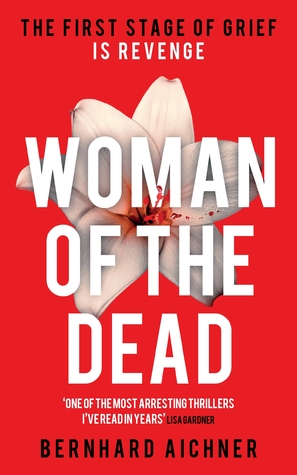
I have seen several favourable reviews of Woman of the Dead by Austrian crime fiction writer Bernhard Aichner. Therefore I expected something at least entertaining, maybe even well written. However…

Let me not bother you with the plot and come straight to the point: this is pulp fiction of the lowest class. The writing consists of strangely clipped sentences, and a pseudo-literary style that reads unintentionally funny at times, especially in the German original. The development of the story is entirely predictable, and the author seems to be a big fan of graphic descriptions of completely unmotivated violence. The more disgusting, the better, seems to be the credo of this author.

I didn’t enjoy this book even a little bit, and after I read a truly revolting FB posting of Herr Aichner in which he is inviting his FB friends to describe an “efficient, creative and spectacular torture method”, and which was promptly answered by more than a hundred obviously sexually aroused resident FB perverts who describe with obvious glee and sadistic pleasure in all graphic and sick details the contents of their demented torture fantasies (the most “creative” and disgusting will be used by Herr Aichner in his next book), I realized that this author writes not for me, but for that part of the population with strong anal-sadistic predisposition – people who would torture me or you to death with orgiastic pleasure, if they just had an opportunity. His books are obviously meant as arousal templates and masturbation help for those sick people, pornography for sadists. It seems that he is very successful in servicing to the needs of this lower segment of humanity.

My apologies for the explicit language in this blog post, but I was rarely more disgusted by any book or author and I strongly recommend you not to waste your time with the poorly written shmutz Herr Aichner is producing.

25216299

Bernhard Aichner: Woman of the Dead, translated by Anthea Bell, Orion 2015

© Thomas Hübner and mytwostotinki.com, 2014-6. Unauthorized use and/or duplication of this material without expressed and written permission from this blog’s author and/or owner is strictly prohibited. Excerpts and links may be used, provided that full and clear credit is given to Thomas Hübner and mytwostotinki.com with appropriate and specific direction to the original content.


Visit to a bookstore: Herceg Novi

I am travelling quite a lot; and I am reading quite a lot – no surprise that I visit also many bookstores while travelling. Therefore I will start here a small series with short portraits and impressions from book shops I visited and that deserve to be recommended. As you will see, I will focus mainly on small independent bookstores with a high-quality selection of books.

The excellent weather last weekend was the perfect excuse for a trip by bus from Prishtina/Kosovo (where I am working right now in an interesting project) to the Bay of Kotor in Montenegro. If you haven’t been there: it is a spectacular and very beautiful place! The contrasts of the high Montenegrin mountains and the bay with its rather unique topography, the Mediterranean climate and the old towns like Kotor (also sometimes known as Cattaro), Perast, or Herceg Novi are stunning.

As usual when I visit a place, I gather some prior information on the locations I want to see (this time Herceg Novi and Perast) – and of course bookstores also belong in that category. So I was rather pleased to find a very nice independent book shop in Herceg Novi, Salt Bookstore, a family business run by Viktorija Malović, wife of the author Nikola Malović.

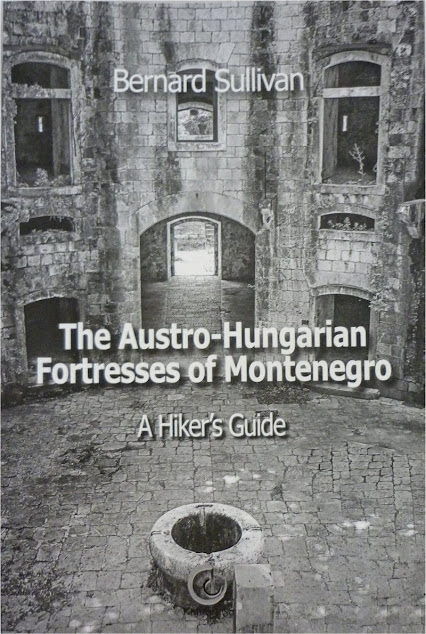
The bookstore is a great place to find a small but well-curated selection of books in English and of course a high-quality selection of books in Serbian/Montenegrin language. Salt is also a small publishing house that focuses on literature related to the history and culture of the Bay of Kotor, and all the editions Viktorija Malović showed me are done with greatest care and obvious devotion to the subject. One of the books from their own publishing house is Bernard Sullivan’s Hiker’s Guide, The Austro-Hungarian Fortresses of Montenegro; the mountains around the Bay of Kotor are just perfect for hiking and with this guide book you will be not only always oriented where you are but you will be also informed about the many remains of forts, bunkers and other remains from the Austro-Hungarians you will come across during your hike which offers truly unforgettable views to this part of the Adria.

Nikola Malović is a well-known Serbian novelist from Montenegro and it would be interesting to see some of his books translated in a language that is accessible to me. Since I don’t read Serbian, I limited myself to buying a few books in English: David Albahari’s short stories Learning Cyrillic, Momo Kapor’s collection of feuilletons A Guide to the Serbian Mentality (with illustrations by the author), and an exhibition catalogue about Serbian literature during WWI.

The bookstore is a very nice place to learn more about the Bay of Kotor, and you can find always something interesting there – so don’t miss the place when you visit the Bay of Kotor. Herceg Novi, although very modest in size, even hosts a book fair and the place has always been a favourite place of many writers from the region, such as Ivo Andrić. Somehow you feel that this is a place for “bookish” people.    

Now that I am thinking of it: Montenegro has recently made a major shift in its geo-political orientation: it has become a NATO member, and it is a candidate country of the EU. Montenegro has always had very close ties with Russia, and it is not by chance that the country was extremely popular among Russian tourists, which now for various political reasons seem to stay away from Montenegro. The huge gap that this is causing in the state budget, and the threat this is to the many people whose livelihood depends on tourism is a huge problem – once again the average population has to pay the prize for a political decision and it is easy to understand that EU and particularly NATO are not the most popular institutions in Montenegro right now. But this doesn’t affect the people’s natural hospitality and therefore I can only recommend you again very strongly a visit in this beautiful country, and particularly the Bay of Kotor.

(And no, the Montenegrin Ministry of Tourism doesn’t sponsor me… ;-))

Bernard Sullivan: The Austro-Hungarian Fortresses of Montenegro: A Hiker’s Guide, Knjižara So, Herceg Novi 2015

David Albahari: Learning Cyrillic, translated by Ellen Elias-Bursać, Geopoetika, Belgrade 2012

Momo Kapor: A Guide to the Serbian Mentality, translated by John White, Ružica White, Branimir Bakić, Danira Parenta, Goran Kričković, Nevenka Kojić, Ana Selić, and Mirjana Dragović, Dereta, Belgrade 2014

Nada Mirkov-Bogdanović / Milena Dordijević: Serbian Literature in the First World War, Exhibition Catalogue, National Library of Serbia / National and University Library of the Republic of Srpska, Belgrade / Banja Luka 2014

Nikola Malović: Jedro Nade, Laguna, Belgrade 2014

More information on Salt Bookstore in Herceg Novi you can find here or on their website.

© Thomas Hübner and mytwostotinki.com, 2014-6. Unauthorized use and/or duplication of this material without expressed and written permission from this blog’s author and/or owner is strictly prohibited. Excerpts and links may be used, provided that full and clear credit is given to Thomas Hübner and mytwostotinki.com with appropriate and specific direction to the original content.

News from Retardistan (5): The silence of the lambs

Honestly, I cannot understand why most Bulgarian intellectuals don’t say a word about the fact that many of the places where they are usually buying their books are being more and more turned into locations where Nazi publishers are selling pamphlets that are advertising an inhumane ideology, racial hatred and mass murder. No wonder that in this climate, anti-Semitism shows its ugly face also outside the bookstores as this excerpt from the excellent book A Guide to Jewish Bulgaria shows.

It seems to be normal for most Bulgarian intellectuals to see Hitler’s My Struggle, Henry Ford’s The International Jew, and other extremely revolting books that either advertise mass murder, deny the Holocaust, or are apologies of war criminals being prominently advertised and promoted literally almost everywhere, or what is the reason for the silence of most of the Bulgarian intellectual elite in this case?

Do they think that the widespread promotion of such books in their country doesn’t concern them? Do they think someone might be offended when they raise their voice to confront those people who help to distribute extermination manuals? Are they afraid to be physically threatened if they speak out against right-wing extremism and Nazism? (I have to admit that this is unfortunately a very real threat as I learned during my public argument with a revisionist and anti-Semitic so-called “historian” – the “fan mail” by his friends gave me a very interesting insight in the moral scruffiness and deprivation of this part of the extreme right wing of the intellectual lumpenproletariat in Bulgaria; it contrasted rather typically and unfavourably with the almost complete lack of public support for my position by most of my intellectual friends – but do not worry, I have an extremely high frustration tolerance.)

Do they think it is a sign of democracy and freedom of expression when those who either deny the holocaust or who would like to commit mass murder, erect concentration camps, and sterilize by force certain groups of the Bulgarian population if they could are not only allowed to propagate their inhumane ideology without limits, but are even supported by a coalition of silent intellectuals and a public that seems to be completely uninformed about history and uninterested in what is going on in their country, in which revisionists, fascists and openly Nazi groups are taking more and more over the public discourse on certain topics? What kind of “democrats” would have the idea to promote a law that bans the use of certain communist symbols under threat of a prison sentence, but who seem to be fine with the promotion of mass murder under the banner of revisionism, fascism, and Nazism?

Hate speech against minorities is not the exception, but the rule in Bulgaria, and very few people seem to care. A real democracy and pluralist society requires that people raise their voice and set limits to this domination of the public sphere by revisionist, fascist and Nazi propaganda; intellectuals have a particular responsibility to speak out when it comes to these issues. Unfortunately, the vast majority of Bulgarian intellectuals seems to be sound asleep – this intellectual indolence, laziness and cowardice when it comes to confront this pest in Bulgaria is something very sad, disappointing, and depressing. 

Fortunately a few bookstores are consciously not following this trend and a few intellectuals voice their concern. A few bookstores and a few intellectuals, yes. But a real public discussion on a large scale about this problem doesn’t take place, nor seem many people who should know it better even to be aware at all of the issue. As long as it is like this, the enemies of democracy and a pluralist society have a field day in Bulgaria.

————————————————————————————————————————————

The above mentioned book is highly recommended to anyone with an interest in Jewish and/or Bulgarian history:

Dimana Trankova, Anthony Georgieff: A Guide to Jewish Bulgaria, Vagabond Media, Sofia 2011

© Thomas Hübner and mytwostotinki.com, 2014-6. Unauthorized use and/or duplication of this material without expressed and written permission from this blog’s author and/or owner is strictly prohibited. Excerpts and links may be used, provided that full and clear credit is given to Thomas Hübner and mytwostotinki.com with appropriate and specific direction to the original content.

A disturbing fairy tale

The by far most disturbing fairy tale I ever came across in my life, and also one of the most disturbing literary texts I ever encountered goes like this:

“Once upon a time there was a poor little child and had no father and no mother all dead and was no-one left in the whole world. All dead, and it went off, crying day and night. And since on earth there was no-one left it wanted to go up to heaven where the moon looked at it so kindly and when it got finally to the moon it was a lump of rotten wood and so it went to the sun and when it got to the sun it was a withered-up sunflower. And when it got to the stars they were little spangled midges stuck there, like the ones shrikes stick on sloes and when it wanted to go back to the earth, the earth was an overturned pisspot and ‘t was all alone, and it sat down and cried, and it is still sitting there and is all alone.”

(„Es war einmal ein arm Kind und hat kei Vater und keine Mutter war Alles tot und war Niemand mehr auf der Welt. Alles tot, und es ist hingangen und hat gerrt Tag und Nacht. Und wie auf der Erd Niemand mehr war, wollt’s in Himmel gehn, und der Mond guckt es so freundlich an und wie’s endlich zum Mond kam, war’s ein Stück faul Holz und da ist es zur Sonn gangen und wie’s zur Sonn kam, war’s ein verwelkt Sonneblum. Und wie’s zu den Sterne kam, warn’s klei golde Mücken, die warn angesteckt wie der Neuntöter sie auf die Schlehe steckt und wie’s wieder auf die Erd wollt, war die Erd ein umgestürzter Hafen und war ganz allein und da hat sich’s hingesetzt und gerrt, und da sitzt’ es noch und ist ganz allein.“)

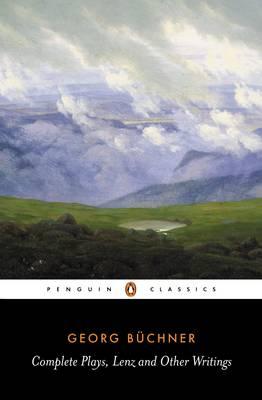
Georg Büchner, the author of the enigmatic and unforgettable play Woyczek from which this short fairy tale is taken, lets the grandmother tell this tale to the children that are present. The grandmother speaks in a slightly archaic and dialect-flavoured language which adds to the “gothic” effect. This is not the place to analyse the role of this dark tale within the play but it still gives probably everyone a feeling of utter hopelessness. It is a post-apocalyptic fairy tale, a text without any hope or consolation – and probably a very appropriate text for the situation of mankind today -; the powerful language of Georg Büchner has an incredible effect on the reader, especially when you can read the German original.

In his short life (he died at the age of 23), he created a few works that stand out not only in German literature. His Lenz is for me the best German story and it still blows me away every time I read it. The same goes for his plays Woyczek, Danton’s Death, and Leonce and Lena, or his revolutionary pamphlet – co-authored with Friedrich Ludwig Weidig – Der Hessische Landbote (The Hessian Courier) with the famous slogan “Peace to the shacks! War to the palaces!” („Friede den Hütten! Krieg den Palästen!“)

I will for sure come back to this extraordinary author. If you have an opportunity to find an edition of his Collected Works, get and read it. You won’t regret it.

Büchner’s works have not only been an inspiration for many authors – the most prestigeous German literary award is named in honour of this man who was once a young refugee wanted by the police of his home country with an arrest warrant because of his fight for a democratic and more free society -, also many composers, film directors, and performance artists take inspiration from him. Alban Berg’s opera Wozzeck, Werner Herzog’s movie Woyczek (with Klaus Kinski), and Tom Waits’s song Children’s Story from the album Orphans come to mind. The lyrics of that song: the text of the fairy tale quoted above (in a different translation).

Georg Büchner’s early death was without doubt one of the biggest losses for the world of literature, a real tragedy. His small number of works show an accomplished genius already at a very young age.

Buechner

Georg Büchner, Complete Plays, Lenz and Other Writings, translated by John Reddick, Penguin Classics, 1993

The translation from German in this blog post is by Thomas Hübner.

© Thomas Hübner and mytwostotinki.com, 2014-6. Unauthorized use and/or duplication of this material without expressed and written permission from this blog’s author and/or owner is strictly prohibited. Excerpts and links may be used, provided that full and clear credit is given to Thomas Hübner and mytwostotinki.com with appropriate and specific direction to the original content.
Lake Como

Residency programs are an important part of the working life of many authors today. They provide for a limited time, maybe a few weeks, a month, or a little bit longer a place in an interesting surrounding, suited to the specific requirements of authors, and frequently they come with a certain sum of money plus free board and plenty of opportunities to socialize with other people working on projects in the making in their respective field – other authors, artists, scientists. In the best case, residency programs provide an opportunity for an author to focus on his/her work, to write or finish a manuscript with which he/she has struggled since a long time and also to collect and exchange new ideas for new projects. Participating in such a program means that as an author you have for this limited time not to think about anything else than your work, particularly not about money. Everything is well taken care of by the host.

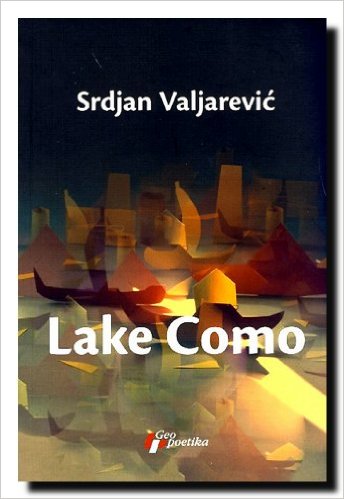
Contrary to what you could expect, the central role of residency programs for many modern authors is not reflected in the literary output of most of these authors. Very rarely – at least this is my impression – are works of fiction dedicated to experiences that authors make with such programs. There are exceptions of course, such as Lake Como by the Serbian novelist Srdjan Valjarevic, the book about which I am writing here.

Nothing spectacular happens in this book: the narrator, a Serbian author that has for sure many similarities with the author of Lake Como, wins a Rockefeller scholarship that comes with an invitation to spend one month in the lovely Villa Maranese in Bellagio near Lake Como. A good opportunity to finish a novel (which he has indeed no intention to write at all), and also to leave behind a flat in Belgrade with a leaking roof, some financial debts and other personal problems, and a more and more difficult situation for intellectuals that are not in line with the official ultra-nationalist Serbian politics and its consequences. It is the end of the 1990s and the armed Kosovo conflict is in its early stages.

During his stay in the Villa, the author meets all kind of other Rockefeller fellows from all over the world busy with all kind of projects. People talk, socialize, eat and drink, gossip, work a bit or rather not, a composer gives some house concerts. The author feels like an outsider because of his age (he is by far the youngest in the Villa), his origin, his interests and even his clothes (he only reluctantly gets used to wearing a tie, which is strongly recommended in the Villa), not to talk about his drinking and smoking habits. (My apologies when I mention the drinking so frequently, but there isn’t probably a single page in the book when the narrator doesn’t have a drink.)

An additional predicament is that the protagonist has to lie to almost everyone about his work: since he is known to be a novelist, people want to know how the work with the novel is going and instead of telling them that he is just enjoying the time doing nothing – except eating, drinking, sleeping, and the occasional walk to the village or a nearby hill – the author/narrator is making up things related to the non-existing novel. But the not existing work in progress is at least a good excuse to get away from activities in which he doesn’t want to participate.

Apart from that, he explores the village, has a short fling with a female guest of the Villa, makes friends with a friendly bar owner, as well as with Alda, a young charming girl working in another bar with whom he is communicating in a mixture of English, Italian, and drawings. He makes some friends at the Villa as well, particularly the waiters that provide a never-ending stream of wine, whiskey and other alcohol, but that are also a valuable source of information about the place. With Mr Sommerman, a holocaust survivor and retired literature professor and his wife, he is developing a friendship that will probably last even after he leaves the Villa when the time is over. And the meeting with another guest who visited once the island of Korcula in what is now Croatia brings back long hidden memories to the author because this place had a particular importance in his earlier life.

Of course, this book reminded me more than a bit of The Magic Mountain by Thomas Mann. The villa is on a hill – ironically called “Tragedy” – not a real mountain, but the setting is very idyllic (Bellagio is already part of the Mediterranean world, but with a view to the snow-covered mountains of the Alps), like a temporary paradise isolated from the rest of the world with all its problems. Valjarevic has a very good ability to characterize people and it seems he talks of his own experience, so vividly retold are many episodes, frequently with a slightly detached irony. There are also beautiful pages where he is describing the nature at Lake Como. And also small observations like what he is writing about the transistor radio, were really interesting to read for me. The visit of Alda and her family on the hill – for some strange reason, most people from the village have never visited the Villa; so near and yet so far are these worlds from each other usually – is a highlight of the book.

A little bit on the downside though is the fact that a considerable part of the novel is a repetitive mentioning of drinking, eating and sleeping habits of the narrator. Not a single drink goes unnoticed, and after a while I was really not so much interested any more in what the narrator did to his liver. This feeling of repetitiveness is even strengthened by the author’s habit to write many short sentences starting with “I”. I did this. I did that. I did this. Then I did that. Ok, most sentences are a bit longer, but the style was for me in many parts of the book not very attractive. Although the narrator refers to Robert Walser, Robert Musil, Walter Benjamin as favourite authors, the style of the novel is more like Hemingway – and that is not at all a compliment in my opinion. These issues somehow prevented me from enjoying this book as much as I wanted to like it.

Srdjan Valjarevic is an interesting and very talented author. With some more editing, Lake Como could have been an excellent novel. 

Geopoetika, a publishing house in Belgrade, has published a series of books by contemporary Serbian authors in English. I can recommend you this series if you want to get to know interesting literature from Serbia.

Lake Como

Srdjan Valjarevic: Lake Como, translated by Alice Copple-Tosic, Geopoetika, Belgrade 2009

© Thomas Hübner and mytwostotinki.com, 2014-6. Unauthorized use and/or duplication of this material without expressed and written permission from this blog’s author and/or owner is strictly prohibited. Excerpts and links may be used, provided that full and clear credit is given to Thomas Hübner and mytwostotinki.com with appropriate and specific direction to the original content.