Category Archives: Books

Drei Gedichte von Vladimir Levchev

Милано

Мустафа гълта огън
с каменно лице
под синята сянка на пламтящата готика.
Катедралата
е скрила залеза.

Тълпата аплодира Мустафа
на площада.
Зелената змийска реклама съска срещу катедралата.
Нощта със звезди и вятър
атакува залеза.

Луната е червена и бавна.
Сградите са вече тъмни.  
Мустафа е италианец.

                                                  1987

Mailand

 
Mustafa schluckt Feuer
mit versteinertem Gesicht
unter dem blauen Schatten der flammenden Gotik.
Der Dom verbirgt
den Sonnenuntergang.
 
Das Publikum spendet Mustafa
Beifall auf dem Platz.
Die grüne Werbeschlange zischt Richtung Dom.
Die Nacht, mit Sternen und Wind,
greift den Sonnenuntergang an.
 
Der Mond ist rot und langsam.
Die Gebäude sind schon dunkel.
Mustafa ist Italiener.
 
                                                  1987

————————————————–

Мост

                              На Исмаил Кадаре

Хилядолетия спориме,
хилядолетия градихме и разграждахме  
Нашия мост
(на Дрина,
на Дунав,
или Моста с трите арки
в Албания).

Хилядолетия се питахме:
Къде е Златният Град – на Изток
или на Запад?
Къде е Пророкът?
И каква ще бъде нашата звездна стока
по този мост между изгрев и залез?

С ножове между зъбите
се питахме:
Наистина ли живи хора – наши хора
са били вграждани,
за да стане моста
между Изток и Запад
по-здрав?

Хилядолетия спориме, воювахме,
убивахме, загивахме,
градихме и разграждахме.

Най-накрая изобретиха самолета.
И днес
никой пътник не вижда дори
нашия древен мост.

                                                   2000

Brücke                         

                              Für Ismail Kadare
 
Jahrtausende stritten wir,
errichteten wir und rissen ab
Unsere Brücke
(über die Drina,
die Donau
oder die Brücke mit den drei Bögen
in Albanien).
 
Jahrtausende fragten wir uns:
Wo ist die Goldene Stadt – im Osten
oder im Westen?
Wo ist der Prophet?
Und was werden die Sterne uns bringen
an dieser Brücke zwischen Sonnenauf- und -untergang?
 
Mit Messern zwischen den Zähnen
fragten wir uns:
Sind wirklich lebende Menschen – unsere Menschen
eingemauert worden,
auf dass die Brücke
zwischen Ost und West
stabiler wird?
 
Jahrtausende stritten, kämpften,
töteten, starben,
errichteten wir und rissen ab.
 
Schließlich erfand man das Flugzeug.
Und heute
sieht schon kein Reisender mehr
unsere uralte Brücke.
 
                                                  2000

————————————————–

Балкански Танц

Ние сме самуиловите войници
ослепени от императора Василий.
Ние сме петнайсет хиляди
и само един на всеки сто
е намигнал с едното око.
Държим се за ръце, вървим и се препъваме
в светлината и мрака на залеза.
Ние играем народно хоро
от хоризонт до хоризонт.
Хора!

Бяхме тръгнали да се връщаме
при нашия цар Самуил.
Той ни видя.
И умря от сърдечен удар.
Но ние не го видяхме
и не умряхме.

И още продължаваме хорото си
босоноги в диви гори,
ситним по жаравата на лагерни огньове,
пързаляме се по леда на езера
под ледените съзвездия.
Танцуваме към новото хилядолетие.

И всичко,
което виждаме в бъдещето
е нашето минало.

Balkantanz

Wir sind Samuils Soldaten
geblendet von Kaiser Basileios
Wir sind fünfzehntausend
und nur einer von hundert
behielt ein Auge.
Hand in Hand gehen und stolpern wir
in Licht und Zwielicht.
Wir spielen zum Volkstanz auf
von Horizont zu Horizont.
Leute!
 
Wir brachen auf um zu
unserem Zar Samuil zu gehen.
Er sah uns.
Und starb an einer Herzattacke.
Wir aber sahen nichts
und starben nicht.
 
Und doch fuhren wir fort unseren Horo zu tanzen
barfuß in wilden Wäldern,
trippeln an die Glut der Lagerfeuer,
Schlittschuh laufend auf dem Eis der Seen
unter eisigen Konstellationen.
Wir tanzen ins neue Jahrtausend.
 
Und alles,
was wir in der Zukunft sehen
ist unsere Vergangenheit.

Vladimir Levchev

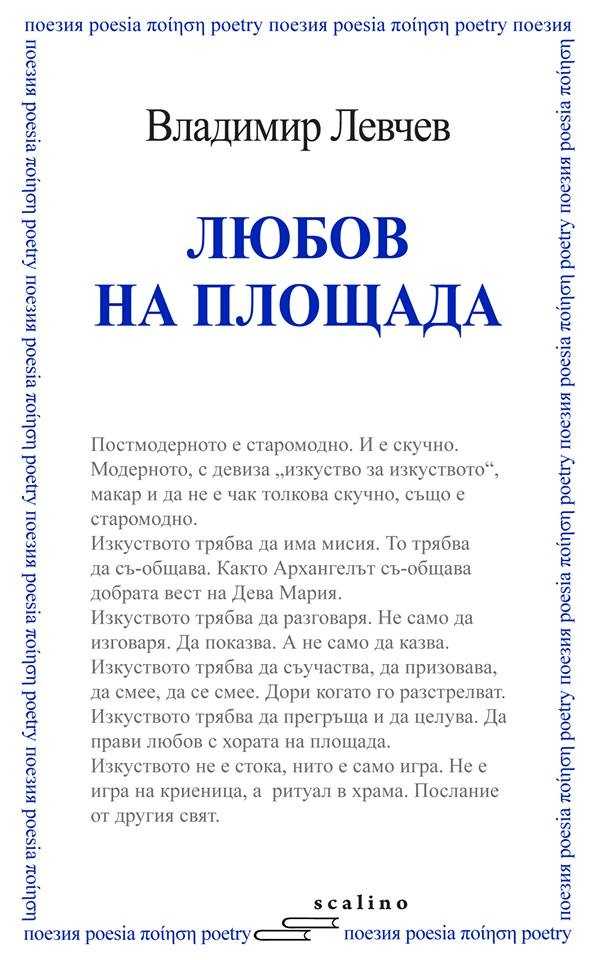
Владимир Левчев: Любов на площада (Vladimir Levchev: Ljubov na ploshtada), Scalino, Sofia 2014

Aus dem Bulgarischen von Thomas Hübner

© Vladimir Levchev and Scalino, 2014.
© Thomas Hübner and mytwostotinki.com, 2014-5. Unauthorized use and/or duplication of this material without expressed and written permission from this blog’s author and/or owner is strictly prohibited. Excerpts and links may be used, provided that full and clear credit is given to Thomas Hübner and mytwostotinki.com with appropriate and specific direction to the original content.

Vier Gedichte von Ivan Christov

Лари

Всичко това се случи
на брега на едно езеро
в щата Уисконсин,
когато Лари ми предостави
своята къща за гости.
Малка къща
с фотоси по стените,
с баня, кухня и тоалетна,
с пиано, пишеща машина
и хол.
Лари тогава не знаеше,
че преди това бях живял
в семейство Василеви,
които много се страхуваха
да не стана алкохолик,
макар че синът им беше
алкохолик и една нощ
ми открадна телевизора.
После бях живял в Крум.
Когато влязох в неговата баня
съседката се разкрещя,
че има вода в коридора
(Мисля, че Крум не се беше
къпал от десет години.).
Лари не знаеше още,
че бях живял в Симон,
на улица Раковски.
Стаята беше хубава,
но нямаше прозорци.
Купих една малка лампа,
която включвах нощем,
за да не се събуждам
като в ковчег.
Бях живял дори в едно мазе,
в казармата,
с Гонзо – кръгъл сирак,
който всяка сутрин
отваряше очи
и запалваше цигара.
Приятелю, Лари,
колко неща не знаеш!
Благодаря ти,
че ми предостави
твоята къща за гости.
Благословен бъди,
че пиша сега тези стихове
на твоята пишеща машина!

Larry

All das geschah
am Ufer eines Sees
im Staate Wisconsin
als Larry mir sein
Gästehaus überließ.
Ein kleines Haus
mit Fotos an den Wänden,
mit einer Dusche, Küche und Toilette,
mit einem Klavier, einer Schreibmaschine
und einem Wohnzimmer.
Larry wusste damals nicht,
dass ich bei den Vassilevs
gelebt hatte,
die sehr fürchteten,
dass ich Alkoholiker werden würde,
obwohl ihr Sohn
Alkoholiker war und eines Nachts
meinen Fernseher stahl.
Dann wohnte ich bei Krum.
Als ich sein Bad benutzte
kreischte die Nachbarin unter uns, 
dass ihr Flur überflutet sei.
(Ich glaube nicht dass Krum
in zehn Jahren ein Bad genommen hatte.)
Larry wusste auch nicht,
dass ich bei Simon gewohnt hatte,
in der Rakovski-Strasse.
Es war ein schönes Zimmer,
hatte aber keine Fenster.
Ich kaufte eine kleine Lampe,
die ich nachts einschaltete
so dass ich nicht
wie in einem Sarg aufwachen würde.
Ich lebte sogar in einem Keller,
in der Kaserne
mit Gonzo – einem rundlichen Waisen,
der jeden Morgen
seine Augen öffnete
und eine Zigarette ansteckte.
Larry, mein Freund,
es gibt so vieles was du nicht weißt!
Danke,
dass du mir
dein Gästehaus überlässt.
Gesegnet seist du,
dass ich jetzt diese Verse
auf deiner Schreibmaschine schreibe!

————————————————–

Chevrolet

Бял „Шевролет“,
модел 1990!
Хвърли ми ключовете
и „Опитай“ ми каза.
Много се зачудих,
защото това не беше
старата кола на баща ми,
който за всяка грешка
ме удряше отзад, зад врата.
Четири скорости?
P – паркиране
R – заден ход
N – „Неутрална“ ми каза
„като Швейцария“
D – напред
Само газ и спирачка!
Когато завъртах ключа
и светлините светваха нощем.
С тази кола обикалях
езерата на Уисконсин.
Езерото „Мокасина“,
„Бурното езеро“,
„Залезното езеро“.
Понякога спирах да снимам
стада елени.
Друг път зареждах.
Натисках педала до дупка
и така откривах Америка.
Бял „Шевролет“,
модел 1990.
Моята първа кола,
макар че всъщност
беше на Дъглас,
баща на жена ми.

Chevrolet

Ein weißer „Chevrolet”,
Baujahr 1990!
Er warf mir die Schlüssel zu
und sagte „Probier ihn aus”.
Ich war sehr erstaunt,
weil das nicht
das alte Auto meines Vaters war,
der mich hinter verschlossener Tür
für jeden Fehler verdrosch.
Vier Gänge?
P – Parken
R – Rückwärts
N – „Neutral” sagte er,
„wie die Schweiz”,
D – Dauerbetrieb.
Nur Gas und Bremsen!
Als ich den Schlüssel drehte
erleuchteten die Scheinwerfer die Nacht.
Mit jenem Auto
fuhr ich die Seen von Wisconsin ab.
Moccasin Lake,
Storm Lake,
Sunset Lake.
Manchmal hielt ich an, um Fotos
von Wildrudeln zu machen.
Dann wieder füllte ich den Tank auf.
Ich trat das Pedal durch
und entdeckte Amerika.
Ein weißer „Chevrolet”,
Baujahr 1990.
Mein erstes Auto,
obwohl es tatsächlich
Douglas gehörte,
dem Vater meiner Frau.

————————————————–

Poetry Room

книжарница City Lights
Сан Франциско
                                 На Силвия Чолева

всички ние
стоим
във тази мрачна
и леко задушна
poetry room
стая за поезия
мълчим
и чакаме
кога ли
някой от нас
ще излезе

Poetry Room

Buchhandlung City Lights
San Francisco
                           Für Silvia Choleva

wir alle
bleiben
in diesem finstern
und etwas stickigen
poetry room
raum für dichtkunst
schweigen
und warten
wann
jemand von uns
hinausgehen wird

————————————————–

Snickers

Срещнах Сникърс
пред една врата
в щата Минесота.
(Всъщност,
всички кучета в Америка
се казват Сникърс,
така че ще ви бъде трудно
да си го представите,
но не това сега
е най-важното.)
Огрян от оскъдното зимно слънце
той ми подаваше
малка гумена топка.
Хвърлих топката
и Сникърс я донесе.
После пак, и пак, и пак…
По-далеч…
Изведнъж забелязах,
че някъде там, в далечината
кучето спира
и отказва да донесе топката.
От Дъглас разбрах,
че това е електрическа нишка,
която пази Сникърс
от близката магистрала.
Почувствах го близък
този приятел
в неговия невидим затвор.

Snickers

Ich traf Snickers
vor einer Tür
im Staate Minnesota.
(Übrigens
heissen alle Hunde in Amerika Snickers,
deshalb wird es schwer für euch
ihn sich vorzustellen,
aber das ist nicht
das wichtigste jetzt.)
Gewärmt von der schwachen Wintersonne
brachte er mir
einen kleinen Gummiball.
Ich warf den Ball
und Snickers brachte ihn zurück.
Immer und immer und immer wieder…
Immer weiter weg…
Plötzlich bemerkte ich,
dass irgendwo dort in der Entfernung
der Hund innehielt
und sich weigerte, den Ball zu bringen.
Douglas erklärte mir,
dass dort ein elektrischer Zaun sei
um Snickers
vor der nahen Autobahn zu schützen.
Ich fühlte mich ihm nahe,
jenem Freund,
in seinem unsichtbaren Gefängnis.

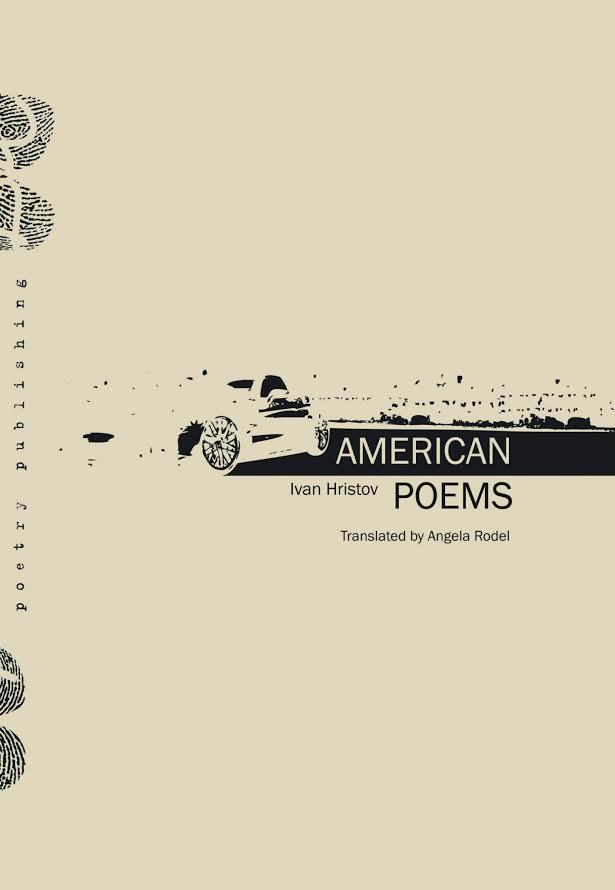
Иван Христов: Американски поеми / Ivan Hristov: American Poems, Bulgarian-English, English translation by Angela Rodel, DA, Sofia 2013

Aus dem Bulgarischen von Thomas Hübner

© Ivan Hristov and DA Publishers, 2013.
© Thomas Hübner and mytwostotinki.com, 2014-5. Unauthorized use and/or duplication of this material without expressed and written permission from this blog’s author and/or owner is strictly prohibited. Excerpts and links may be used, provided that full and clear credit is given to Thomas Hübner and mytwostotinki.com with appropriate and specific direction to the original content.

Vier Gedichte von Petar Tchouhov

Малки Дни

Във входа все по-рядко виждам
лица
и все по-често
снимки

графинята от третия етаж
остана в пощата
а лудият замина
с Христос да отпразнува Коледа

близначките
потънаха в небето
да търсят годеници

от леглото
съседката с изкуствения крак
се хвърля към екрана

там краят на века минава
по Sunset Boulevard

Kurze Tage

Am eingang sehe ich immer seltener
personen
und immer häufiger
fotos*

die gräfin vom dritten stock
blieb in der post
und der verrückte ging
mit Christus Weihnachten feiern

die zwillinge
versanken im himmel
auf der suche nach verlobten

vom bett aus
schleppt sich die nachbarin
mit dem künstlichen bein zum bildschirm

dort vergeht das ende des jahrhunderts
auf dem Sunset Boulevard


*Anspielung auf den bulgarischen Brauch, Todesanzeigen mit Fotos der Verstorbenen an Hauseingängen aufzuhängen.

————————————————–

Теория на познанието

Адам позна Ева,
Аврам позна Сара,
Исак позна Ребека…и т.н.

После се появи Сократ, философат
с ужасна жена и каза:
– Познай себе си!

Erkenntnistheorie

Adam erkannte Eva,
Abraham erkannte Sara,
Isaak erkannte Rebekka…usw.

Danach kam Sokrates, der philosoph
mit der schrecklichen frau und sagte:
– Erkenne dich selbst!

————————————————–

Oмир

Платил
последния обол
той стъпва
в лодката на Харон

и тя потъва

Homer

Bezahlt
den letzten obolus
er tritt
in Charons boot

und es versinkt

————————————————–

Трудов стаж

Този младеж
е на 20 и е доста объркан –
като топче за пинг-понг след несръчен удар.

Току-що се е припознал –
за миг му се стори, че вижда приятеля,
в чиито очи е събирал лицето си,
чиито ръце са държали чашата,
помагаща на неговата да оживее
и чието дишане
често е било единственото
лекарство срещу безветрие.

Този объркан младеж, израсъл в семейство,
на което смъртта е далечен роднина,
си е мислел за нея като за непознат братовчед,
беден студент,
какъвто е всъщност и той, самият,
но днес, уви, е за пръв ден на работа
в градската морга.  

Arbeitserfahrung

Dieser junge mann
ist 20 und sehr verwirrt –
wie ein pingpongball nach einem plumpen angriff.

Er hatte gerade eine erscheinung –
für einen moment glaubte er den freund zu sehen,
in dessen augen sich sein gesicht spiegelte,
dessen hände das glas hielten,
das ihm zu überleben half
und dessen atem
oft das einzige heilmittel
gegen die stille war.

Dieser verwirrte junge mann, aufgewachsen in einer familie,
in der der tod ein entfernter verwandter ist,
stellte er ihn sich wie einen unbekannten vetter,
einen armen studenten,
so wie er es selbst ist, vor,
doch heute, ach, ist sein erster arbeitstag
in der städtischen leichenhalle.

big-petar-chuhov

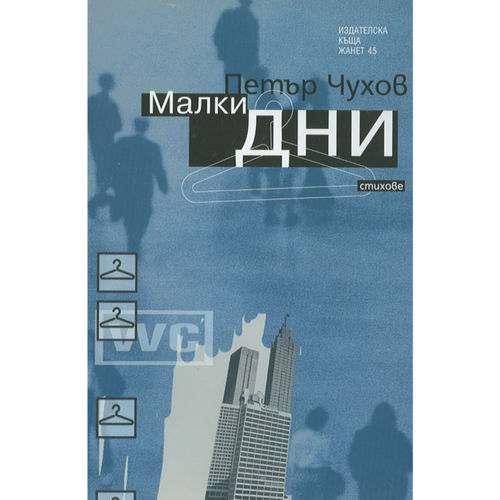
Petar Tchouhov: Malki dni (Малки Дни), Janet45, Plovdiv 2002

Aus dem Bulgarischen von Thomas Hübner

© Petar Tchouhov and Janet45 Publishers, 2002.
© Thomas Hübner and mytwostotinki.com, 2014-5. Unauthorized use and/or duplication of this material without expressed and written permission from this blog’s author and/or owner is strictly prohibited. Excerpts and links may be used, provided that full and clear credit is given to Thomas Hübner and mytwostotinki.com with appropriate and specific direction to the original content.

TTIP – The Free Trade Lie

Do you know what TTIP stands for? It is the abbreviation of Transatlantic Trade and Investment Partnership, the planned Free Trade Agreement between the USA and the European Union. (A similar agreement between Canada and the EU is also being negotiated.) It stands for an agreement whose consequences will affect each and everyone of us, even when he or she doesn’t live in the area which will be directly influenced by this treaty. It is therefore important to be able to form an opinion of your own on this topic.

Before I start my review of Thilo Bode’s highly interesting book Die Freihandelslüge (The Free Trade Lie), I should maybe mention that I am in principle an advocate of free trade. Free trade can – if properly applied – increase the welfare of all, it enhances the international division of labor and the optimal use of scarce resources when each country is producing those things in which it is best and has comparative advantages – but frequently those who talk about free trade have something else in mind.

Bode, a development and trade economist by profession (so am I) gives an interesting example. In his first job as a development economist, he worked in a project in Tunisia, a country with scarce water resources. Tunisia is a very suitable place for producing and exporting olive oil, and importing wheat, a cereal that needs a lot of water to grow. This kind of division of labor makes sense: why should a country like Tunisia produce its own wheat and use the little water they have for something that can be much more efficiently grown abroad?

Unfortunately, the EU was and is subsidizing the olive oil production in the EU to an extent that made it for a long time almost impossible for Tunisia to export to the EU – its olive oil was not competitive with the highly subsidized olive oil from the EU. On the other hand, development projects financed by the EU stimulated the growing of wheat in Tunisia, sheer madness! – I could easily add similar examples from my own professional experience in various countries.

This example is typical. “Free” trade means practically in many cases that potential exporters from outside the EU are prevented from entering the market – this situation will be even worse with TTIP since this new agreement will for sure increase the bilateral trade between the two partners at the expense of third countries, particularly the developing countries.

When we listen to those lobbyists that try to convince the public that TTIP is a good thing, the first they usually tell us is that TTIP will increase the GDP, the employment and the wealth of us all. Great – but is it also true? Bode has some convincing facts here that makes us see these claims in a very different light.

The Centre for Economic Policy Research (CEPR) in London that was hired by the EU to make a study on the probable positive effects of TTIP on growth and employment calculates the positive effect for the GDP in the EU until 2027 to be between 0.39 and 0.48% – not per year, but for the whole period. A very meagre result – and this is of all the studies the one with the highest estimated growth! An additional working day per year or the introduction of the metric system in the US would have in one year a much bigger growth effect than TTIP in together fifteen years! If we consider additionally that the study suggests somehow very inconsistently that people who lose their jobs as a result of the increased competition will find immediately and without additional training costs a new job (in the real world these training costs are considerable and are paid by the society, i.e. they have to be deducted from the calculated growth), we begin to understand that TTIP will be under no circumstances the big job and wealth machine as which the pro TTIP faction is trying to sell it to the public.

The negotiations of TTIP are top secret. Even most elected representatives in both the American Parliament Houses and the European Parliament have no access to information regarding the concrete situation of the negotiations. Only a handful of EP members have access to at least some basic documents which they can access only as if they are in a high security tract, not in an institution that represents the European people. For an international treaty that affects not only trade, but also consumer rights, health, industrial and intellectual property rights, the rights of trade unions, and many other sectors, this is for my understanding a big scandal. Access to information is denied to us and our elected representatives, but lobbyists of the big business have free access to the negotiations and are even part of it! It doesn’t come as a surprise that the meeting agendas of those who are a part of the negotiation teams consist almost exclusively of representatives of the big industrial corporations and multinationals.

Bode gives in his book an overview that is really shocking. Many of his examples concern the food sector. But TTIP will not only in all probability decrease the quality standard in the food sector, it will affect all of us also in other areas. I want to give just two more examples: the production of and trade with chemicals, and the impact of the introduction of arbitrage courts for foreign investment protection.

Many chemicals have the potential to damage the health. The US and the EU have two diametrically opposed approaches to handle this potential danger. The EU regulation REACH that defines the conditions under which chemicals may be brought in use and circulation in the European Union is based on the precautionary principle. This approach to risk management states that if an action or policy has a suspected risk of causing harm to the public or to the environment, in the absence of scientific consensus that the action or policy is not harmful, the burden of proof that it is not harmful falls on those taking an action, i.e. in this case the producers of these chemicals – and not the consumers or persons that may be harmed.

In the United States, the approach regarding risk management is diametrically opposed. Here the producers don’t need to take precautionary measures, and the burden of proof that a certain substance is harmful falls on those who claim to be harmed by the chemical. In practice this means that a person who has developed cancer from a chemical substance has to go to court and sue the producer – a procedure that is extremely costly and risky, and usually the harmed part will not live to see the result of the law suit.

As a result, many substances that are considered as carcinogenic in Europe and the rest of the world, are still sold and used in the United States, such as asbestos. The Environmental Defense Fund (EDF) commented the fact that the Environmental Protection Agency (EPA) that is supervising a list of about 85,000 different chemicals that are in industrial use, only very rarely orders scientifically supported tests of chemicals. The risk analysis of trichloroethylene, a high risk chemical, took decades to take place. After a long battle, EPA undertook finally a risk analysis – which was sarcastically commented by the EDF chief scientist with the words: “Now it remains us only the missing risk analysis of the other 84,999 chemicals on the Toxic Substances Control Act list.” 

TTIP will lead to a situation where both sides will agree on the principle of mutual recognition, which means in practical terms that products that have been brought in circulation in one country of the signatories of TTIP, for example the United States, can circulate freely within the TTIP area. That means that a lot of chemicals will enter the EU that contradict the minimum safety and health standards in the EU. Additionally it means that the chemical factories in Europe will have a competitive disadvantage because they produce at higher costs as a result of the additional costly test series that are a result of REACH. That will reduce also employment in the chemical industry in Europe, and many producers will probably close their productions in Europe. 

The most bizarre part of the planned TTIP is the implementation of a separate jurisdiction outside the regular jurisdiction for companies. In the future there will be the regular courts that deal with law suits between companies and governmental institutions in cases when there is a legal conflict; these regular courts will deal with the cases of the local companies or companies from outside the TTIP area. American companies in Europe or European companies in the United States will not need to go to a regular court when thy think that a decision of a government is affecting their business interest. They can go to an arbitration court – in practical terms this is a group of three (usually American) lawyers that is meeting behind closed doors and is deciding the case without ever making the court proceeding or the verdict publically available. And the amount in controversy can be many billions.

The concept of arbitration courts is old. The idea behind it was that countries, particularly countries which have a reputation of lacking transparency or with a history of high corruption want to make it more attractive for foreign investors to come to their countries. When foreign investors know that in case of a conflict they have not to wait ages for a decision of a possibly corrupt court in the country in which they invested their assets, they will feel much more comfortable in their investment decision. Arbitration courts are thus potentially a foreign investment incentive – at least in theory. (Recent studies have shown that they are practically irrelevant as an FDI promotion instrument.)

But neither the United States nor the European Union are developing economies; the legal systems are in principle well established and transparent; there is absolutely no reason to have arbitration courts that create double standards and a law outside the law. (By the way, all arbitration court members worldwide come from a tiny group of Law Firms which are earning outrageous sums for this kind of premodernist “courts” that resemble more the clandestine meetings of cosa nostra padrones than courts in democratic and modern societies.)

What does this system of arbitration courts mean in practical terms for us taxpayers? One example, the case Philip Morris vs. Australia. Australia introduced in 2012 a law that requires that all cigarettes have to be sold in a standardized packaging, the so-called “plain packaging”. All packages are dark brown, are warning in bold letters and with very drastic photos what consequences smoking can have. The packaging can have the name of the producer and the product but no more logo on it. Philip Morris was suing the Australian government but lost finally after a long battle at the highest Australian court.

Nevertheless, Philip Morris may receive billions of Dollars from the Australian taxpayer. Since Philip Morris has a branch in Hong Kong, and the bilateral trade agreement between Hong Kong and Australia gives the foreign investor access to arbitration courts, Philip Morris used its branch in Hong Kong to sue Australia again, this time at the arbitration court. The ban of the logo on the packaging had damaged the interest of Philip Morris in Australia, so the company argues. The case is pending but Philip Morris has good chances to get several billion USD from the Australian taxpayer, although the decision in Australia was legally correct and the highest Australian court had already closed the case. Similar cases have been or are being pursued in Uruguay and the EU (again Philip Morris). New Zealand and several other countries in Africa and Latin America changed their draft laws because they are afraid of the billions they would possibly have to pay the multinationals that produce cigarettes. And the tobacco industry is just one very small example.

While I am writing these lines I just read that the European Parliament again exacerbates its information security regarding the TTIP negotiations. The access to documents related to the negotiations is now almost completely blocked even for EP members. In parallel, interest groups of small and medium-sized companies voice more and more concerns about TTIP – the clear majority of SMEs in Europe and the United States is against this TTIP that will so obviously serve the interest of a few multinationals but will be a huge step backwards for the rest of us.

It is late, but maybe not too late to stop TTIP. We need free trade, but not at all costs. An agreement that exposes consumers to higher health risks, makes exports almost impossible for developing countries and that creates double standards for foreign investors is definitely not something from which anyone of those will profit that is not a major shareholder of a multinational company.

The book of Bode is a wake-up call for all of us and I can recommend it without hesitation to everyone who wants to get to know all the dirty details of this clever but rather outrageous agreement. An English translation would be great!

Bode


Thilo Bode: Die Freihandelslüge, DVA, München 2015

© Thomas Hübner and mytwostotinki.com, 2014-5. Unauthorized use and/or duplication of this material without expressed and written permission from this blog’s author and/or owner is strictly prohibited. Excerpts and links may be used, provided that full and clear credit is given to Thomas Hübner and mytwostotinki.com with appropriate and specific direction to the original content.


Gespräch

Meine Übersetzung des Gedichts Gespräch von Ivanka Mogilska wurde auf der deutschen Website von Public Republic veröffentlicht.

Dank an Natalia Nikolaeva und Tsvetelina Mareva.

© Thomas Hübner and mytwostotinki.com, 2014-5. Unauthorized use and/or duplication of this material without expressed and written permission from this blog’s author and/or owner is strictly prohibited. Excerpts and links may be used, provided that full and clear credit is given to Thomas Hübner and mytwostotinki.com with appropriate and specific direction to the original content.


Women in Translation month upcoming

Following the good example of some blogger friends and in anticipation of this year’s Women in Translation month, I post a list of books by women which I reviewed or from which I published translation samples here, covering the period September 2014 until now:

Deborah Rohan: The Olive Grove
Herta Müller: The Passport
Marjana Gaponenko: Who Is Martha?
Elif Batuman: The Possessed
Neli Dobrinova: Malki mazhki igri
Virginia Zaharieva: Nine Rabbits
Ivanka Mogilska: DNA
Tanja Nikolova: Tolkoz
Isidora Sekulic: Balkan

More to come!

© Thomas Hübner and mytwostotinki.com, 2014-5. Unauthorized use and/or duplication of this material without expressed and written permission from this blog’s author and/or owner is strictly prohibited. Excerpts and links may be used, provided that full and clear credit is given to Thomas Hübner and mytwostotinki.com with appropriate and specific direction to the original content.

A case of revisionism, or How interested circles in Bulgaria try to turn the main responsible for the killing of 11,363 Jews into someone that is “more than a Bulgarian Schindler”

The events about which I am talking here took place more than 70 years ago and are extremely well documented. But until today there are two competing narratives regarding the interpretation of these events and a recent interview of the former Bulgarian Czar and later Prime Minister Simeon Sakskoburggotski (Simeon von Sachsen-Coburg-Gotha) brought them to the surface again and created a quite heated discussion in the public sphere in Bulgaria.

The facts: Bulgaria, whose government at that time had since long very close ties to Nazi Germany, joined the Axis officially on March 1, 1941. Bulgaria had lost territories in the Balkan Wars and WWI that it considered to be rightfully part of Bulgaria, and Nazi Germany supported these territorial claims to Macedonia, a part of Kosovo, the Dobrudzha, and the Greek part of Thrace. Part of the deal to join the Axis was on the other hand to actively support the extermination of the Jews – it was later agreed that Bulgaria will “deliver” as a starter 20,000 Jews to the Nazis. So, in the end of the day it was a deal “territory against handing out the Jews for extermination”.

Even before joining the Axis, the Bulgarian government started to support actively the anti-Semitic policy of the Nazis. Bulgaria issued laws that deprived Bulgarian Jews of most of their rights; the laws were inspired by the anti-Semitic laws in Nazi Germany that in a way prepared the population to accept the fact the Jews were no citizens, and actually not even human beings in the ideology of the Nazis and their willing helpers.

In spring 1943, the Bulgarian parliament issued a supportive vote to deport for now 20,000 Jews from the territory of Bulgaria (including those territories that were to be annexed by Bulgaria) to Poland. 11,363 Jews from Bulgarian-occupied Macedonia and Western Thrace were rounded up by Bulgarian police and military, put in trains guarded by Bulgarians and sent mainly to Treblinka. There was literally only a handful of survivors.

When in March 1943 the Bulgarian authorities started to announce their intention to round up also the Jews from the “Old” Bulgarian territory, i.e. Bulgaria in the borders before 1941, courageous Bulgarian citizens, a few politicians with a conscious (such as Dimitar Peshev), and some of the leaders of the Bulgarian Orthodox Church (Metropolit Kiril and Metropolit Stefan), organized public resistance in Kyustendil, Sofia, Plovdiv, and other places. A demonstration of the illegal Communist party in Sofia resulted in the arrest of more than 400 participants.

Bulgaria was a country where antisemitism was not a mass phenomenon, most Bulgarians traditionally held good relationships with their Jewish neighbors and felt that they were Bulgarian citizens just like everybody else. It became obvious to the government and to the powerful Czar Boris III that they had underestimated the supportive reaction of the Bulgarian population for the Jews; at a time when it was already clear that Nazi Germany will lose the war (this happened after the capitulation of Stalingrad), the Czar and the government decided to “play on time”.

In order to avoid a serious crisis and threat to their power by a possibly very strong reaction of a considerable part of the Bulgarian population if they would deport the remaining Jews to Poland, they found all kind of excuses to delay the deportation – much to the anger of Dannecker, the highest Nazi representative in Bulgaria who was dealing with the organisation of the endlösung, and of Hitler personally. But knowing fully well that he was on the losing side, Boris (who died a few days after he visited Hitler in Germany) tried to gain some leverage for the time after the war. And to be considered the “savior” of the Bulgarian Jews would be possibly part of that leverage, so he hoped.

As a result, all Jews within the pre-1941 territory of Bulgaria survived (unless they perished as part of the partisan movement); almost all Jews in the annexed territories were killed.      

In his recent interview with CNN, the son of Czar Boris III, the former Czar Simeon II, and later Prime Minister of Bulgaria, mentioned his hopes that his father will be declared one of the Righteous Among the Nations, a title awarded by Yad Vashem to non-Jews who risked their lives to save Jews during the Holocaust.

The basic criteria to be awarded the title of Righteous Among the Nations, according to the official website of the Yad Vashem Memorial are as follows:

  1. Active involvement of the rescuer in saving one or several Jews from the threat of death or deportation to death camps;
  2. Risk to the rescuer’s life, liberty or position;
  3. The initial motivation being the intention to help persecuted Jews: i.e. not for payment or any other reward such as religious conversion of the saved person, adoption of a child, etc.;
  4. The existence of testimony of those who were helped or at least unequivocal documentation establishing the nature of the rescue and its circumstances.

It is obvious that Czar Boris III is not fulfilling a single one of these criteria.

I would not have mentioned the attempt of a son to whitewash his father from his responsibility of the death of more than 11,000 people, if it would be a private matter only. But Simeon is not a private person only. He came back to Bulgaria after decades of exile to become Prime Minister, making the promise that after 800 days the Bulgarians would live better under his rule (he and his sister live indeed much better now – one of the first laws he issued was about the restitution of the private property of the family of the Czar, and now he and his sister own land and properties that were never theirs, and which make them the by far biggest landowners in Bulgaria).

The reason why I am writing about this topic is another one. What we can witness in Bulgaria is the attempt of interested circles to whitewash history, to deny historical responsibility for the deeds of the past, or even for serious crimes that were committed in the past. That is not limited to Bulgaria of course, and it is not limited to the role of the Czar in the survival of the Bulgarian Jews living on the pre-1941 Bulgarian territory. Revisionism is in my opinion a very serious threat for Bulgaria. Only when you know who you are and what you did in the past and for what you are responsible, you have a chance to learn from history.

An article written by Manol Glishev, a poet and intellectual, shows clearly the very ugly side of this kind of revisionism. I was really shocked and aghast when I read it.

After an introduction which he is using to insult everyone who dares to be critical regarding Boris’ role and Simeon’s objective lies about that part of history (see below), saying that “negativism transferred from father to son or from son to father is a totalitarian practice”(!!!), we “learn” in his article how Boris III was working hard for years to preserve the life of every Bulgarian – but “unfortunately” the Jews in the occupied and annexed territories were not Bulgarians, so there was nothing he could do. (This is ignoring the fact that it was Boris III and his government that “made” all inhabitants of the occupied and annexed territories into Bulgarians – except for the Jews, for which he had already other plans.)

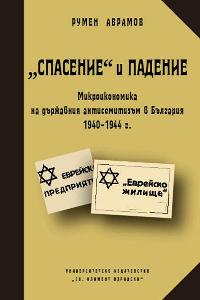
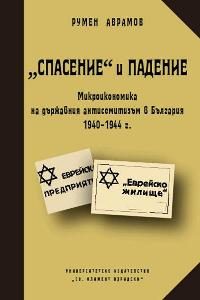
In one of the paragraphs that is dealing with the fate of the Macedonian and Thracian Jews, Glishev is writing that Macedonia was not part of Bulgaria at the time of the deportation and that the Czar made “big efforts” to save the Macedonian and Thracian Jews. Both is simply a fabrication. I would recommend Mr Glishev to read a bit about the historical facts. As a start I could recommend him the excellent book by Rumen Avramov: “Salvation” and fall: Microeconomics of the state antisemitism in Bulgaria 1940-1944, which shows among other things the very strong involvement of the Bulgarian state, its government and its ruler, Czar Boris III in the deportation and killing of the Jews in the annexed territories. That the Bulgarian state and Boris himself bear the responsibility for the extermination of the Jews in Macedonia and Western Thrace is also evident from the documents published recently by Avramov and Nadia Danova from the archives of Alexander Belev, the “Kommissar für Judenfragen” in Bulgaria, the organizer of the activities against the Jews. Mr Glishev could also inform himself by reading the Dimitar Peshev biography by Gabriele Nissim. Or Arno Lustiger’s excellent book Rettungswiderstand, in which the author describes clearly and with plenty of documentary support that the main responsibility for the extermination of the Jews in Macedonia and Western Thrace was with the Bulgarian government and Boris III.

When Mr Glishev even writes that “Boris is more than a Bulgarian Schindler” (headline of his article), I feel really that I am running out of words. To read a headline like this from an intellectual and poet is sickening. His intervention on behalf of an opportunistic ruler who sided with the Nazis because it suited his policy to increase the Bulgarian territory (and let – if possible – others do the dirty job for him), someone who didn’t have the slightest problem to turn the Bulgarian Jews into slaves that were deprived of almost any human rights, someone who ordered his policemen and military to round up the Jews in Macedonia and Western Thrace and send them to Treblinka, is not a worthy cause by any means.

According to the logic applied by Mr Glishev, Joseph Goebbels should be given the title of a Righteous Among the Nations too. It was Goebbels, who ordered the release of about 2,000 Jews in Berlin in 1943, after a group of women demonstrated in the Rosenstrasse in Berlin, after the arrest of their Jewish husbands and fathers. As a result of these unexpected demonstrations, and after a major bombing raid, Goebbels decided not to fuel possible protests and to release these people – for the time being. Does that make Goebbels a “savior of the Jews of Berlin”? The answer is obvious, and I feel ashamed that some people, among them even intellectuals and writers have the chutzpah to make a “savior of the Jews” out of an opportunist and bootlicker of the Nazis, who partnered in their crimes whenever it was favorable for him.

In an emotional, but factually correct response, the writer and survivor Lea Cohen answered to Glishev’s unsupportable article and Simeon’s interview.

Contrary to what Simeon said in the interview, Bulgaria was not an occupied country; Macedonia and Western Thrace were occupied by Bulgarian troops; to say that Boris “was hiding the Jews in labor camps” is so ridiculous and outrageous as to say Stalin was “hiding the opposition in labor camps”; it was not Simeon’s mother, but the Spanish ambassador that issued passports to the Bulgarian Jews; it was not the Nazi administration, but the Bulgarian administration that sent the Jews from Macedonia and Western Thrace to Treblinka; Boris III name was removed by the Jewish National Fund from all commemorative signs after a committee headed by an Israeli High Court judge came to the result that he in no way was responsible for saving the Bulgarian Jews – Simeon is just outright lying in this interview.

It makes me angry to see a person spreading so much obvious revisionist lies as Simeon does; it is sickening to see some intellectual and writer running to his help for his outrageous lies, trying to manipulate the public opinion in Bulgaria in accordance with Simeon’s revisionist agenda.

That the Jews in the pre-1941 Bulgarian territory were saved, is and will always be an honorable act by the part of the Bulgarian population responsible for it and by those people who voiced their resistance to the planned deportation; Boris III doesn’t belong to that group of honorable people, and revisionist campaigns like the one his son, with the support of interested circles, is running now, will hopefully have no success. This is not only a question of the interpretation of historical events; it is also a question of morals and ethics.

It is high time to admit that also Bulgaria had its share of responsibility in the Holocaust, and that the saving of a part of the Jews is just a (convenient) part of the whole story. It is also important to remember who was responsible from the Bulgarian side for this participation in the Holocaust: the Bulgarian government at that time, and the monarch Czar Boris III. That may be painful for some people who still prefer a made-up version of history to the truth – but it is indispensable for the country’s future. Only a Bulgaria that acknowledges its past – and not a revisionist parody of it – will be able to build a future free of the ghosts of antisemitism, racism and fascism.
kniga_roumen_1

Румен Аврамов: „Спасение“ и падение, Университетско издателство „Св.
Климент Охридски“, 2012 (Rumen Avramov: “Salvation” and fall: Microeconomics of the state antisemitism in Bulgaria, 1940-1944), Sofia 2012

Румен Аврамов и Надя Данова: Депортирането на евреите от Вардарска Македония, Беломорска Тракия и Пирот, март 1943 г./ Т. I-II (Rumen Avramov and Nadya Danova, eds.: The deportation of the Jews from Vardar Macedonia, Aegean Thrakia and Pirot, March 1943, 2 vol.), Sofia 2013

Arno Lustiger: Rettungswiderstand. Über die Judenretter in Europa während der NS-Zeit. Wallstein, Göttingen 2011

Gabriele Nissim: The Man who stopped Hitler, I. Borouchoff, 2002

© Thomas Hübner and mytwostotinki.com, 2014-5. Unauthorized use and/or duplication of this material without expressed and written permission from this blog’s author and/or owner is strictly prohibited. Excerpts and links may be used, provided that full and clear credit is given to Thomas Hübner and mytwostotinki.com with appropriate and specific direction to the original content.
Two new projects

As I mentioned already in an earlier blog post, I am working on some book-related projects that absorb right now a considerable part of my free time. Since then things have become more tangible, and I feel this is the right moment to inform my readers a bit more in detail about these projects.

I am now – together with my associate and dear friend Elitsa Osenska – the proud owner of two new small companies that deal with different aspects of the book market. One of them (Hyperion) is a literary agency that is assisting publishers, authors and other agencies to sell book translation rights and other subsidiary rights on foreign markets; the agency aims also to assist authors in their professional development. The other company (Rhizome) is a publishing house that will mainly publish high-quality fiction (and in some cases also non-fiction). Both companies are located in Sofia, Bulgaria.

As for Hyperion, we have already won a few prestigeous partners with which we will work. We will represent selected titles of the publishers I.B.Tauris, Verso Books (both UK), and Wallstein (Germany) in Bulgaria, Macedonia, Albania, Kosovo, and Indonesia. We are also now the exclusive sub-agent of The Raya Agency (Beirut), the most relevant literary agency in the Arabic world, for Bulgaria, Macedonia, Albania and Kosovo. We represent books by authors such as H.G. Adler, Kamal Al Riahi, Hoda Al Qudumi, Mohammad Alwan, Benedict Anderson, Sinan Antoon, Hoda Barakat, Samar Mahfouz Barraj, John Berger, Marcel Beyer, Joseph Breitbach, Judith Butler, Hilal Chouman, Joan Copjec, Hassan Daoud, William Davies, Mike Davis, Jabbour Douaihy, Robert Elsie, Elias Farkouh, Iain Finlayson, Richard Hamilton, Mohammad Eqbal Harb, Wang Hui, Ghada Karmi, Khaled Khalifa, Mostafa Khalifa, Naila Jraissati Khoury, Ruth Klüger, Eka Kurniawan, Ibrahim Nasrallah, Ilan Pappe, Youssef Rakha, Makkawi Said, Amina Shah, Fatima Sharafeddine, Marcus Tanner, Abdullah Thabit, Armin T. Wegner, Samar Yazbek, Slavoj Žižek. We are now in negotiations with a publisher and two authors from Bulgaria to represent them as well. Our client base is expanding.

As for our publishing house Rhizome, we are preparing the publication of our first two titles. We are planning to publish by the end of the year a book with poems by the excellent Bulgarian author Vladislav Hristov in German (you can find a sample translation here). Suhrkamp is granting us the Bulgarian language rights of the novel Wer ist Martha? (Who Is Martha?) by Marjana Gaponenko (you can find a review of this wonderful book here). For 2016 we have four more titles “in the pipeline”. For 2017 we plan with six or seven new titles.

Our mission statement as a publishing house is a quote by the famous publisher Kurt Wolff:

„Man verlegt entweder Bücher, von denen man meint, die Leute sollen sie lesen, oder Bücher, von denen man meint, die Leute wollen sie lesen. Verleger der zweiten Kategorie, das heißt Verleger, die dem Publiumsgeschmack dienerisch nachlaufen, zählen für uns nicht – nicht wahr? ”  –

(“You either publish books of which you think that people should read them, or books of which you think that people want to read them. Publishers of the second category that run in a servile manner after the public’s taste do not count for us – isn’t that so?”) 

It may sound a bit arrogant, but we will definitely be publishers of the first category of this quote.

In October we will visit the Frankfurt Book Fair which will help us to widen and increase our network. We are also developing a website for each of the two operations and will be present at social media.

Of course I will keep on blogging here, but as you can see I am a very busy man these days – I have a regular job and a private life as well, haha. This blog will be free of advertisement also in the future and I will keep my work as a literary agent and micro publisher separated from this blog, but from time to time I might write here about my experiences in these fields as well.  

Translation of the Kurt Wolff quote by Thomas Hübner

© Thomas Hübner and mytwostotinki.com, 2014-5. Unauthorized use and/or duplication of this material without expressed and written permission from this blog’s author and/or owner is strictly prohibited. Excerpts and links may be used, provided that full and clear credit is given to Thomas Hübner and mytwostotinki.com with appropriate and specific direction to the original content.
The Polish Boxer

No, the tattooed six-digit number visible on the arm of the narrator’s grandfather is not his phone number as he tells his grandson – it is his inmate number from Auschwitz.

Eduardo Halfon, the narrator/author of The Polish Boxer is a literature professor at a college in Guatemala that seems to be rather frustrated by his job. Year after year he is teaching students that don’t take the slightest interest in literature – but the rare exceptions make up for this disappointment. Juan Kalel, an Indio student is such an exception; he is not only very intelligent and attentive, it turns out that he is also a genuine poet. When he drops out of college all of a sudden, Eduardo wants to find out why…

Later Halfon meets together with his girlfriend a talented classical Serbian/Gypsy pianist at a festival in Antigua; the pianist sends him later strange postcards from all over the world with rather cryptic messages that deal with the origin, fate, and culture of the Gypsy people and especially with their music. Without remarking it first, the narrator gets more and more drawn into the Gypsy music and once the postcards suddenly come to a stop, he travels to Belgrade to find out what happened to Rakic, the pianist who was an outsider in the Serbian and the Gypsy society as well.

And there is the story of Halfon’s grandfather, who survived Auschwitz thanks to the help of a Polish Boxer – that’s what he tells Eduardo, although when a TV crew interviews him about his concentration camp survival, he tells them that he survived exclusively due to his skills as a carpenter. The classical unreliable narrator.

These three stories plus a few smaller ones are interwoven in Eduardo Halfon’s novel. While it starts like a classical campus novel in which a literature professor is talking about different authors and his concept of literature, later visiting an interdisciplinary Mark Twain conference in the United States, the focus shifts completely to questions of identity when he meets the pianist Rakic, who is rejecting his Serbian heritage and wants to become a Gypsy (since he is of mixed origin, he is shunned by both communities). The author/narrator, a Jew that rejects his Jewish heritage (“I have retired from being Jewish”, he says somewhere) is probably attracted to Rakic’s story so much because Rakic, just like him wants to get rid of a part of his heritage in order to become someone else – but that is of course not possible.

The chapter about the Indio poet would make in my opinion a great stand-alone short story. But since Kalel is dropped and never again mentioned during the rest of the book, I was wondering why his story was included in the novel. The same goes even for the story of the Polish Boxer, since the main character in the book (beside the author) is neither the Polish Boxer nor the grandfather, it is the enigmatic pianist. Halfon can write and many pages are really gripping, but as a novel, the book disappointed me a bit. 

My impression of The Polish Boxer is mixed: an interesting author and a text that makes curious to read more by Halfon. As a novel it is for me not very satisfactory. The different parts and story lines fall not always in place, and even the title is a bit odd since we learn next to nothing about The Polish Boxer except the few remarks of the grandfather, a seemingly unreliable storyteller. Maybe we have to wait for Halfon’s next book – I read somewhere that he is working on a follow-up novel to The Polish Boxer – and then maybe some of my questions will be answered, who knows.

A few minor mistakes (like Nejgoš instead of Njegoš) could be easily fixed in  a new edition.

Halfon

Eduardo Halfon: The Polish Boxer, translated by Thomas Bunstead et al., Bellevue Literary Press, New York 2012

© Thomas Hübner and mytwostotinki.com, 2014-5. Unauthorized use and/or duplication of this material without expressed and written permission from this blog’s author and/or owner is strictly prohibited. Excerpts and links may be used, provided that full and clear credit is given to Thomas Hübner and mytwostotinki.com with appropriate and specific direction to the original content.

The Politics of Friendship

Isidora Sekulić  – unless you are from Serbia or former Yugoslavia you have very probably never heard that name before. And that is a pity because she was a very remarkable woman and writer.

Sekulić was born in 1877 in a small town in Northern Serbia, at a time when it was extremely rare and unusual for a woman to get a good education; but she was lucky: her father, a lawyer, thought obviously differently from most men of his time (not only in Serbia) and made it possible for his daughter to study.

Isidora graduated from the Teachers College in Sombor, then from the Higher Pedagogicum in Budapest and finally got her Ph.D. in Berlin; she was fluent in seven languages, traveled on her own, and had an excellent knowledge of European art and culture. Most of her life she lived in Belgrade working as a teacher and later in the lexicography department of the Serbian Academy of Sciences.

A small collection of her essays on the Balkans is to my knowledge so far the only part of her work that is translated at all. These essays have the titles: Balkans, The Balkans (notes of a Balkanophile), The Problem of the Small Nation, and Concentrating – Absentmindedness is not a fault but a vice. These essays are complemented in the edition I can recommend here by a short introductory essay The Policies of Friendship, by Nataša Marković and an instructive afterword Blood and Honey by Darko Tanasković and a short biographic sketch.

Sekulić’s main other works, although so far untranslated, give an impression regarding her intellectual interests as a writer: Fellow-Travelers, Letters from Norway, The Deacon of Notre Dame, The Chronicles of the Small-Town Cemetery, Analytical Moments and Topics, To My People, Speech and Language, a cultural review of the nation, and a biography of Njegoš, the Poet-King.

Sekulić was very modern in her writing. In her belletristic texts she used the stream-of-consciousness technique before Virginia Woolf. It is said that Sekulić was adequately Serb and adequately European and cosmopolitan at the same time. In her essayistic writing she would anticipate a concept that would be later called The Politics of Friendship by Jacques Derrida. In her words

“only culture connects people, states and nations; everything else separates them. Cultural contacts are the joy of people…”

Her essay The Problem of the Small Nation should be obligatory reading for each politician of a big nation that thinks he is entitled to decide or have a say in the fate of small nations.

“It is not easy being a small nation: not in Finland, not in Norway, not in Serbia…we are small and we are alone!”

And the following note seems to be written today, so fresh and still valid is it:

“Serbia as a small country must join the world, Europe, at any cost, but not at the cost of losing its dignity and its identity…”

At its core, the Balkan nations have survived the roughly five centuries of Ottoman rule and the five decades of Communism with their particular identity intact; now it is time to become a part of Europe not only economically – without losing its identity and without inferiority complex. Sekulić’s message is as actual as ever.

Sekulić, in many respects a predecessor of Maria Todorova and other scientists that deal with the Balkan identity, is a fascinating author that should be discovered finally also outside her home country – so let’s hope for more translations of her books and essays and maybe also one day a biography that will be available to readers outside Serbia. Her Politics of Friendship are now needed more than ever.

Sekulic
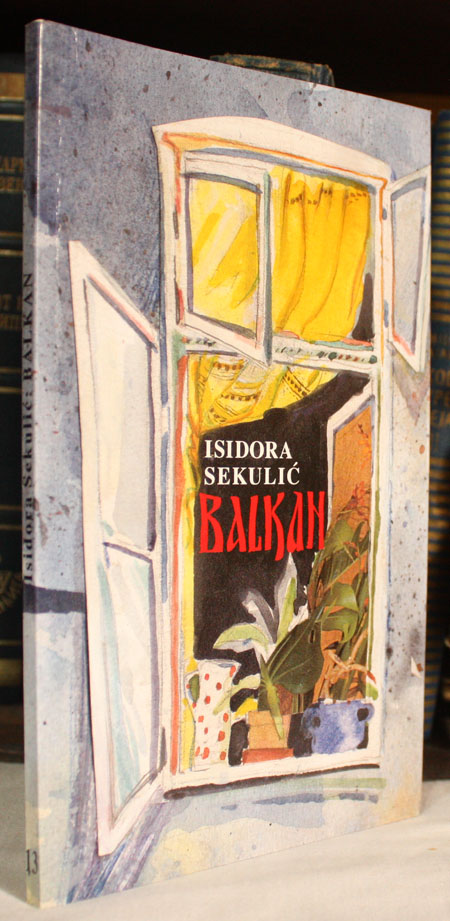
Isidora Sekulić: Balkan, translated by Vuk Tošić, bi-lingual edition Serbian-English, Plavi jahač, Belgrade 2013

Jacques Derrida: Politics of Friendship, trans. George Collins (London & New York: Verso, 1997)

Maria Todorova: Balkan Identities: Nation and Memory, Hurst, London & New York University Press, 2004

Maria Todorova: Imagining the Balkans, New York: Oxford University Press, 2009

© Thomas Hübner and mytwostotinki.com, 2014-5. Unauthorized use and/or duplication of this material without expressed and written permission from this blog’s author and/or owner is strictly prohibited. Excerpts and links may be used, provided that full and clear credit is given to Thomas Hübner and mytwostotinki.com with appropriate and specific direction to the original content.