Tag Archives: Bulgarian literature

Women in Translation month upcoming

Following the good example of some blogger friends and in anticipation of this year’s Women in Translation month, I post a list of books by women which I reviewed or from which I published translation samples here, covering the period September 2014 until now:

Deborah Rohan: The Olive Grove
Herta Müller: The Passport
Marjana Gaponenko: Who Is Martha?
Elif Batuman: The Possessed
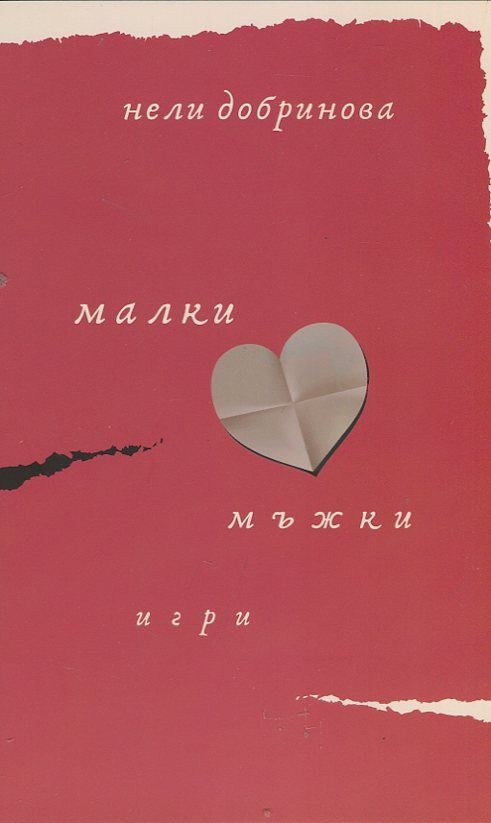
Neli Dobrinova: Malki mazhki igri
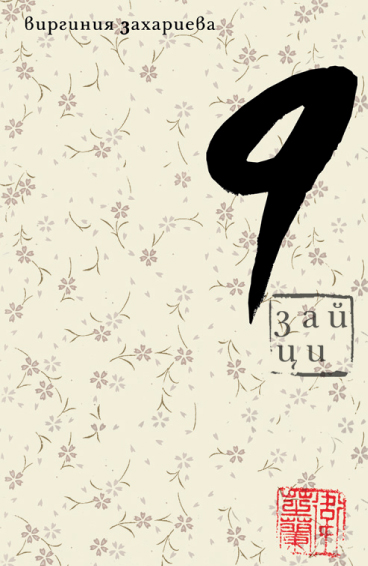
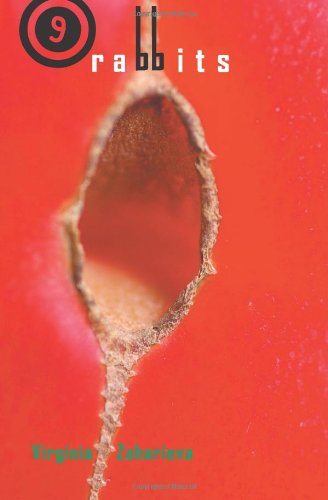
Virginia Zaharieva: Nine Rabbits
Ivanka Mogilska: DNA
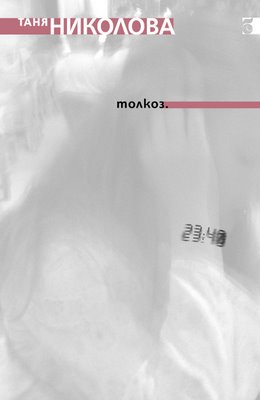
Tanja Nikolova: Tolkoz
Isidora Sekulic: Balkan

More to come!

© Thomas Hübner and mytwostotinki.com, 2014-5. Unauthorized use and/or duplication of this material without expressed and written permission from this blog’s author and/or owner is strictly prohibited. Excerpts and links may be used, provided that full and clear credit is given to Thomas Hübner and mytwostotinki.com with appropriate and specific direction to the original content.

Vier Gedichte von Edvin Sugarev

Пясък
 
обитавам те
както песента
славея обитава
 
обладаваш ме
както водата
камък обладава
 
пясък на дъното съм
накрая
успокоен и безименен

пак ще се срещнем
тогава
ти ще си морска вълна
 

Sand
 
ich bewohne dich
wie das lied
die nachtigall bewohnt
 
du beherrschst mich
wie das wasser
den stein beherrscht
 
sand auf dem grund bin ich
endlich
besänftigt und namenlos
 
wenn wir uns wiedersehen
dann
wirst du die meereswelle sein

————————————————————————-

 
пространство
 
безименното присъствие
безименното отсъствие
 
танцувам в здрачевината
изопната между тях
 

raum
 
namenlose anwesenheit
namenlose abwesenheit
 
ich tanze in der dämmerung
zwischen beide gespannt

———————————————————————————

 
стъпки
 
топла светлина и кръпки есенни
слънцето
от клоните се стича
по пътеката идеш
гола
и листата целуват петите ти
 
само стъпка още
само стъпка
и ще сме завърнати завинаги
 

schritte
 
warmes licht und herbstliche flicken
die sonne
fließt die zweige herunter
du kommst über den pfad
nackt
und die blätter küssen deine fersen
 
nur noch ein schritt
ein schritt nur
und wir werden uns
für immer umschlungen halten

—————————————————————————————–
 
танц на дервиш
 
все по-бързо
все по-бързо се върти
върти се докато се слее
в цветен вихър разноликото
докато тимпаните на ритъма
в един единствен звук протяжен зазвучат
 
пространствата са подлудели
огъват се и се изливат в него
вдън въртопа
стопява ги
и ги поглъща и вилнее
на танца в урагана
но както и във всеки ураган
 
в центъра
е спокойно
 
в центъра
е мълчание
 

tanz des derwischs
 
schneller
und schneller wirbelt er
dreht sich bis der farbige wirbel
die verschiedenen gesichter verschmilzt
bis der paukenrhthmus
zu einem einzigen langanhaltenden laut wird
 
die räume sind ver-
rückt biegen sich und ergießen sich
in den strudel
schmelzen und werden verschlungen
im wirbelsturm des tanzes
doch wie in jedem wirbelsturm
 
ist es im zentrum
ruhig
 
ist es im zentrum
still

Sugarev

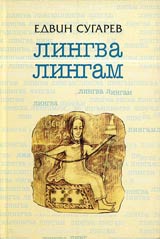
Edvin Sugarev: Lingva Lingam (Едвин Сугарев: Лингва Лингам), ателие Аб, Sofia 2001

Aus dem Bulgarischen von Thomas Hübner

© Edvin Sugarev and ателие Аб, 2001
© Thomas Hübner and mytwostotinki.com, 2014-5. Unauthorized use and/or duplication of this material without expressed and written permission from this blog’s author and/or owner is strictly prohibited. Excerpts and links may be used, provided that full and clear credit is given to Thomas Hübner and mytwostotinki.com with appropriate and specific direction to the original content.

Vier Gedichte von Ivajlo Dobrev

Аритметика
 
И ти – като нищожна част
от огромния часовник,
и все пак твърде значителна
за неговите механизми,
бъди сигурен, че времето
е безкраен любовен плащ –
съвкупност от зависимости
на взаимност.
 

Arithmetik
 
Und du – bruchteil
des riesigen uhrwerks,
und doch sehr bedeutsam
für seine mechanismen,
sei versichert, daß die zeit
ein unendlicher mantel der liebe ist –
eine ansammlung von abhängigkeiten
auf gegenseitigkeit.

————————————————–
 

Дребна мъдрост
 
Веднъж ученикът
отишъл при учителя си
и го попитал, после
учителят отишъл
при ученика и
го попитал, а после,
не им харесвало и
спрели да се виждат.
 

Pfennigweisheit
 
Einmal ging der schüler
zu seinem lehrer
und fragte ihn, dann
ging der lehrer
zu seinem schüler und
fragte ihn, und dann
mochte er nicht mehr und
sie hörten auf sich zu sehen.

————————————————–
 

Почивам си от поезията
 
доизносвам роклите на мама
доизносвам обувките на татко
броя големите банкноти в сакото
на чичо Фред почивам си от поезията
отдадох се на здравословен живот
ям малко спя много вечер се моля
не чакам просветление искам да съм
опашката на куче – да изразявам радост
 

Ich ruhe mich von der dichtkunst aus
 
ich verschleiße mutters kleider
ich verschleiße vaters schuhe
ich zähle die großen scheine im sakko
von onkel Fred ich ruhe mich von der dichtkunst aus
sie gab mir ein gesundes leben
ich esse wenig schlafe viel abends bete ich
erwarte keine erleuchtung will nur
der schwanz des hundes sein – um freude auszudrücken

————————————————–
 

Две четири стишия
 
В плетения кош
на жълт лист хартия
върху ръждив ключ
има част от старо стихотворение
 
Ти не можеш да бъдеш разделена
ти не можеш да бъдеш разделена
Женитба на тъжното
в бледното око на радостта
 

Zwei vier verse
 
Im weidenkorb
auf einem vergilbten blatt papier
über einem rostigen schlüssel
steht ein teil eines alten gedichts
 
Du kannst nicht getrennt werden
du kannst nicht getrennt werden
Ehe der traurigkeit
mit dem blassen auge der freude

Dobrev

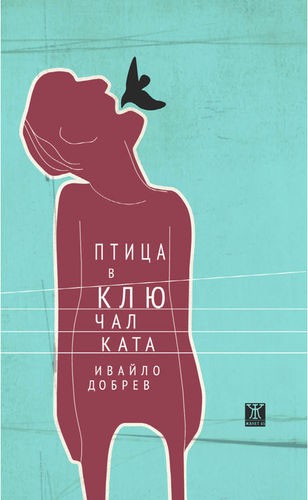
Ivajlo Dobrev: Ptitsa v kljuchalkata (Ивайло Добрев: Птица в ключалката), Janet45, Plovdiv 2014

Aus dem Bulgarischen von Thomas Hübner

© Ivaylo Dobrev and Janet 45, 2014
© Thomas Hübner and mytwostotinki.com, 2014-5. Unauthorized use and/or duplication of this material without expressed and written permission from this blog’s author and/or owner is strictly prohibited. Excerpts and links may be used, provided that full and clear credit is given to Thomas Hübner and mytwostotinki.com with appropriate and specific direction to the original content.

Drei Gedichte von Tanja Nikolova

и без въпроси, моля
 
седим и пием след работа
защото той иска да се самоубие
тъпо
но ние сме там –
приятелите
една мижава алтернатива на смъртта
и се шегуваме
и пеем
и пием…
основно пием
опитваме се да измислим
за него
и за себе си
доводи за живот:
“- Животът е хубав!”
(е добре де…не е)
но…
“-Трябва да се живее!”
защо???
…ами…
пием
…а любовта?
а бе…
………………
я наздраве!
……………….
любовта не е живота
животът в ХУБАВ и ТРЯБВА
(като лозунг)
вярвай!
и без въпроси,
моля…


und ohne fragen, bitte
 
wir sitzen und trinken nach der arbeit
weil er sich umbringen will,
dumm
aber wir sind da –
die freunde
eine schäbige alternative zum tod
und wir scherzen
und singen
und trinken…
vor allem trinken
wir versuchen
uns für ihn
und für uns selbst
gründe fürs leben auszudenken:
“- Das leben ist schön!”
(na ja … ist es nicht)
aber…
“Man muss leben!”
warum???
…ach komm…
wir trinken
…und die liebe?
hör doch auf…
………………
na dann prost!
……………….
die liebe ist nicht das leben
das leben ist SCHÖN und MAN MUSS
(wie eine losung)
glaub es!
und ohne fragen,
bitte …

……………………………………………………………………………………


песен
 
твоята кухня, мила,
е моят аеродрум
летя, летя
вино, сирене и музика
ах, каква музика!
вълшебно е от лекота
но ти знаеш, мила,
с теб летя


lied
 
deine küche, liebes,
ist mein flugplatz
ich fliege, ich fliege
wein, käse und musik
ach, was für musik!
magisch ist die leichtigkeit
aber du weisst schon, liebes,
mit dir fliege ich

……………………………………………………………………………………
 
 
Писмо до Кабул
 
написах писмо
цяла страница ситен шрифт
за децата, за къщата, за приятелите
объркано и простовато
писмо
зa малките неща
които са големи, големи
по-големи от всеки стих
представям си как четеш и се усмихваш
и се смалявам
до сълза


Brief nach Kabul
 
ich schrieb einen brief
die ganze seite in delikater schrift
über die kinder, das haus, die freunde
verwirrt und seicht
ein brief
über die kleinigkeiten
die groß, groß sind
größer als jeder vers
ich stelle mir vor, wie du ihn liest und lächelst
und vergehe 
vor tränen


kora_Tolkoz1

Tanja Nikolova: Tolkoz (Толкоз), Literaturen forum, Sofia 2007

Aus dem Bulgarischen von Thomas Hübner

© Tanja Nikolova and Literaturen forum, 2007
© Thomas Hübner and mytwostotinki.com, 2014-5. Unauthorized use and/or duplication of this material without expressed and written permission from this blog’s author and/or owner is strictly prohibited. Excerpts and links may be used, provided that full and clear credit is given to Thomas Hübner and mytwostotinki.com with appropriate and specific direction to the original content.

Fünf Gedichte von Ivanka Mogilska

Разговор
 
Думите са бавни.
Черно-бели.
Спрели.
После тръгнали
в погрешната посока.
 
Gespräch
 
Die Worte sind langsam.
Schwarz-weiss.
Gestoppt.
Gingen dann
in die falsche Richtung.

—————————————————————-

Мечтание в 10 Секунди
 
Невъзможните дни
ги заравят
като черупки от охлюви.
После пясъкът бяга
да се дави в морето.
 
Träumerei in 10 Sekunden
 
Die unmöglichen Tage
vergrabe sie
wie Schneckenhäuser.
Danach flieht der Sand
um im Meer zu ertrinken.

—————————————————————-
 
За Страха
 
Птиците се събраха.
Гарванът даде знак.
Екзекуцията започна.
Бесеха ловеца,
който уби лисицата.
 
Zum Fürchten
 
Die Vögel versammelten sich.
Der Rabe gab Zeichen.
Die Hinrichtung begann.
Gehängt wurde der Jäger,
der den Fuchs tötete.

———————————————————————–
 
Библейски Мотив
 
Железни са правилата на бога:
Не лъжи!
Не кради!
Не убивай!
Не пожелавай жената на ближния!
Не е казано само какво да правиш,
ако жената те пожелае.
 
Biblisches Motiv
 
Ehern sind Gottes Gebote:
Du sollst kein falsches Zeugnis ablegen!
Du sollst nicht stehlen!
Du sollst nicht töten!
Du sollst nicht begehren deines Nächsten Weib!
Nur wird nicht gesagt, was zu tun ist,
wenn dessen Frau dich begehrt.

——————————————————————————-
 
Краят на лятото
 
Самотен гларус
е останал да целува
на пясъка лицето.
 
Das Ende des Sommers
 
Eine einsame Möwe
ist verblieben um das Antlitz
des Sandes zu küssen.

Mogilska

Ivanka Mogilska: DNA (Иванка Могилска: ДНК), Janet45, Plovdiv 2004

Übersetzung aus dem Bulgarischen von Thomas Hübner

© Ivanka Mogilska and Janet45 Izdatelstvo, 2004
© Thomas Hübner and mytwostotinki.com, 2014-5. Unauthorized use and/or duplication of this material without expressed and written permission from this blog’s author and/or owner is strictly prohibited. Excerpts and links may be used, provided that full and clear credit is given to Thomas Hübner and mytwostotinki.com with appropriate and specific direction to the original content.

Nine Rabbits

The first part of Virginia Zaharieva’s autobiographical novel Nine Rabbits consists of childhood memories of the narrator. Manda, as everyone calls her, grows up in Nesebar in socialist Bulgaria in a house at the Black Sea coast. The men in the big family are mostly or completely absent. Boris, the Grandfather, a good-natured and friendly man works most of its life abroad and comes home only during holidays for a few weeks. Even later when he gets older and is back in Bulgaria, he avoids to spend too much time at home – he doesn’t get along well with his wife, Nikula. Manda’s parents are divorced and her father lives hundreds of kilometers away in Sofia; also Manda’s mother who works far away is most of the time not at home.

The big family is governed by Grandmother Nikula with a hard hand. Not only is she beating Manda frequently, she is even able to torture her for no apparent reason with needles. Only when she is cooking or baking she seems to become a different person who is more human and less rigid – maybe that’s why Manda loves cooking so much; cooking seems to give her life (and also the novel) a structure even when things are getting otherwise messy and difficult to handle. Manda’s favorite receipes are printed in the book and additionally collected in a small booklet that comes with the novel – the dishes are comparatively easy to prepare and I suppose very delicious. 

Beside her mother, who tries to protect her when she is at home, and a few childhood friends, Manda finds support and consolation at a nun’s monastery nearby. The nuns care for Manda’s (physical and psychological) wounds after Grandma has exercised again one of her cruel needle tortures; as a result Grandmother, who is an old activist of the Communist Party gets the monastery closed by the authorities and the nuns dispersed all over the country.

Politics cast a long shadow over this part of the novel – Prague 1968 is anxiously witnessed via the radio transmissions by the summer guests from Czechoslovakia; we read about Manda’s innocent friendship with a boy from the neighborhood; and finally her fate takes a turn to the better: her mother remarries and moves together with Manda to Sofia; later we learn of Grandfather’s and Grandmother’s death – they were divorced in old age.

The second part of the novel sets in decades later. Manda is now a 46-year old writer and therapist in Sofia. She has a son who is in the process to leave the house; a divorced husband (she was married for 13 years); a lover that is sixteen years younger than her; and she is in a serious crisis: writers block, panic attacks, the feeling that something has gone terribly wrong with her life.

While the first part of the novel is very much centered around the house in Nesebar where Manda spent a big part of her childhood, the second part involves changing places quite a lot.

We see Manda in Corfu; traveling with other writers through Europe by train; we see her having another panic attack in Moscow; her life in idyllic Kovachevitsa; her travel to Osaka; her yoga and other esoteric experiences with various groups that search for an alternative life style; we witness her at a performance of a writer colleague (Toma Markov) who reads her poems in a woman’s dress while Manda is serving huge amounts of tomato soup to the audience (“Don’t forget to bring your spoon!” was written on the invitation to the event); sometimes the second part of the novel gets a bit messy – just as the protagonist’s life. But, without wanting to reveal too much, it all ends well for Manda.

This is a book full of energy; the protagonist struggles to getting over the unhappy childhood of hers and the fact that the men in her life were always disappearing or withdrawing themselves; and although fate seems to repeat itself again (her lover Christos becomes more distant by accepting more jobs as an actor that keep him away from Manda over longer periods; and also her beloved son is leaving home), Manda finally seems to accept herself and reinvents herself as a strong, independent woman.

This is also a feminist book, a book that shows the failure of many men to really attach themselves to their wives and families. But it is definitely not the book of a man-hater, but of a rather compassionate person.

There are also plenty of weird, unforgettable moments in the book; a sense for the absurd; and a real wit and humor on many pages. Zaharieva has something to tell us and she has all the technical means at her command to tell her story in an interesting, intelligent, even enticing way. I enjoyed this book therefore very much and can only recommend it to everyone who loves a good novel. As Dubravka Ugrešić puts it:

“What makes this book exceptionally pleasant is Zaharieva’s vitality, her guiltless hunger for life, for every bit of it. It’s a happy book about a happy personal life.”

I read the English edition by Istros Books but compared it also with the original edition. The translation by Angela Rodel is excellent; unfortunately the English version frequently is alluding to the 1840s or 1850s, when in the original version it is referred to the Forties and Fifties (of the 20th century that is); that mistake is quite confusing especially for readers that are not very familiar with Eastern European history. 

It is a real pity that all but one of the author’s Chinese calligraphies have disappeared from the English version; I also much preferred the cover of the Bulgarian version to the cover of the Istros edition; my copy contained also an additional (double) set of pages. I don’t want to sound petty, but I pay attention to such small details and it would be great if they could be changed in future editions. –

But these are very small criticisms. Istros is a great, courageous publisher with an excellent program. And English-speaking readers can be grateful that thanks to publishers like Istros, true gems like this one (and many others) are available to them.    

Zaharieva BG Zaharieva

Virginia Zaharieva: Nine Rabbits, translated by Angela Rodel, Istros Books, London 2012 (each copy includes the booklet 29 receipes, by Virginia Zaharieva) 

This review is part of Stu’s (Winstonsdad’s Blog) Eastern European Lit month: https://winstonsdad.wordpress.com/2015/03/02/welcome-to-eastern-european-lit-month/

 
© Thomas Hübner and mytwostotinki.com, 2014-5. Unauthorized use and/or 
duplication of this material without expressed and written permission from this blog’s author and/or owner is strictly prohibited. Excerpts and links may be used, provided that full and clear credit is given to Thomas Hübner and mytwostotinki.com with appropriate and specific direction to the original content. 

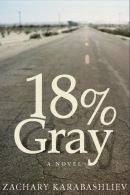
18% Gray

Eighteen_Percent_Gray-web_large

When you take photos sometimes, you may know or not know that cameras have a light meter. All light meters including those in every camera must be calibrated to assume a certain percentage of light being reflected from the subject you want to photograph.

Each light meter can be used to determine correct exposure so long as the photographer knows the angle of measurement and knows how to isolate what is being measured. In addition to knowing the area from which the reading is taken, it is also important to know the approximate reflectance of that area. This is the part that can make using a reflected meter difficult, since the meter can’t determine subject reflectance for you and you must mentally calculate it.

Or you use a standardized surrogate subject such as the common Kodak Gray Card, which has a stated reflectance of 18%. Hence the title of this book, which has also a metaphorical meaning, as readers will find out.

Zack, the narrator/protagonist of this book – the fact that he has the same name as the author is a hint that probably a part of this novel is autobiographical – has two serious problems at the beginning of this book: Stella, his wife and the big love of his life has left him (and as we later learn: for good), and as a result of that Zack is in a severe crisis; and furthermore he comes unintentionally into possession of a big bag with marijuana.

What follows is a road trip from California to New York, and also a trip into the past of Zack’s and Stella’s lives. A man tries hard to find the woman he loves and whom he has lost (long before she physically left him); but he also tries to find again his vocation as an artist; and besides, he wants to sell the dope at the East Coast and maybe start a new life with the money.

The book is structured in a very interesting way: there is the story of Zack, after Stella left him, and his journey through the country; there are flashbacks that describe Stella’s and Zack’s story from the moment they met, in Varna, Bulgaria – by coincidence also a very important place in my life – , in the last days of the communist regime, their move to the U.S. as students, their attempts to build a new life – Stella as a painter, Zack as a photographer and after this fails, as a supervisor of test results for a pharmaceutical company -, and how their lives are drifting slowly apart; and there are short conversations between Zack and Stella, all recorded in moments when Zack takes photographs of Stella, and which give a clear indication of how their relationship slowly changes.

All three lines of this story have their own typography, so it is very easy for the reader to follow these permanent switches, which structure the texts into quite short sections. Here and also in the very good dialogues the reader feels that the author is also a prolific screen writer. This novel has a movie-like feel, and it is not surprising that it will be made (or is it already made?) into a movie.

The novel touches on many interesting topics: how do relationships change over time, and what can we do to prevent us from losing “it” – the love and also the purpose of life, which for Zack was first the music (when he was in Bulgaria, he started a career as front man of a punk band), later photography, and finally writing; it is also a novel about emigration and how it affects the identity of those who give up their home country and re-invent themselves somewhere else; it is a book about America (there are excellent descriptions not only about California and New York, but especially about the Mid West, Texas and all the other places Zack is crossing); can money really compensate us for other losses – the answer is obvious…; and a few more.

“I now realize that my American West was not a geographical place, but a sacred territory in my dreams. Perhaps everybody has their own Wild West. From a very young age, I knew with certainty that one day I would live in mine. I’d caress the yellow prairie grass and the wind would kiss my face. When did I lose all that? How did I manage to desecrate my West by replacing it with the plastic version of what I’ve been living in for the last few years of my life? “

I like about the book also that it is obviously in the tradition of the Künstlerroman (artist’s novel); but it reminds me at the same time of American road movies. There are plenty of absurd situations and people in the book, and also a kind of roguish humor which is a good antithesis to Zack’s and Stella’s sad story. I also like the somewhat ambiguous end and the wonderful last sentence:

“We watch the world outside through our reflections.”

A great book, if you ask me.

The English translation by Angela Rodel is flawless and excellent.

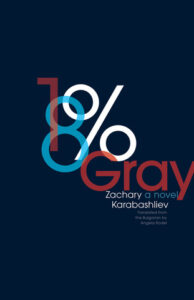
By the way, I read the English edition published by the Bulgarian publisher Ciela. For the cover they used a photo by the author (now editor-in-chief at the same publishing house) that fits this book very well.

PS: One – minor – correction: Old Firehand is of course NOT “a fictional native American hero” of several Karl May novels, as a footnote on page 190 informs us. “Hugh, ich habe gesprochen!”
 Karabashliev


Zachary Karabashliev: 18% Gray, transl. by Angela Rodel, Open Letter Books, Rochester 2013, Ciela, Sofia 2015

This review is part of Stu’s (Winstonsdad’s Blog) Eastern European Lit month: https://winstonsdad.wordpress.com/2015/03/02/welcome-to-eastern-european-lit-month/


© Thomas Hübner and mytwostotinki.com, 2014-5. Unauthorized use and/or 
duplication of this material without expressed and written permission from this blog’s author and/or owner is strictly prohibited. Excerpts and links may be used, provided that full and clear credit is given to Thomas Hübner and mytwostotinki.com with appropriate and specific direction to the original content. 
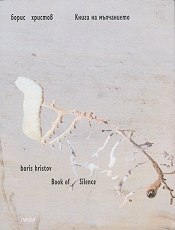
from/aus: Book of Silence / Buch der Stille

Книга на мълчанието

пролог

Какво говори философът?
Не е ли същото, което аз живея –
но без думи?

1.
 
Навсякъде в небето примки и капани –
богослужебни знаци, псалми и бръмчене.
Навсякъде край нас спасителни камбани…
И ни една душа спасена.

2.
 
Разхвърляно до хоризонта Време –
да ровим в него и с усърдието на клошари
да го събираме на мънички купчини,
които вятарат безмилостен отвява.

3.
 
Оставени сме тук обърнати по гръб да драскаме
въпроси по небето и да си отговаряме сами –
докато някой ден Безкраят се смили
и подаде ръка да ни изправи.

4.
 
Загърната в парцали от мъгли къде отива
сляпата тълпа, която се представя за човечество?…
Следи наоколо от хиляди посоки –
и ни следа от Пътя.

…..

___________________________________________________________________________

Book of Silence

Prologue
 
What does the philosopher say?
Is it not the same as what I am living –
but without words?

1.
Everywhere in the sky snares and wiles –
liturgical signs, psalms and buzzing.
Everywhere beside us, saving bells…
And not a single soul saved.

2.

Time, scattered to the horizon –
to search in it and with the zeal of a vagrant
to gather it up in tiny heaps,
which the wind unmercifully blows away.

3.

We are left here, turned to our backs, to scratch
questions on the sky and to answer them alone,
until one day Eternity deigns to stretch out a hand
and stands us upright.

4.

Wrapped up in shreds of fog, where does the blind
mob go, which passes itself off as humanity?…
All around – tracks from a thousand directions,
but not one track from the Road.

…..

__________________________________________________________________________

Buch der Stille

Prolog
 
Was sagt der philosoph?
Ist es nicht dasselbe, was ich lebe –
nur ohne worte?

1.

Überall am himmel stricke und netze –
liturgische zeichen, psalmen und summen.
Überall um uns herum rettungsglocken…
Und nicht eine einzige seele gerettet.
 
2.

Die zeit, verstreut am horizont –
in ihr suchend und mit dem eifer der landstreicher
sie in winzigen haufen sammelnd,
die der wind unbarmherzig verweht.
 
3.

Zurückgelassen sind wir auf dem rücken liegend um
fragen in den himmel zu kratzen und sie uns selbst zu beantworten –
bis eines tages die Unendlichkeit sich unserer erbarmt
und uns die hand nach oben reicht.
 
4.

Eingehüllt in fetzen aus nebel, wohin geht
der blinde mob, der sich selbst als menschheit ausgibt?…
umgeben von spuren aus tausenden richtungen
aber nicht eine spur vom Weg.

…..

Boris Hristov

from: Boris Hristov: Book of Silence (Kniga za malchanieto), bi-lingual edition Bulgarian-English, transl. by John Hamilton, Riva, Sofia 2014 – Boris Christov: Buch der Stille

German translation: Thomas Hübner

© Boris Hristov and Издателство Riva, 2014.
© Thomas Hübner and mytwostotinki.com, 2014-5. Unauthorized use and/or 
duplication of this material without expressed and written permission from this blog’s author and/or owner is strictly prohibited. Excerpts and links may be used, provided that full and clear credit is given to Thomas Hübner and mytwostotinki.com with appropriate and specific direction to the original content. 
Drei Gedichte von Kris Enchev

Enchev


                                                            На Ели
очакваното неочаквано
в тесен коридор да просветне
нагоре по криви стълби
покрай прозорец с гълъби
така незабележимо от случайни слизащи
устремени към други нагоре
или други пропасти
 
                                                          Für Eli
das erwartete unerwartete
im dunkeln flur leuchtend
über krumme stufen hinaufsteigend
vorbei am fenster mit den tauben
so ununterscheidbar von zufällig herabsteigenden
strebend zu den anderen oben
oder zu anderen abgründen

—————————————————————————————————————————-

                                        На Поли
убивам времето
за да не ме убие то
дъждът ми е свидетел
 
                                           Für Poli
ich schlage die zeit tot
damit sie mich nicht totschlägt
der regen ist mein zeuge

—————————————————————————————————————————- 

събирам
в тайна таванска стаичка
картини
на които
те няма
 
картини
които нямат лице
нито очертания
нито сенки
 
очаквам
 
влагата
праха
паяжините
 
опитай
да очертаеш
отсъствие

ich sammle
im geheimen schrank auf dem dachboden
bilder
auf denen
du nicht bist
 
bilder
die weder gesicht
noch linien
noch schatten haben
 
ich warte
 
feuchtigkeit
staub
spinnweben
 
versuche
die abwesenheit
zu zeichnen

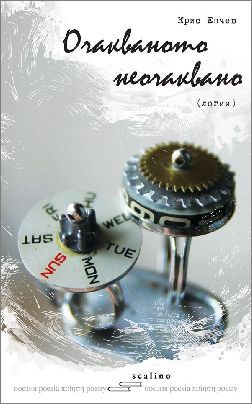
aus: Kris Enchev: Ochakvanoto neochakvano (Очакваното неочаквано), Scalino, Sofia 2014
Aus dem Bulgarischen von Thomas Hübner


© Kris Enchev and Scalino OOD, 2014.
© Thomas Hübner and mytwostotinki.com, 2014-5. Unauthorized use and/or 
duplication of this material without expressed and written permission from this blog’s author and/or owner is strictly prohibited. Excerpts and links may be used, provided that full and clear credit is given to Thomas Hübner and mytwostotinki.com with appropriate and specific direction to the original content. 
Ein Gedicht von Neli Dobrinova

neli

упражнения за ляв бял дроб
 
бащите идват, слушат новините, гледат спорта
и си тръгват
преди прогнозата за времето
реша още влажните коси на дъщеря си
почукай на дъжда
и ще ти отвори вятърът, с когото винаги сме доверчиви
като долната и горна устни
 
зад костения порцелан на зъбите
езикът чака да бъде подарен –
прегънат на фуния, през която да издишваш воя
на стадо единаци,
или да го превърнеш в звук от върбова пищялка –
прабабата на флейтитe
 
току-що събудена муха изпъква
между стъклото
и книгата уникат
вълшебства на инстинкта


übungen für den linken lungenflügel

die väter kommen, hören die nachrichten, schauen sport
und gehen
vor der wettervorhersage
ich bürste das noch nasse haar der tochter
der regen klopft
und ich werde dir öffnen wind, der uns immer vertraut war
wie die unter- und oberlippe

hinterm porzellan der zähne
wartet die zunge darauf, sich zu zeigen –
zum trichter gefaltet durch den man ausatmet heulen
der einsamen herde,
oder umgeschaltet auf den ton der weidenpfeife –
die urgroßmutter der flöten

die gerade erwachte fliege steht
zwischen dem glas
und dem einzigartigen buch
magie des instinkts


aus:
Neli Dobrinova: Malki mazhki igri (Нели Добринова: Малки мъжки игри), Pergament Press, Sofia 2014
Aus dem Bulgarischen von Thomas Hübner


© Neli Dobrinova and Издателство Пергамент Прес, 2014.
© Thomas Hübner and mytwostotinki.com, 2014-5. Unauthorized use and/or 
duplication of this material without expressed and written permission from this blog’s author and/or owner is strictly prohibited. Excerpts and links may be used, provided that full and clear credit is given to Thomas Hübner and mytwostotinki.com with appropriate and specific direction to the original content.